
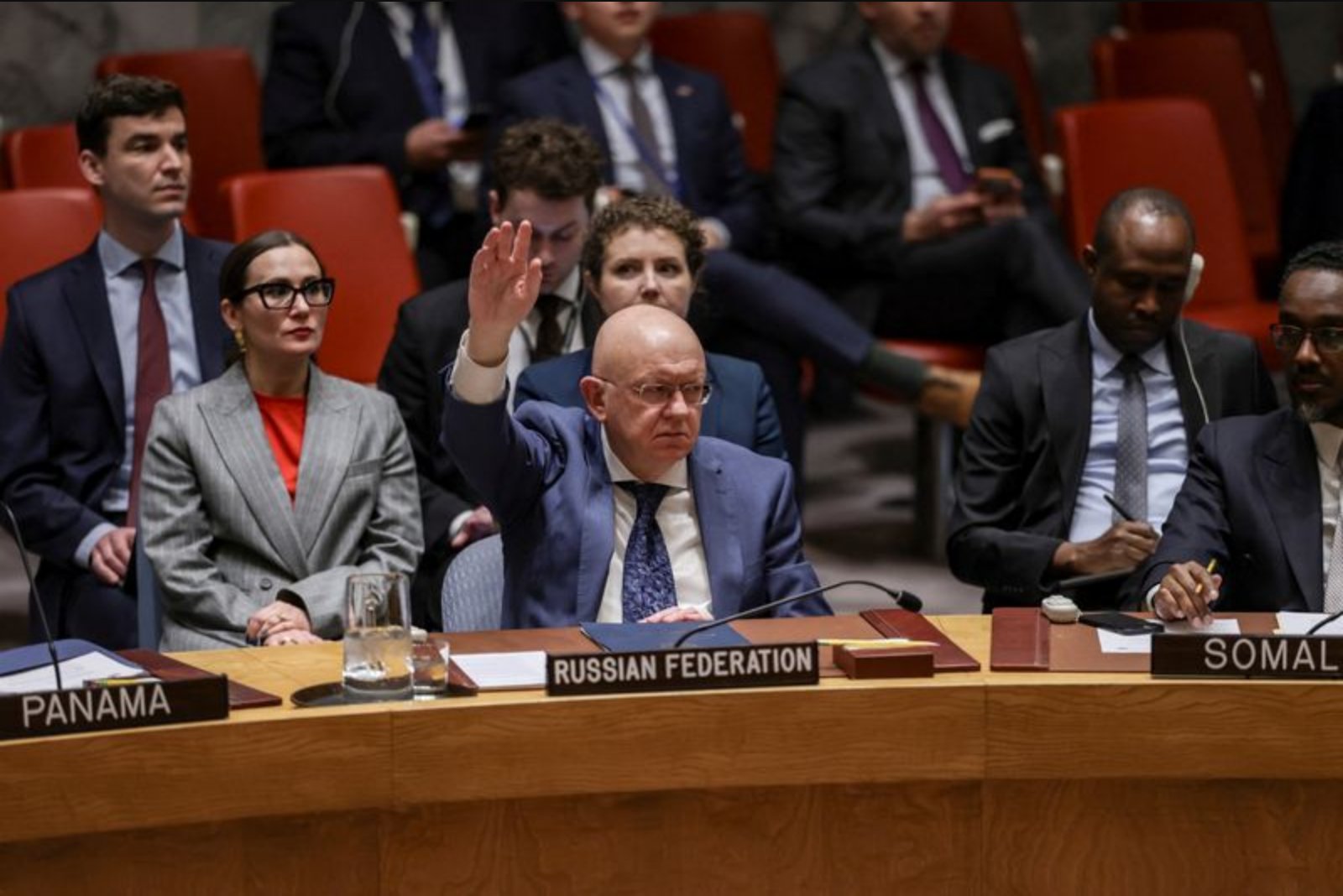
The United States on Thursday pressed U.N. member states to support a Security Council resolution calling on Iran to cease attacks and the placement of naval mines in the Strait of Hormuz, but diplomats said Beijing and Moscow appeared poised to use their veto power against the proposal.
U.S. President Donald Trump is due to travel to China next week, and a Chinese veto would present a diplomatically sensitive moment as talks on Iran-related conflict are likely to feature on the agenda.
A month ago a different resolution backed by Washington, which critics said risked enabling U.S. military action against Iran, failed after Russia and China cast vetoes in the 15-member U.N. Security Council. The new draft, authored by the United States and Bahrain with the backing of Saudi Arabia, the United Arab Emirates, Kuwait and Qatar, seeks to again draw a firm council response.
Standing side by side with envoys from Gulf states that support the proposal, the U.S. ambassador to the United Nations, Mike Waltz, addressed reporters and warned of the precedent at stake for any state opposing the text. He said any country that "seek to throw it out, are setting a very, very dangerous precedent." Waltz added: "We have to ask ourselves, if a country chooses to oppose such a simple proposition, do they really want peace?"
Diplomats who attended a closed session of the Security Council this week said the draft encountered sharp criticism from Russia and China and that both capitals are likely to veto the measure if it is put to a vote. One diplomat reported that Russia urged the resolution be withdrawn or completely rewritten. According to the same diplomat, China argued the text showed bias and objected to its use of Chapter VII of the U.N. Charter, the provision that permits the Council to adopt measures that range from sanctions to the authorization of military action.
Bahrain's U.N. envoy Jamal Fares Alrowaiei affirmed his country's intent to keep engaging with fellow council members, saying Bahrain looked forward "to working constructively with all council members in the days ahead to finalize this text."
The draft accuses Iran of breaching the existing ceasefire and of conduct that includes "actions and threats aimed at closing, obstructing, tolling" freedom of navigation through the Strait of Hormuz. It demands that Iran immediately stop attacks, reveal the locations of any mines it has placed, and refrain from obstructing mine clearance operations.
Waltz's statements came as some sources and officials indicated the United States and Iran were nearing a temporary arrangement to halt the fighting, with Tehran reported to be examining a proposal that would pause hostilities while leaving the most contentious matters unresolved.
While neither Moscow nor Beijing has issued a formal public comment on the new draft, diplomats briefed on council deliberations described both countries as taking a firm stance during internal discussions. On Tuesday, U.S. Secretary of State Marco Rubio framed the proposed resolution as a test of the U.N.'s usefulness and appealed to China and Russia not to veto it.