
Tennessee's Republican-controlled legislature on Thursday enacted new congressional boundaries that dismantle a majority-Black U.S. House district focused on Memphis, setting up a likely partisan turnover ahead of November's midterm elections. The plan, which splits Shelby County - the jurisdiction of Memphis - into three districts that lean Republican, was approved amid intense demonstrations at the state capitol.
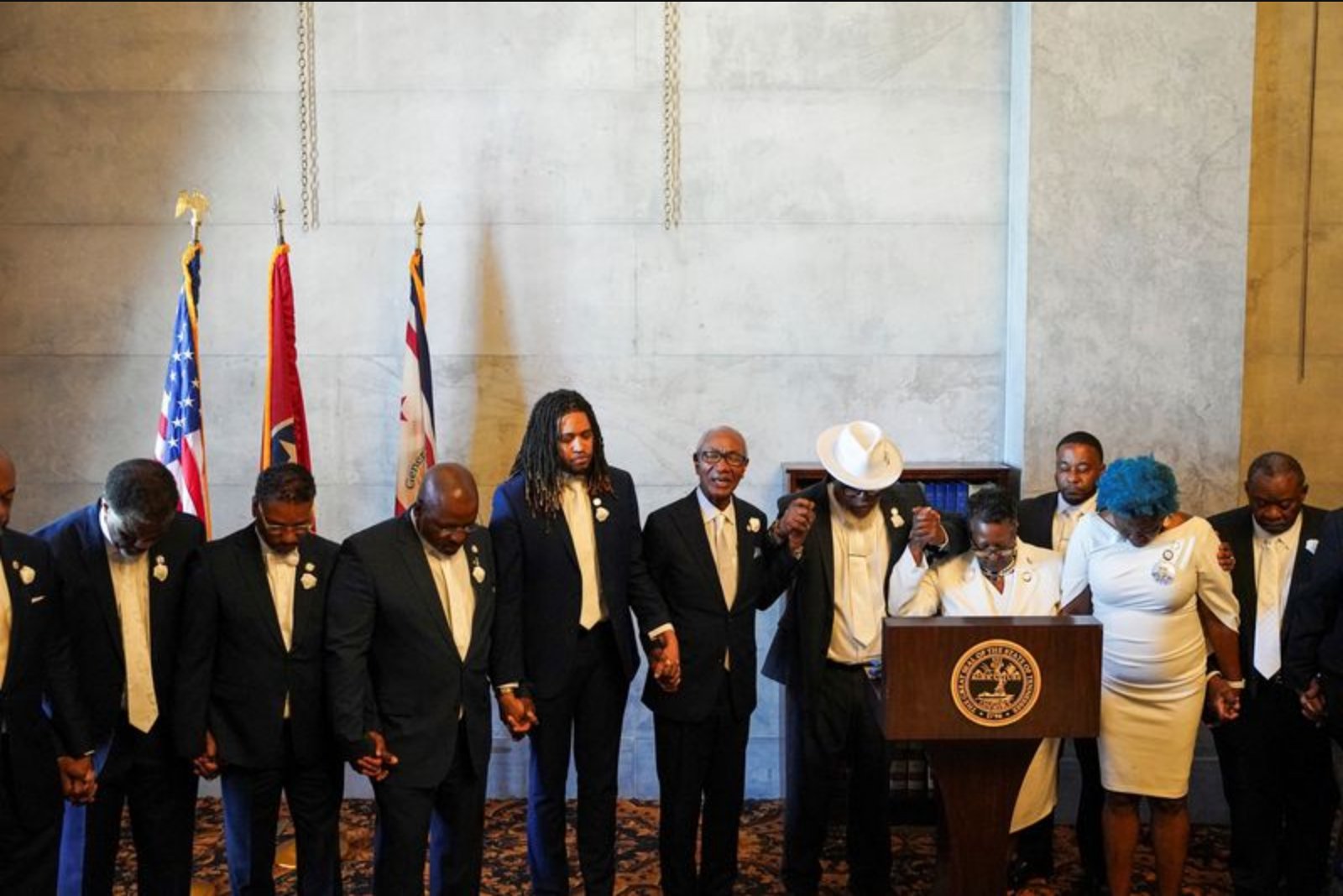
Lawmakers and activists clashed in the chambers and galleries as the vote moved forward. Protesters repeatedly interrupted proceedings and were removed from the balcony by the House speaker, Cameron Sexton. At the final House vote, Black legislators stood arm-in-arm at the front of the chamber while demonstrators sounded airhorns and chanted. The Senate's action was briefly delayed when state Senator Charlane Oliver, a Black Democrat, climbed onto a desk on the floor and unfolded a sheet bearing the words "No Jim Crow 2.0," while other Democrats continued to protest.
Republicans said the new map reflects partisan priorities rather than race. "This gives us a unique opportunity for the first time in history to have an all-Republican delegation sent from Tennessee to Washington, D.C., to represent conservative values," Republican state Representative Jason Zachary said. Democrats countered that the redrawing was racially motivated and tantamount to a regress to discriminatory practices. "It is a form of Jim Crow terror," state Representative Justin Jones, a Black Democrat, said, comparing the map to the pre-1960s laws that suppressed Black voting rights. "You know what you s doing. It s shameful."
The lines could unseat Democratic U.S. Representative Steve Cohen, who has represented Memphis since 2007, by dispersing the city's majority-Black population across multiple Republican-leaning districts. Republicans already hold the state's other eight congressional seats, and party leaders celebrated the chance to extend that control.
The Tennessee action follows a recent U.S. Supreme Court ruling that constricted the application of the Voting Rights Act, a decision that has catalyzed efforts in several Republican-led states to redraw maps that had preserved majority-Black districts. In a 6-3 ruling, the Court found that Louisiana had improperly used race when creating a second majority-Black district to comply with the Voting Rights Act's protections for minority voters. That decision has opened a pathway for Louisiana and other states to eliminate districts long viewed as legally protected.
Louisiana has paused its May 16 U.S. House primary to allow lawmakers time to adopt a new map, even though tens of thousands of voters already cast early ballots. In South Carolina, Republican legislators are pursuing measures that would permit them to pursue a new map that would erase a majority-Black district held by U.S. Representative Jim Clyburn, described in coverage as a civil rights activist and Democratic Party kingmaker who is in his 17th term. Alabama has appealed to the Supreme Court to overturn a lower court order issued in 2023 that created a second majority-Black district and to allow the state to return to a map with only one such district; Alabama Republicans this week advanced legislation that would let them postpone the May 19 U.S. House primary if the court rules in their favor.
Observers say the Tennessee vote is part of an accelerated, mid-decade push to redraw congressional maps nationally. That campaign intensified after efforts last summer in Texas, when former President Donald Trump urged state Republicans to replace their congressional map with one designed to target five Democratic incumbents. Other states, across the political spectrum, subsequently undertook map revisions.
Republicans have built a net advantage of about four U.S. House seats across nine states so far, though the ultimate tally remains contingent on pending developments in Louisiana, South Carolina and Alabama. Ongoing litigation in Virginia, Florida and Missouri also has the potential to alter the current calculations.
Context and repercussions
The Tennessee legislation showcases how a Supreme Court decision narrowing the Voting Rights Act's reach has influenced state-level redistricting. Republican officials argue the maps are partisan exercises within their authority; Democratic officials and protesters argue the maps undermine long-standing protections for minority voters and amount to racial discrimination in practice.
The procedural confrontations in both chambers, including the removal of protesters and dramatic demonstrations by minority legislators, underscore the deep partisan and racial tensions surrounding these map changes. The contest in Tennessee is a focal point in a larger nationwide tussle over congressional control ahead of a critical midterm cycle.
What to watch next
- Whether the new Tennessee map leads to a Republican victory in the Memphis-centered seat in November.
- How legal challenges and continued litigation in multiple states will affect the current distribution of House seats.
- Decisions by state officials in Louisiana, South Carolina and Alabama to redraw maps or postpone primaries as they respond to the Supreme Court ruling.