
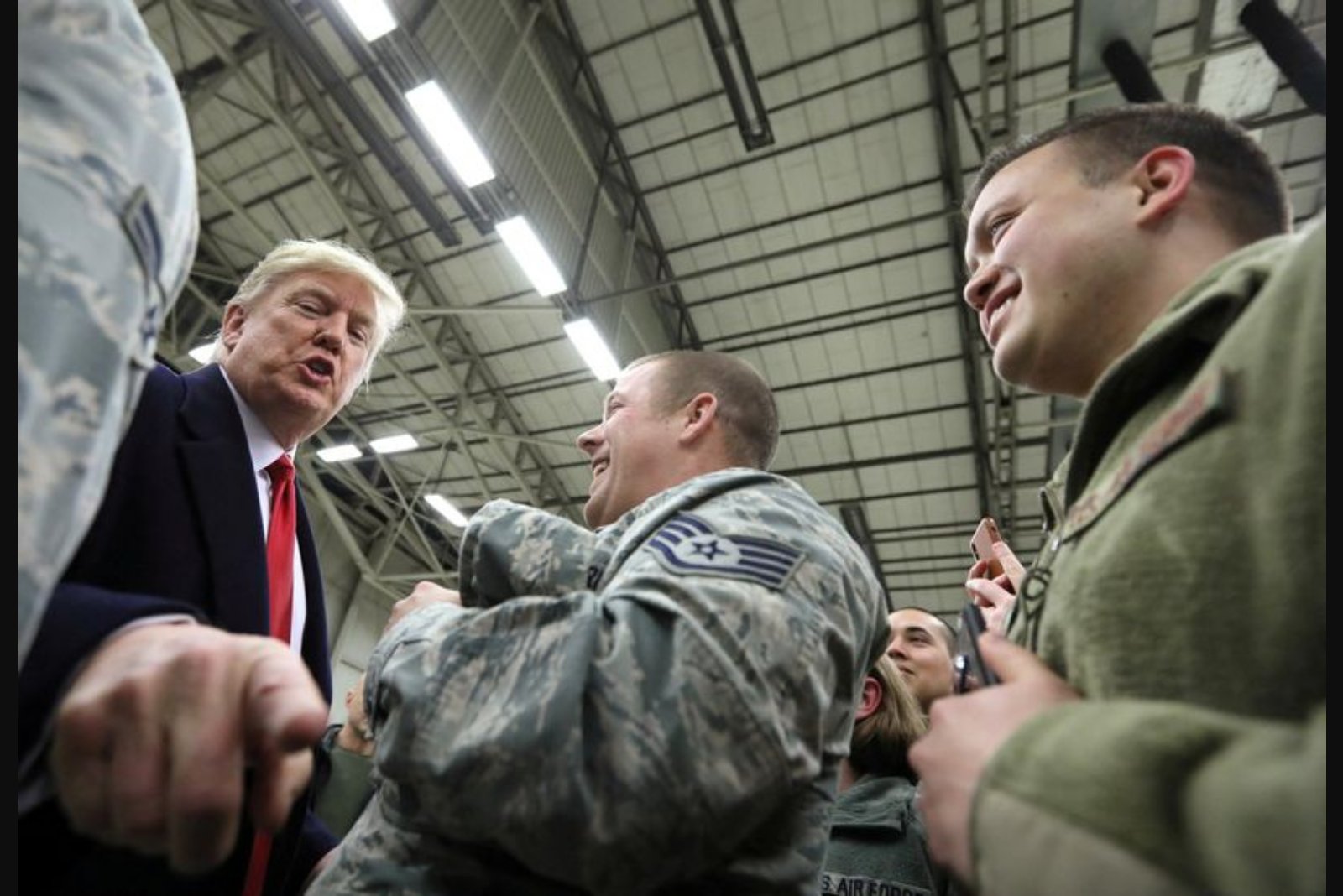
President Donald Trump has ordered the removal of 5,000 U.S. troops from Germany, the Department of Defense said, setting off a debate over presidential authority, congressional oversight and the future of America's forward presence in Europe.
The Pentagon announced the decision on May 1 and indicated the withdrawals should be completed within six to 12 months. A senior Pentagon official told Reuters that the move was a response to comments by German Chancellor Friedrich Merz, who had said the Iran war was humiliating the United States and questioned what exit strategy Washington was pursuing in the two-month-long conflict.
Germany currently hosts roughly 35,000 active-duty U.S. military personnel, more than in any other European nation. The administration has framed the drawdown as a return of troop numbers in Europe to levels seen before 2022, prior to the buildup of forces that followed Russia's invasion of Ukraine under then-President Joe Biden.
Legal framework and constraints
As commander-in-chief, the U.S. president wields broad authority over the armed forces, but Congress controls military appropriations and can therefore influence force posture. In response to Trump's past criticism of NATO, lawmakers from both parties included a provision in the National Defense Authorization Act - the NDAA - designed to prevent U.S. troop levels in Europe from dropping below 76,000. The president signed that measure into law in December.
That law, however, contains a mechanism that preserves flexibility for the White House. It permits reductions below 76,000 if the president certifies that consultations with NATO allies took place and if independent assessments are provided showing how a reduction would affect U.S. security, the transatlantic alliance and deterrence of Russian aggression. "There’s a lot of flexibility baked in here. There’s ways you can see the Trump administration moving around troops within these constraints," said Scott Anderson, a senior fellow in governance studies at the Brookings Institution.
Late last year, forces in Europe numbered about 85,000, which means, by that arithmetic, the administration could withdraw up to 9,000 troops without violating the 76,000 threshold set in the NDAA.
Political reaction in Washington
Members of Congress from both parties reacted to the announcement. Democrats raised alarms, with Representative Adam Smith, the top Democrat on the House Armed Services Committee, saying the decision "is not grounded in any coherent U.S. national security policy, strategy or even analysis," and warning that it could embolden Russia.
Some Republicans responsible for military oversight also expressed concern. Senator Roger Wicker and Representative Mike Rogers, who head committees that supervise the military, described themselves as "very concerned" and urged that any repositioning of forces consider moving units eastward within Europe rather than removing them from the continent. In a joint statement they said that "prematurely reducing America’s forward presence in Europe ... risks undermining deterrence and sending the wrong signal to Vladimir Putin."
Congressional leverage is an important counterweight. The announcement on troop cuts came shortly after the administration requested a substantial increase in military spending - asking lawmakers to approve a $1.5 trillion defense budget, up from about $1 trillion in the current year. Separately, the Pentagon is expected to seek an additional request in the range of $80 billion to $200 billion to cover costs associated with the Iran war that the White House began alongside Israel on February 28.
Kristine Berzina, a senior fellow at the German Marshall Fund, noted the political risks for the administration. "Having a very annoyed Congress, in particular annoying the armed services committees in both houses, is not a path to getting what it wants on defense," she said. "Congress has made very clear that this is a priority, and a priority in a bipartisan way."
Context and prospects
Trump has a longstanding record of criticizing U.S. allies in Europe for not spending enough on their own defense and for relying on the United States to bear a disproportionate share of the security burden. Paradoxically, Germany has been among the countries increasing defense spending significantly.
In 2020, toward the end of Trump's first term, the administration announced plans to remove about 12,000 of the 36,000 troops then stationed in Germany amid a dispute with Berlin over defense spending. That plan was not implemented after Trump lost the 2020 election.
With more time in office now, the current president has signaled the possibility of further reductions. When asked last week whether he might consider withdrawing U.S. forces from Italy and Spain - two other NATO allies whose leaders he has criticized for not endorsing the Iran war - he replied "probably."
What remains uncertain
Key questions remain about how the drawdown will be executed, where affected units will be relocated if not returned to the United States, and how congressional oversight and funding decisions may constrain or alter the plan. The NDAA's certification path for reductions provides an avenue the administration can use, but it requires consultation and assessment steps that could generate legal and political pushback.
The broader implications for NATO deterrence, the alliance relationship with Germany and the alignment of U.S. defense priorities with Congress's funding decisions are all areas that will continue to evolve as the withdrawal proceeds over the stated six-to-12-month timeline.
Summary: The Pentagon's plan to remove 5,000 troops from Germany, attributed in part to comments by Chancellor Merz about the Iran war, is slated to be finished within six to 12 months and aims to return European troop levels to roughly their pre-2022 footing. Legal provisions in the NDAA aim to prevent U.S. troop strength in Europe from falling under 76,000 but provide a certification route that the president can use to make reductions. Lawmakers of both parties have raised objections, and potential budget conflicts could influence the outcome.