
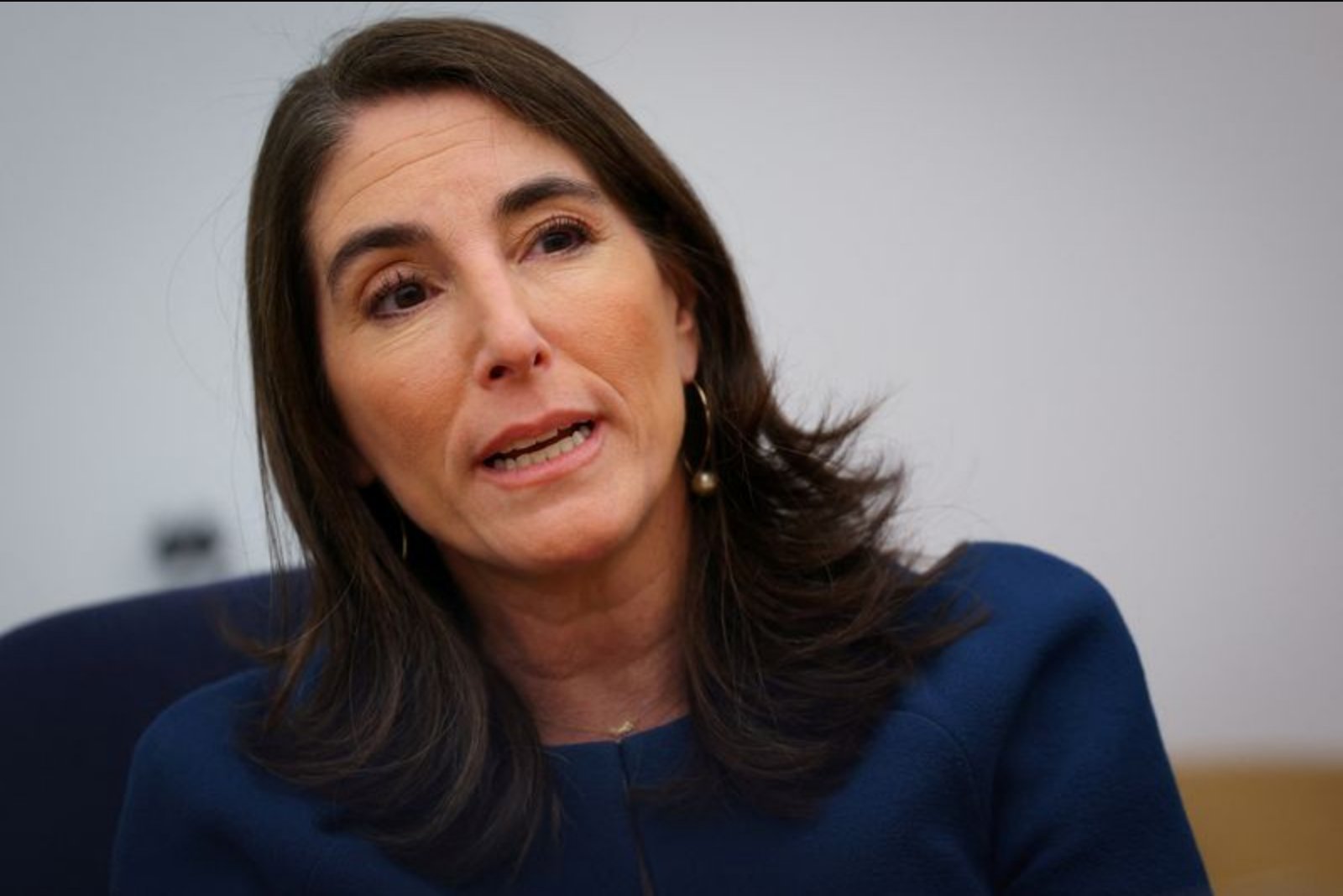
Federal Reserve Bank of Cleveland President Beth Hammack said in a radio interview on Thursday that she anticipates the central bank will maintain its current interest rate setting for an extended stretch as policymakers navigate an uncertain outlook.
"My outlook right now is that interest rates will be on hold for quite some time," Hammack told listeners on the WOSU public radio station, adding that the exact duration of that pause remains unclear. She emphasized the prevalence of uncertainty in her economic outlook, saying, "Based on what I see right now, I see a lot of uncertainty in the economic outlook."
Hammack advocated for measured language in the Fed's public statement to reflect that uncertainty. "I think our statement should have a pretty neutral stance about whether the next move is down or up or just on hold for a really long period of time," she said.
At the Fed's most recent policy meeting, officials held the target range for the federal funds rate at between 3.5% and 3.75%. The committee's statement suggested that when it next changes policy, the move would be to lower rates. Hammack registered a dissent at that meeting over the inclusion of language implying a forthcoming cut.
Her dissent was joined by a number of other officials who objected to that forward guidance, producing what the Fed characterized as the largest number of dissenting votes at a meeting since 1992. In the radio interview, Hammack said she had supported holding rates at that meeting and downplayed the extent of disagreement among policymakers, stating there was more consensus on economic and policy views than the vote tally might imply.
On the labor market, Hammack described conditions as relatively stable and characterized the current dynamic as a "low-hire, low-fire equilibrium." She identified inflation as a continued concern, noting a sustained shortfall relative to the Fed's 2% objective. "We have been missing our 2% objective for the past five years," she said, and cautioned that recent pressures arising from the conflict in Iran "could mean that those pricing pressures are going to be more persistent."
Hammack also said inflation expectations remain largely anchored and that the banking system is performing well at present. Those comments underscore the dual set of considerations - price stability and financial system health - that figure in her assessment of appropriate policy stances.
Her remarks provide a window into one policymaker's thinking as the Fed balances uncertainty, the state of labor markets, inflationary performance relative to long-run goals, and the condition of the banking sector in setting a path for interest rates.