
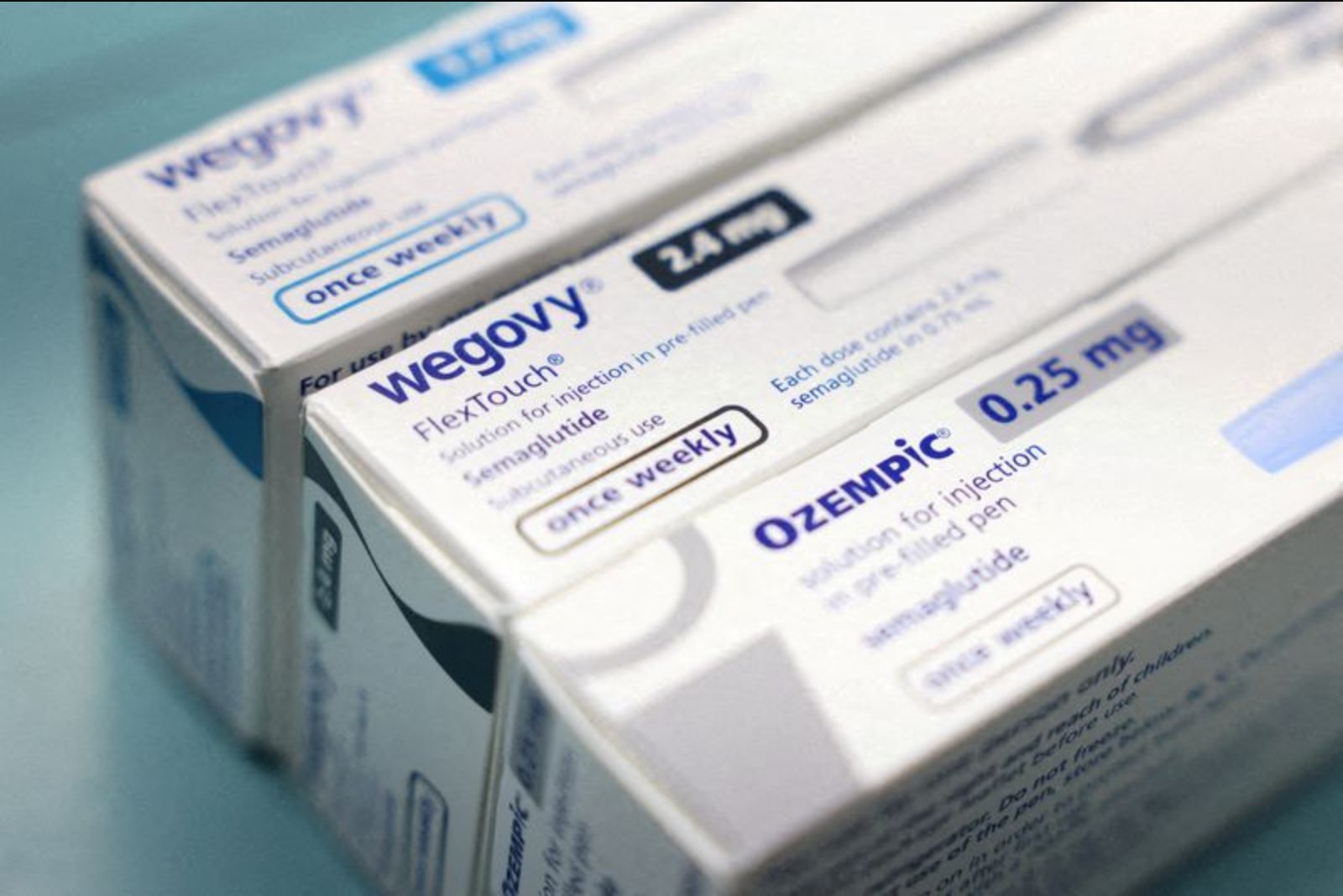
Novo Nordisk is experiencing vigorous early demand for its oral weight-loss pill, but investor focus has shifted to whether surging prescription volumes can offset an increasingly aggressive price war in obesity treatments. The Danish drugmaker reports first-quarter earnings on Wednesday, and market participants will be watching whether the pill can help the company regain lost ground in a market where falling U.S. prices and intensifying rivalry have clouded earlier lofty sales projections.
Those earlier projections envisaged annual global sales as high as $150 billion early in the next decade. Yet that outlook has been questioned amid rapid price erosion in the U.S. and rising competition from rival products. Novo has faced a difficult stretch over the past year, including disappointing trial results for a next-generation obesity candidate, downward revisions to guidance, a leadership change and a sharp decline in its market value - more than $400 billion wiped out since a 2024 peak.
Investors and shareholder groups are treating the current period as a pivotal assessment of Novo’s ability to transition from defense to offense. "We are in the middle of the exam period, let’s put it that way," said Mikael Bak, head of the Danish Shareholders’ Association, which counts about 17,000 members, most of whom hold Novo stock. "What I will be looking for is whether they are increasingly able to go from being rather defensive to being more offensive."
Prescription tracking from research firm IQVIA has shown stronger-than-expected early uptake for the oral Wegovy formulation. BMO Capital Markets analyst Evan Seigerman pointed to roughly 721,000 prescriptions in the U.S. during the first quarter based on those data. Seigerman cautioned that IQVIA’s figures do not capture prescriptions filled through some authorised telehealth providers, meaning total patient counts could be higher.
However, analysts say that the volume story may be disguising weaker revenue trends. Roughly 450,000 of the prescriptions were for the 1.5 mg starter dose, which is priced at $149 per month. BMO Capital Markets has estimated that first-quarter revenue from the pill could come in about 12% below the analyst consensus of roughly $1 billion.
Barclays analyst James Gordon described the launch as having exceeded expectations on a headline basis, but he flagged uncertainty about how dosing patterns might evolve. "The initial launch has gone better than people thought," Gordon said. "But are some people just starting on the cheap low dose and staying on it because it’s cheaper and they don’t need the higher efficacy and cost delivered by higher doses? There are still quite a lot of moving parts, even before Lilly’s competing oral product makes an impact."
Clinical practice typically involves beginning treatment at a lower dose and titrating upward over months as patients adapt. If a substantial fraction of patients remain on the starter dose for longer than anticipated - or discontinue therapy - headline prescription growth would not necessarily produce commensurate revenue growth.
Gordon observed that prescriptions for the starter 1.5 mg dose had plateaued, while uptake of higher-dose prescriptions has lagged relative to what would be expected if most patients were moving on after a month. He suggested that the most plausible explanations are a combination of patients remaining on the cheaper dose for an extended period and others dropping off treatment entirely.
Novo Nordisk declined to comment during the regulatory quiet period ahead of its earnings release.
Competition in the oral obesity-pill space shifted markedly in early April when Eli Lilly secured U.S. approval for its oral contender, Foundayo, ending Novo’s position as the only company with an oral option on the U.S. market. The head-to-head dynamic matters greatly to investors evaluating market share, pricing and margin trajectories.
In what could be viewed as a constructive sign for the sector, Lilly last week reported first-quarter results that beat expectations, a performance that lifted shares of both Lilly and Novo. Lilly’s quarterly strength was attributed in part to strong volume growth for its weight-loss and diabetes medicines Zepbound and Mounjaro.
Stakeholders and shareholders are divided on what to expect from Novo’s guidance. Some investors anticipate that Novo will maintain its full-year outlook as the company gathers more information about post-launch dynamics and the competitive response. Two investors indicated they expect Novo to raise the lower bound of its guidance, while others remain cautious and want to see clearer evidence of revenue resilience.
Investor Lukas Leu praised the rapid uptake of the oral pill but warned that intensifying price pressures and policy moves aimed at lower drug costs could erode revenue potential. "The launch is definitely strong - I think no one wants to debate about that," Leu said. "What we don’t know yet is whether it will compensate Novo for the price decline, which is faster."
For some shareholders, comparisons with Eli Lilly extend beyond the commercial launch to perceptions of strategic momentum in pipeline progression and dealmaking. Anders Schelde, representing Novo shareholder AkademikerPension, described early signs as preliminary and stressed that it remains early to judge whether recent progress will be sufficient. "We see early but preliminary signs of progress. But it is still early stage - the future will show whether it is actually enough," Schelde said.
Analysts and investors will be parsing Novo’s upcoming quarterly report for concrete data on prescription mix, revenue per prescription and any commentary on competitive pricing pressure. The combination of strong initial demand and rapid price declines has produced a complicated picture in which volume growth, dose-mix shifts and payer or policy actions will together determine whether the pill can restore lost market value.
Summary
Novo Nordisk’s new oral Wegovy pill has seen faster-than-expected prescription uptake in the U.S., but heavy use of low-cost starter doses, incomplete prescription-tracking coverage and renewed competition from Eli Lilly’s oral product have raised questions about whether volume will offset pricing declines. Investors await Novo’s quarterly results for clearer evidence on revenue and competitive positioning.
Key points
- Early prescriptions for Novo’s oral Wegovy exceeded expectations, with IQVIA-tracked data showing about 721,000 U.S. prescriptions in Q1.
- Significant usage of the 1.5 mg starter dose - about 450,000 prescriptions at $149 per month - may mute revenue despite strong volume growth.
- Eli Lilly’s U.S. approval of an oral rival has created direct head-to-head competition and coincided with strong Q1 results for Lilly, complicating investor comparisons between the two companies.
Risks and uncertainties
- Price pressure risk: Rapid declines in U.S. prices for obesity drugs could erode revenue even if prescription counts rise - impacting pharmaceutical revenues and healthcare margins.
- Dose-mix uncertainty: A slower-than-expected transition from starter to higher doses would reduce average revenue per patient - affecting drugmakers and payers in the obesity and diabetes treatment markets.
- Data coverage limitations: IQVIA tracking excludes some authorised telehealth providers, leaving uncertainty about the full patient population and complicating revenue forecasting - influencing investor confidence and valuations.