
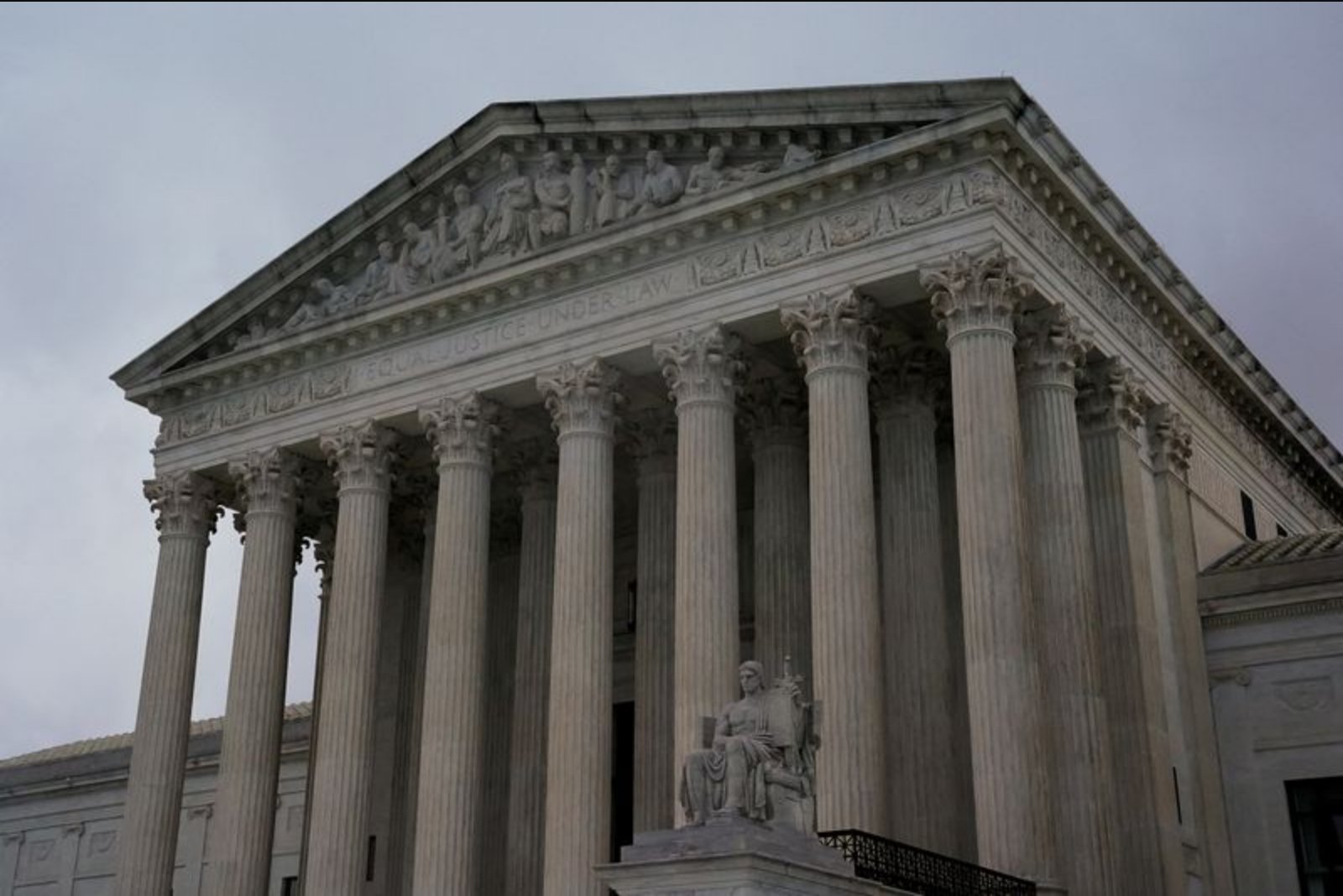
The U.S. Supreme Court's recent decision that weakens a landmark voting rights law substantially reduces judicial limits on partisan mapmaking, opening the possibility that Republican-controlled legislatures will redraw majority-Black and majority-Latino U.S. House districts held by Democrats across the South. Legal experts and voting-rights advocates warn the shift could give Republicans an electoral edge that persists into the next presidential cycle.
Wednesday's ruling amplified an ongoing national contest over congressional maps that intensified last year when President Donald Trump spearheaded an unusual mid-decade redistricting effort aimed at protecting a narrow Republican House majority ahead of this November's midterm elections. Traditionally, states update district lines only at the start of each decade to reflect the U.S. Census; the court's decision strips away a layer of judicial scrutiny that had historically constrained state legislators from marginalizing voters of color when drawing those lines.
Legal observers say the change is likely to trigger another round of retaliatory mapmaking that could extend into the 2028 election cycle. Whether statehouses will attempt to impose new electoral maps before November remains uncertain. Lawmakers face compressed timelines: many states are already well advanced in their 2026 election calendars, with candidate filing deadlines passed and primaries approaching.
That timing is material in several states where Republican legislatures might be expected to move quickly. In Georgia and Alabama, for example, voters have already begun casting early ballots ahead of the May 19 primary elections. Louisiana presents its own complications. The state's congressional map was at the center of the Supreme Court case, but lawmakers there confront significant practical barriers to altering district boundaries. Candidates have been fundraising and campaigning for months, absentee ballots have been mailed, and early voting is set to begin on Saturday for the May 16 primary.
In court filings, Louisiana's top election official had asked the court to issue a ruling no later than early January to provide sufficient time to prepare for the state's elections. The compressed timeline has drawn criticism from voting-rights advocates. "It is very late in the cycle to make changes to maps," Danielle Lang, vice president for voting rights at the nonpartisan Campaign Legal Center, said. "It would be enormously disruptive and chaotic."
House Speaker Mike Johnson, a Louisiana Republican, told reporters the path forward was not yet clear. "We have, as you know, a primary coming up in about two weeks," he said. "So we'll see if the state legislature deems it appropriate to go in and draw new maps."
Even if state legislatures defer action until after this November's elections, the decision creates the conditions for a broader partisan fight over district lines. Republicans appear positioned to target as many as a dozen Democratic-held districts with majority Black or Latino populations ahead of the 2028 presidential election, according to observers who have tracked the political implications. Democrats could respond in states they control by dismantling majority-minority districts and redistributing voters - a strategy aimed at diluting concentrations of Democratic voters.
Advocates say that dynamic would reduce the ability of racial minority communities to elect candidates of their choice. Janai Nelson, president of the Legal Defense Fund and the attorney who argued the case before the Supreme Court on behalf of Black voters in Louisiana, said it was too early to know whether states would immediately move to redraw maps but emphasized that state legislatures possess broad authority to alter election rules and boundaries. "This is a day of infamy for the court," she told reporters. "It is a day of devastation for our democracy."
The ruling has intensified a national redistricting struggle that began last summer when Trump persuaded Texas Republicans to adopt a new congressional map designed to unseat five Democratic incumbents. That initiative set a precedent that both Republican- and Democratic-led states have since used to justify mid-cycle changes. The Supreme Court's decision came as Florida Republicans were debating a partisan map drafted by Governor Ron DeSantis, a plan intended to flip four Democratic seats in November; the legislature moved to approve that map shortly after the court's announcement.
States are already permitted to draw maps with partisan objectives - a practice known as gerrymandering - following a 2019 Supreme Court ruling that limited federal courts' ability to police partisan advantage. The latest decision further reduces the constraints on how state legislatures can reconfigure districts for political advantage.
Experts warn the ruling risks making an already volatile redistricting environment more chaotic. "The court has just added more chaos to a system that's already chaotic," said Kareem Crayton, a redistricting expert at the Brennan Center for Justice. Danielle Lang added that the combination of mid-cycle redistricting efforts and the court's ruling could erode institutional guardrails, turning voters into "pawns in a set of political games instead of being the decision-makers themselves."
The immediate practical effect of the ruling depends on whether state legislatures choose to act quickly amid packed election schedules. Where changes are attempted late in the cycle, election administrators, candidates, and voters could face significant disruption. Where legislatures wait, the ruling still alters the strategic landscape of redistricting, creating incentives for both parties to pursue aggressive mapmaking in states where they hold power.
For now, the ruling has reopened contentious debates over the balance between partisan strategy and the protection of minority voting strength, while setting the stage for continued legal and political battles over congressional maps in the years ahead.