
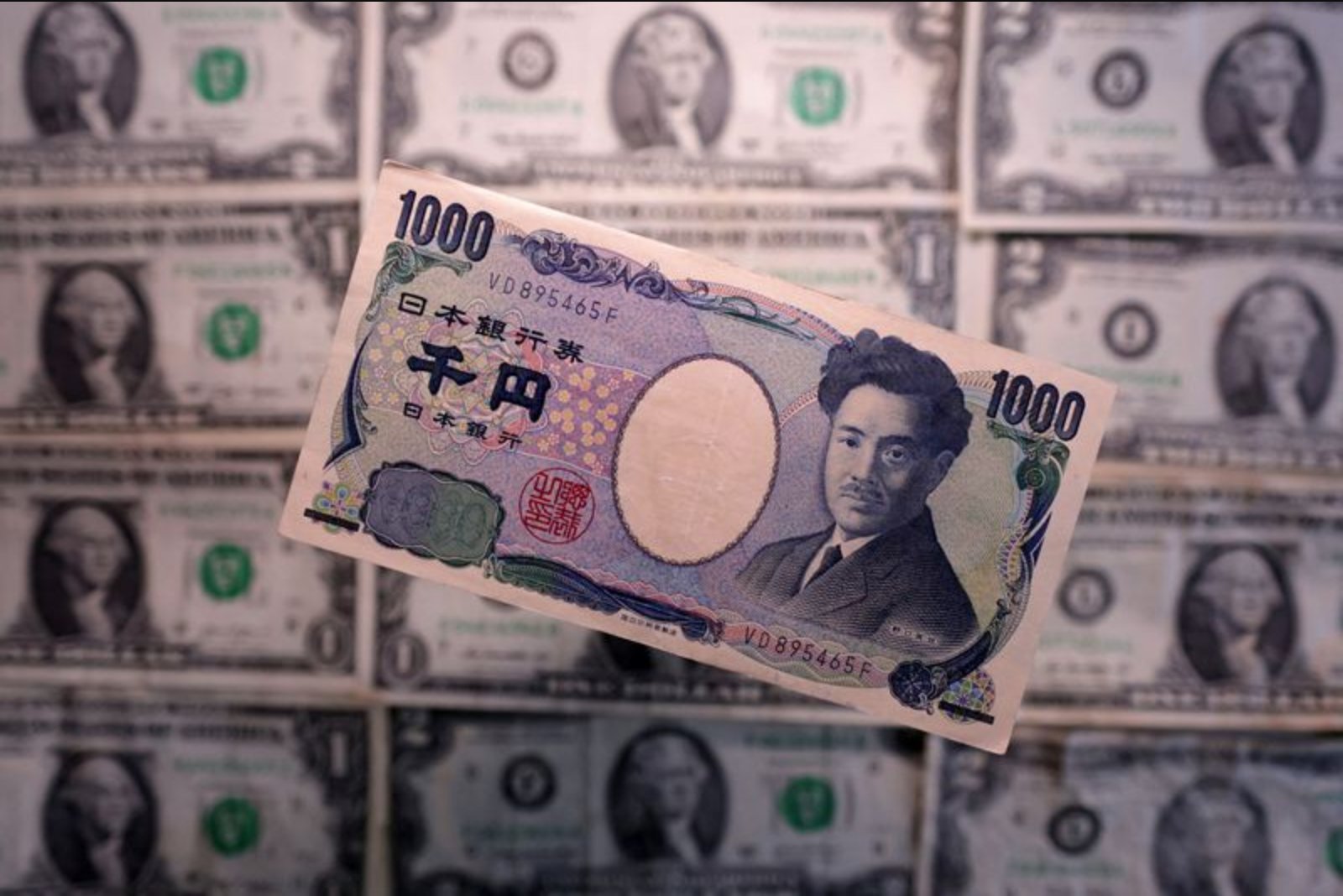
Foreign exchange markets were broadly cautious on Tuesday as traders weighed suspected Japanese intervention, renewed hostilities in the Middle East and a key policy decision from the Reserve Bank of Australia (RBA).
The yen remained near recent highs, trading at 157.22 per U.S. dollar, after several sharp gains beginning last Thursday when reports circulated that Tokyo had entered the market to counter a rapid selloff. That sequence of moves, together with data suggesting roughly $35 billion of Tokyo spending to support the currency, left the yen close to its strongest point in two months.
Market participants noted, however, that those measures are unlikely to reverse the currency's long-run pressures. The yen has been under strain for years due to Japan's ultra-low interest rates and widening yield gaps with other developed economies, compounded by growing fiscal concerns. The energy shock stemming from the Middle East conflict has added further burden on the currency.
Across currencies, the U.S. dollar found support as investors sought shelter amid heightened geopolitical risk. The euro was trading around $1.1693 after earlier losses, while sterling was unchanged at $1.353. The dollar index, which tracks the U.S. currency against six peers, was steady at 98.452 following a 0.3% gain on Monday.
The Australian dollar was little changed at $0.7168 as markets awaited the RBA decision later in the day. The central bank is widely expected to raise rates for the third consecutive meeting in an effort to rein in inflation. Traders will be looking closely at the RBA's tone and guidance for the path of future policy.
Inflation dynamics are central to the RBA's stance. Inflation has been above the RBA's 2%-3% target band since mid-2025, prompting the central bank to begin lifting rates from early February. Against that backdrop, the bank's messaging on the persistence of inflation and the likely number of additional hikes is likely to influence currency and rate markets.
Global inflation worries have intensified since the closure of the Strait of Hormuz, a crucial shipping lane that carries roughly one-fifth of global oil flows. That disruption helped push crude prices largely above $100 a barrel after the late-February outbreak of war in the region. Fresh strikes by U.S. and Iranian forces in the Gulf on Monday rattled markets, testing a fragile truce and keeping investor risk appetite subdued.
Brent futures traded at $113.8 per barrel in early deals, down 0.6% after a 6% rise on Monday. Market strategists warned that renewed escalation could drive oil prices materially higher and weigh on risk assets.
"While we have seen a clear shift toward risk aversion, we are yet to see the kind of outsized moves that would likely accompany a full escalation in hostilities," said Nick Twidale, chief market strategist at ATFX Global in Sydney. He added that the situation remains highly fluid and that further escalation could push oil prices sharply higher and weigh on risk assets.
On the yen, analysts said suspected intervention has narrowed the immediate trading range but has not altered the fundamental short-yen, carry-driven pressures.
Deepali Bhargava, regional head of research for Asia-Pacific at ING, said the suspected intervention has merely recalibrated the near-term dollar-yen trading range and does little to change the underlying short-yen, carry-driven pressures.
Monday's brief yen spike revived talk of intervention, particularly after officials warned last week they could act during the Golden Week holidays. Japan's markets are on holiday until Wednesday, leaving thinner trading conditions that can amplify moves. Traders and policymakers are mindful that the 160 level is politically sensitive, and even modest moves in thin Asian trade can trigger outsized short-covering.
"Near term, USDJPY may stay volatile in a wider 155-160 range, with authorities likely leaning against a clean break above 160 rather than engineering a durable yen reversal," said Charu Chanana, chief investment strategist at Saxo.
The yen's trajectory is also linked to the path of oil prices and the duration of the Middle East conflict. "A lot hinges on oil price," said Vasu Menon, managing director of investment strategy at OCBC. He noted that if oil rises or stays elevated, the yen could come under renewed pressure.
With geopolitics driving risk sentiment and central banks responding to persistent inflation, market participants will be watching both energy markets and policy pronouncements for clues to currency and asset price direction in the near term.