
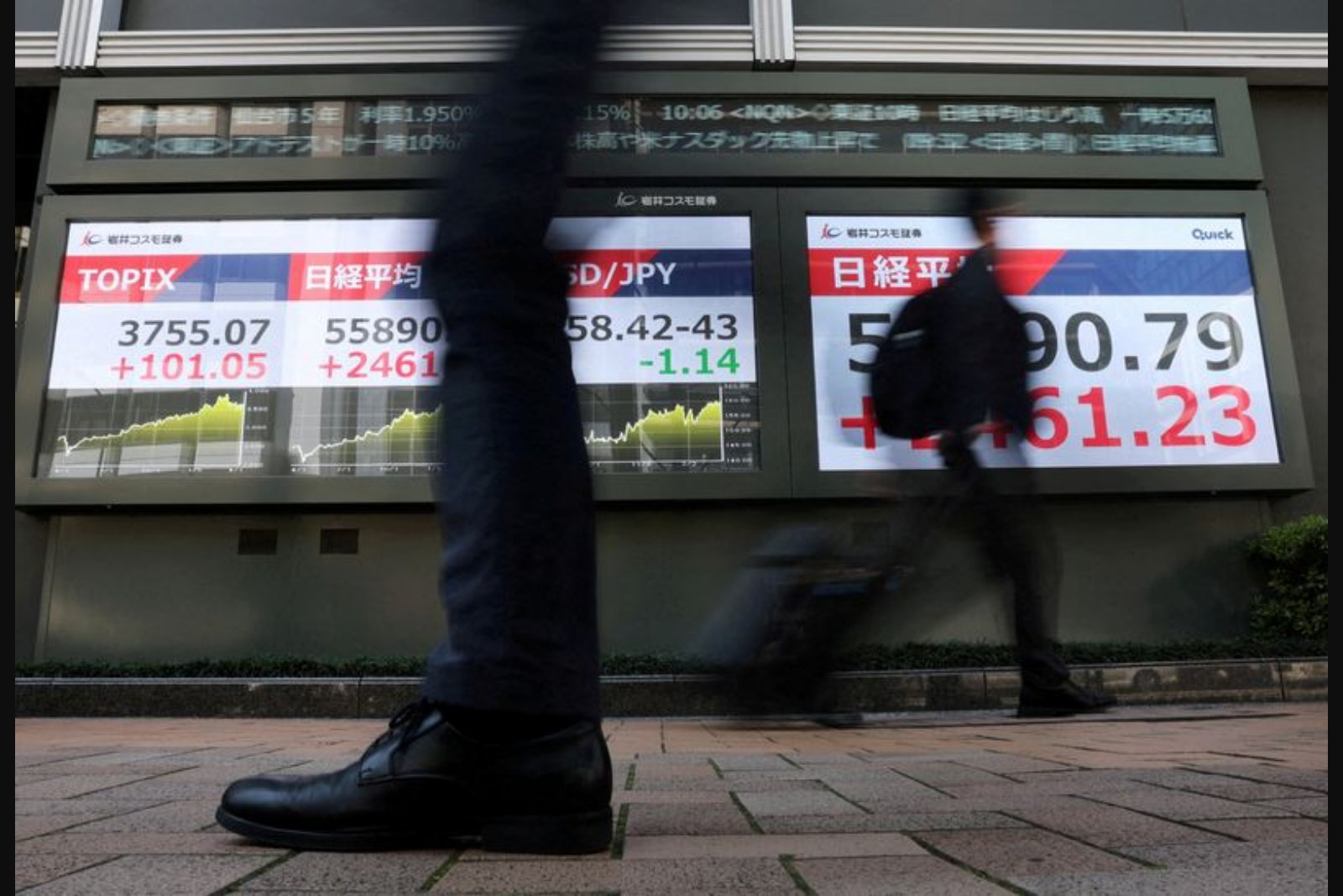
Asian shares drifted lower on Tuesday as fresh hostilities between the United States and Iran in the Gulf and persistent risks to maritime traffic through the Strait of Hormuz weighed on investor sentiment. Oil prices retreated from a prior session's spike but remained materially elevated above the $100-per-barrel mark.
Market moves and liquidity
MSCI’s broadest index of Asia-Pacific shares outside Japan fell 0.3% as regional markets absorbed the geopolitical developments. Australian equities declined 0.4% in a session described as thinned Asia trade, while trading was halted in Japan and South Korea for public holidays.
U.S. equity futures were softer: Nasdaq futures and S&P 500 futures each eased by roughly 0.1%. European futures also traded lower, with EUROSTOXX 50 futures down 0.2% and FTSE futures off about 0.75%.
Gulf confrontations and shipping
The United States and Iran exchanged attacks in the Gulf on Monday as each side sought to assert control over the Strait of Hormuz, deploying competing maritime blockades. The confrontations followed a U.S. initiative aimed at escorting stranded tankers and other commercial vessels through the strategic chokepoint.
Maersk said that the Alliance Fairfax, a U.S.-flagged vehicle carrier run by its Farrell Lines unit, left the Gulf via the Strait of Hormuz on Monday under the escort of U.S. military assets. Market participants said the renewed clashes rattled sentiment and underscored that the wider Middle East war remains unresolved.
"We started yesterday with high hopes that operation 'Project Freedom' would be, I guess, a success on the ground, that it was being pitched as more of a humanitarian effort," said Tony Sycamore, a market analyst at IG. "But as we saw, the Iranians weren’t taking that bait at all... It really signifies that the stalemate remains in place, it’s been a very shaky start."
Energy markets
After jumping in the previous session on heightened disruption fears, oil prices cooled but stayed elevated. Brent crude futures eased 0.5% to $113.85 a barrel, while U.S. crude fell 1.3% to $105.03. The declines followed a session where supply concerns had pushed prices higher.
Corporate results and earnings backdrop
Beyond geopolitics, investors were positioning ahead of several corporate earnings reports due this week. Advanced Micro Devices and Pfizer were among the companies scheduled to publish results later in the day.
Data compiled by S&P Global Market Intelligence showed that among S&P 500 constituents that have already reported, 83% exceeded earnings-per-share estimates and 78.2% topped revenue forecasts. Jeff Buchbinder, chief equity strategist at LPL Financial, noted that continued AI-driven spending should remain a key driver of S&P 500 earnings growth, with the technology sector the primary beneficiary.
Currency moves and intervention watch
The yen was last quoted near 157.22 per dollar after a brief surge on Monday took the currency to an intraday high of 155.69. That short-lived strength prompted renewed attention on the possibility of intervention from Japanese authorities.
Japanese Finance Minister Satsuki Katayama publicly criticized speculative foreign-exchange moves on Monday, a comment that kept markets alert to further intervention after sources said Tokyo stepped in to support the yen on Thursday. Abbas Keshvani, Asia macro strategist at RBC Capital Markets, said authorities could again intervene if the dollar/yen rate pressed toward 160, a level historically defended by Tokyo. He added that, based on prior episodes, intervention is more likely to act as a cap on USD/JPY than to spark sustained yen appreciation.
Other currencies and central bank focus
The Australian dollar eased 0.06% to $0.7163 as markets braced for the Reserve Bank of Australia’s interest rate decision later in the day, where a hike was widely anticipated. The U.S. dollar strengthened on safe-haven flows amid the regional tensions.
Attention this week also centers on a stream of U.S. economic releases that could influence Federal Reserve policy expectations, most notably April’s nonfarm payrolls report on Friday. Consensus forecasts pointed to a gain of 62,000 jobs in April, following an outsized 178,000 increase in March, though analysts noted seasonal-adjustment issues that add uncertainty to the headline number.
Markets currently priced a scenario in which the Fed leaves its policy interest rate on hold for the rest of the year, citing ongoing inflationary pressure tied to the global energy shock.
Precious metals
Spot gold ticked up 0.2% to $4,529.19 an ounce, remaining comfortably within the recent trading range.
Investors continued to balance geopolitical risk in the Gulf, currency volatility tied to potential FX intervention, and an active corporate reporting calendar as the main forces shaping market flows.