
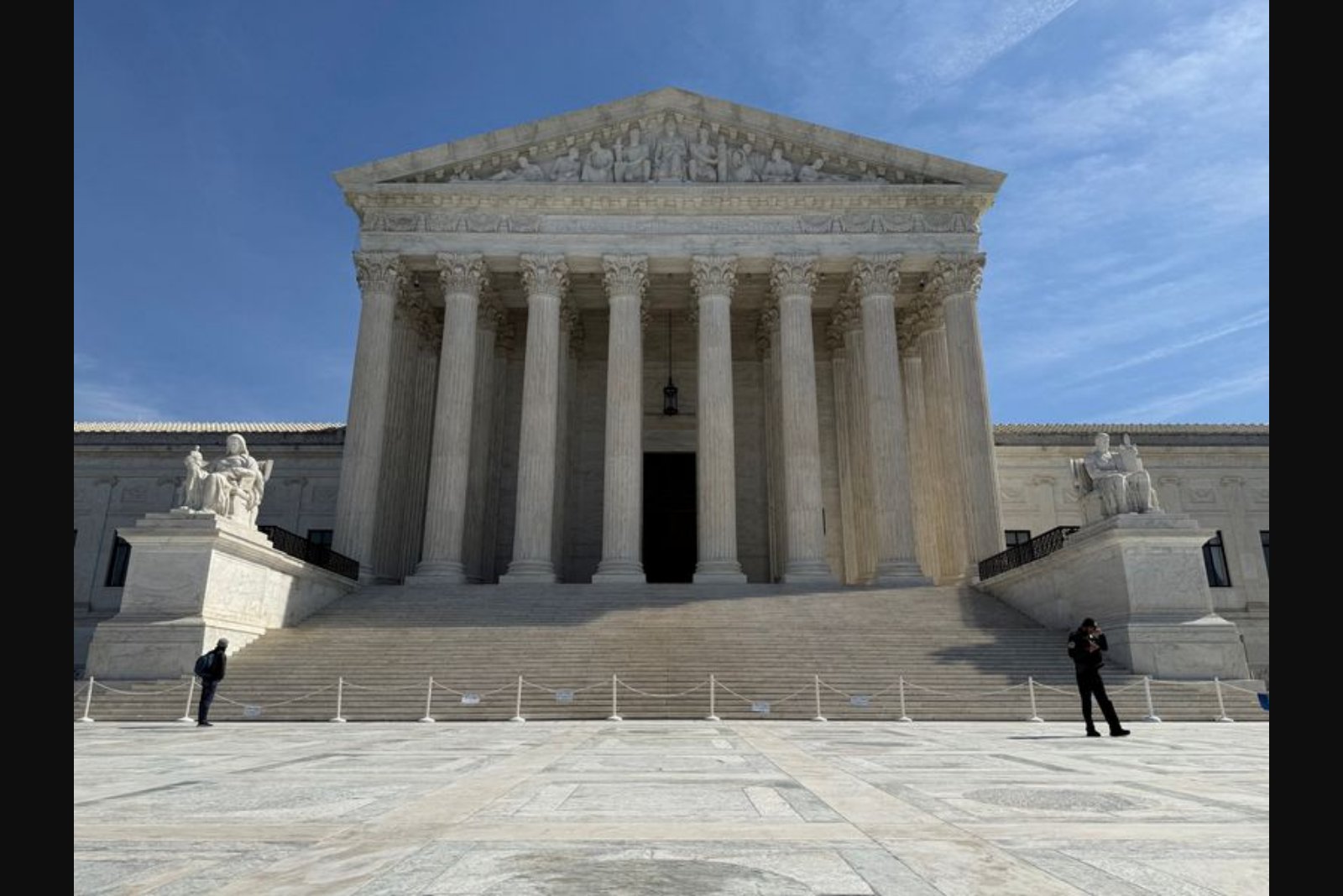
The U.S. Supreme Court on Wednesday sided with challengers to a Louisiana congressional map that had created a second district with a Black majority, upholding a lower court ruling that the map was unlawfully race-conscious. The court's 6-3 decision preserves the three-judge panel's finding that the Legislature's redistricting placed undue emphasis on race in a manner that ran afoul of the equal protection guarantee.
The dispute unfolded after Louisiana's Republican-controlled legislature adopted a post-2020 census map that initially included a single Black-majority U.S. House district. Black residents constitute roughly one-third of the state's population, and Black voters in Louisiana tend to support Democratic candidates. Following the legislature's map, a group of Black Louisiana voters filed suit, and a federal judge determined the adopted map likely harmed Black voters in violation of Section 2 of the Voting Rights Act.
In response to that ruling, the state legislature drew a revised map that added a second Black-majority district. That redrawn map prompted a separate lawsuit brought by 12 Louisiana voters who described themselves in court filings as "non-African American." Those plaintiffs argued that the addition of a second Black-majority district unlawfully diluted the influence of non-Black voters like them. A three-judge federal panel examined the plan and, in a 2-1 decision, concluded the new map placed too great a weight on race and therefore violated the equal protection principle. The state appealed, and the matter reached the Supreme Court.
The case implicates Section 2 of the Voting Rights Act, a provision enacted by Congress to prevent electoral maps that would dilute minority voting power even in the absence of explicit racial hostility. Section 2 has been a central tool in challenges to district lines, particularly after the Supreme Court's 2013 ruling that curtailed a distinct part of the Voting Rights Act aimed at requiring preclearance for certain jurisdictions. Legal observers had warned prior to the high court's decision that moves to narrow the reach of Section 2 could carry partisan effects, a point noted by analysts who said undercutting Section 2 might advantage Republican candidates. The Republican Party is aiming to defend narrow majorities in the U.S. House of Representatives and the Senate in the November congressional elections.
The Supreme Court's conservative majority, which stands at 6-3, has previously reshaped key elements of voting litigation. The court in 2013 struck down a separate Voting Rights Act obligation that had required jurisdictions with certain records of discrimination to obtain federal approval before changing voting rules. Yet in 2023 the court ruled 5-4 that a Republican-drawn map in Alabama violated Section 2 and required an additional Black-majority congressional district, a decision that drew an atypical alignment with Chief Justice John Roberts and Justice Brett Kavanaugh joining the three liberal justices.
Procedurally, the Louisiana case had an unusual trajectory. The Supreme Court first heard arguments in March 2025 but declined at that time to resolve the matter, instead ordering an additional round of arguments. The court heard the case again in October 2025. Louisiana initially appealed the three-judge panel's ruling and in March had aligned with the Black voters challenging the original map. The state later reversed course, urging the justices to limit or eliminate race-conscious redistricting as a remedy for a Section 2 violation.
The Trump administration filed briefs supporting the challenge to the map, arguing for a higher threshold to prove a Section 2 violation. The administration's position sought to narrow the circumstances in which race-conscious remedies could be used in redistricting disputes.
Context and implications
The court's decision leaves in place the three-judge panel's determination that the map's designers relied too heavily on race. That finding prevented the new map from taking effect, at least as long as the Supreme Court's ruling stands. The dispute is part of a broader, nationwide contest over how electoral boundaries are drawn and the legal standards courts will apply when assessing whether maps unlawfully account for race.
The case highlights tensions between competing legal principles: the Voting Rights Act's aim to protect minority voting power under Section 2, and the constitutional prohibition on race-based governmental classifications under the equal protection guarantee. How courts balance those principles determines both the available remedies for discriminatory maps and the permissibility of using racial data in designing districts.
Legal pathway to the Supreme Court
The litigation sequence began with a federal judge finding the legislature's initial map likely violated Section 2. After the legislature adopted a remedial map adding a second Black-majority district, non-Black voters brought a new suit asserting that the remedial map itself was constitutionally infirm because it subordinated traditional districting criteria to race. The three-judge panel agreed with those plaintiffs by a 2-1 vote, and the state appealed to the Supreme Court, which has now sustained the lower-court ruling.
The decision marks another significant point in the evolving jurisprudence over race-conscious redistricting and the scope of Section 2 remedies, and it leaves unresolved broader questions about when and how race may be considered in drawing districts.