
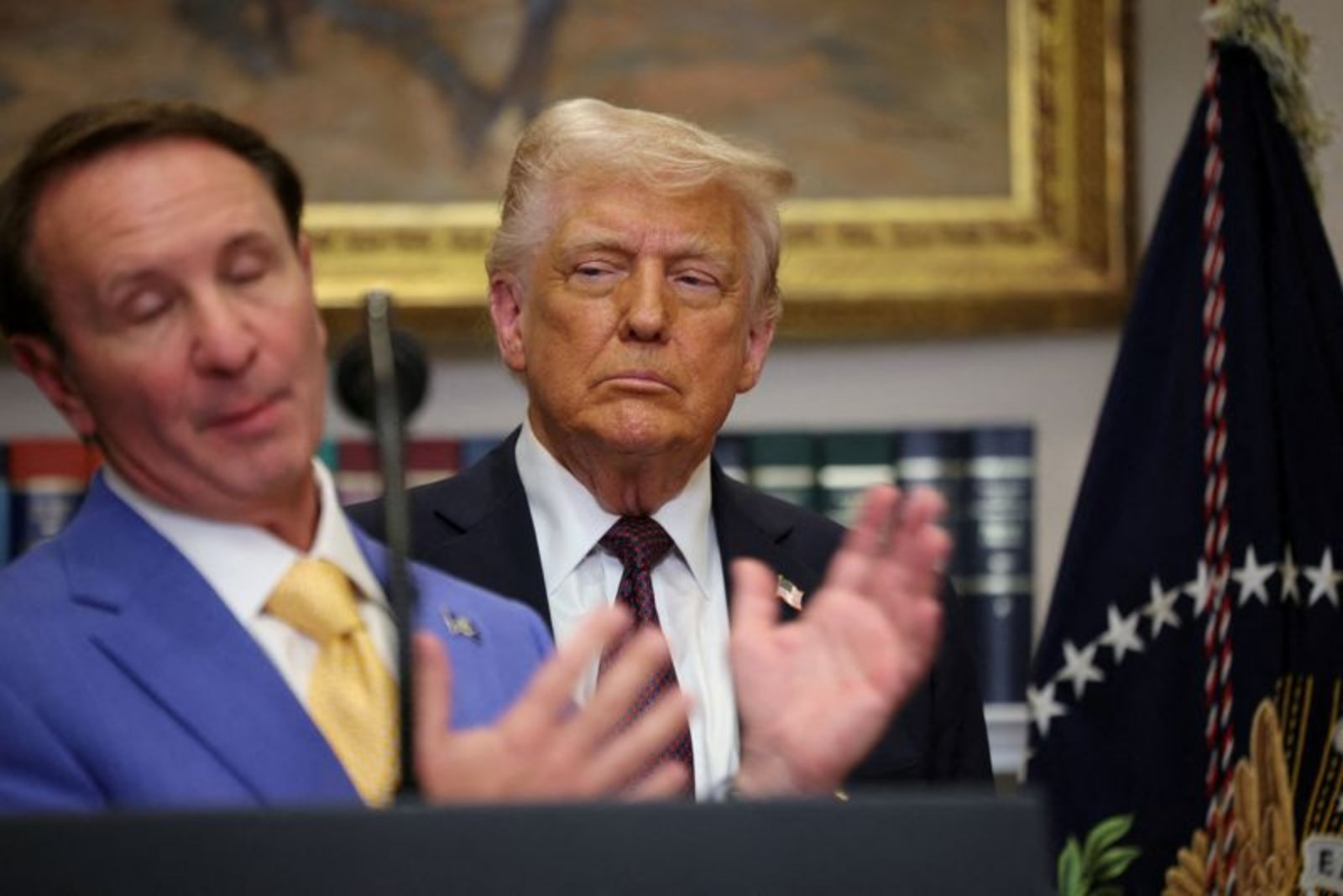
Republican Louisiana Governor Jeff Landry on Thursday moved to suspend the state's scheduled May 16 congressional primary, issuing an executive order that halts the nominating contests for the U.S. House of Representatives until at least July 15 or until another date is fixed by the Republican-controlled state legislature. The action came a day after the U.S. Supreme Court found Louisiana's congressional map unlawful and significantly weakened a major provision of the Voting Rights Act.
Landry cited an "election emergency of unconstitutional maps" in the executive order. The pause occurs two days before early voting was to begin and gives the state legislature an opportunity to redraw the six-district map. That effort could remove at least one seat currently held by a Democratic member of Congress, and possibly two, altering the partisan makeup of Louisiana's congressional delegation ahead of the November midterm elections.
The Supreme Court struck down the map that had delineated the state's six U.S. House districts. The legislature's most recent map had included a second majority-Black district after a judge ruled that an earlier plan, which contained only one majority-Black district, unlawfully disadvantaged Black voters under the Voting Rights Act.
The high court's 6-3 decision came from its conservative majority. The ruling also weakened a central provision of the Voting Rights Act that had long guided how districts were drawn in many states to protect minority voters' ability to elect representatives of their choice. Black residents comprise roughly one third of Louisiana's population, and the two current majority-Black congressional districts are both represented by Black Democrats; the state's remaining four incumbents are white Republicans.
House Speaker Mike Johnson, a Republican from Louisiana, said earlier on Thursday that Landry had "no choice" but to suspend the election in light of the court's decision. The suspension and the prospect of a new map will disrupt campaigns that have been active for months: candidate filing closed on February 13, and mail-in ballots for overseas voters were dispatched weeks ago.
The executive order specifies that other primary contests will proceed as scheduled. Notably, the Republican U.S. Senate primary in Louisiana - a competitive race between incumbent Bill Cassidy and U.S. Representative Julia Letlow, who has the endorsement of former President Donald Trump - will continue according to the state order.
Beyond Louisiana, the Supreme Court ruling creates the potential for Republican-led states in the South to challenge and alter a number of Democratic-held districts that encompass predominantly Black and Latino populations. The ruling could enable the dismantling of as many as a dozen such districts, according to assessments noted in the court's aftermath. Many of those districts have historically delivered support for Democratic candidates.
How extensively the decision will affect this year's midterm elections is unclear, in part because many states already are well along in their electoral preparations. Earlier on Thursday, former President Trump said he had discussed drawing a new map in Tennessee with Governor Bill Lee that would target the state's only Democratic seat, a majority-Black district centered on Memphis.
Legal and political observers say the court's ruling makes it likely that Republican lawmakers in several states will pursue new congressional maps ahead of the 2028 election cycle. The redistricting battles follow a broader multistate effort that intensified last year, when former President Trump initiated an uncommon mid-decade push to redraw maps in Republican-led states, beginning with Texas.
Summary
Governor Landry suspended Louisiana's May 16 congressional primary after the U.S. Supreme Court invalidated the state's six-district map and curtailed a key Voting Rights Act provision. The executive order delays House nominating contests until at least July 15 or until the legislature sets a date, allowing lawmakers to redraw districts that could eliminate at least one Democratic-held seat.
Key developments
- The Supreme Court struck down Louisiana's congressional map in a 6-3 decision, weakening a major provision of the Voting Rights Act.
- Governor Landry issued an executive order citing an "election emergency of unconstitutional maps," pausing the May 16 House primaries until at least July 15 or until a date set by the legislature.
- Other primaries, including the Republican U.S. Senate contest between Bill Cassidy and Julia Letlow, are to proceed as scheduled.
Key points
- Political - The map change gives the Republican-led state legislature a window to redraw districts that could reduce the number of Democratic-held U.S. House seats in Louisiana, with implications for the national balance of power ahead of November's midterms.
- Electoral process - The suspension disrupts campaigns that have been underway for months, with candidate filings closed on February 13 and overseas mail-in ballots already sent.
- Legal landscape - The Supreme Court decision removing a central provision of the Voting Rights Act may prompt similar map challenges and redistricting efforts across Republican-controlled states in the South.
Risks and uncertainties
- Timing and logistics - With many states already advanced in their election calendars, it is uncertain how broadly and rapidly other states can or will redraw maps, creating planning and operational risks for election administration and campaigns.
- Political balance - The potential elimination of Democratic-held districts in Louisiana and elsewhere could shift competitive dynamics for the U.S. House, affecting investor attention on policy uncertainty ahead of the midterms.
- Legal follow-up - The long-term effects of the Supreme Court's weakening of the Voting Rights Act provision are unclear, leaving an open question about subsequent litigation and legislative responses.