
Politics April 29, 2026 03:03 PM

Federal Prosecutors to Drop Felony Conspiracy Count in Chicago Immigration Protest Case

Four defendants will retain misdemeanor charges after prosecutors remove the single felony count tied to a September demonstration at Broadview detention center

By Maya Rios
Federal Prosecutors to Drop Felony Conspiracy Count in Chicago Immigration Protest Case

Federal prosecutors in Chicago have informed defense attorneys they will dismiss the main conspiracy charge against four people accused of obstructing a federal agent during a September protest at a Broadview, Illinois, detention facility. The defendants will continue to face misdemeanor counts of impeding a federal officer; two other co-defendants previously had all charges dropped.

Key Points

  • Prosecutors plan to drop the conspiracy count - the only felony charge - against Kat Abughazaleh, Andre Martin, Michael Rabbitt and Brian Straw, leaving misdemeanor impeding charges in place.
  • Two other initially indicted individuals, Catherine Sharp and Jocelyn Walsh, had their charges dropped last month.
  • Sectors potentially affected by the case and unrest include local government and public safety, as well as legal services and related municipal policies tied to immigration enforcement.

Federal prosecutors in Chicago told defense counsel at a court hearing on Wednesday that they intend to withdraw the principal conspiracy count leveled against four individuals arrested after a protest at a federal detention facility in Broadview, Illinois, in late September.

The conspiracy charge was the only felony allegation against Kat Abughazaleh - a former journalist and one-time candidate for the U.S. House - and her co-defendants Andre Martin, Michael Rabbitt and Brian Straw, defense attorney Chris Parente said. With the conspiracy count removed, the four defendants will still face misdemeanor charges of impeding a federal officer, according to Parente.

The four have at times been identified collectively as the "Broadview Six" in reference to the demonstration at the detention center; two other individuals who had been indicted alongside them, Catherine Sharp and Jocelyn Walsh, had their charges dismissed entirely last month.

"The conspiracy charge was the most serious count, and it’s the most troubling because it was intended to silence dissent," Parente said. He represents Brian Straw.

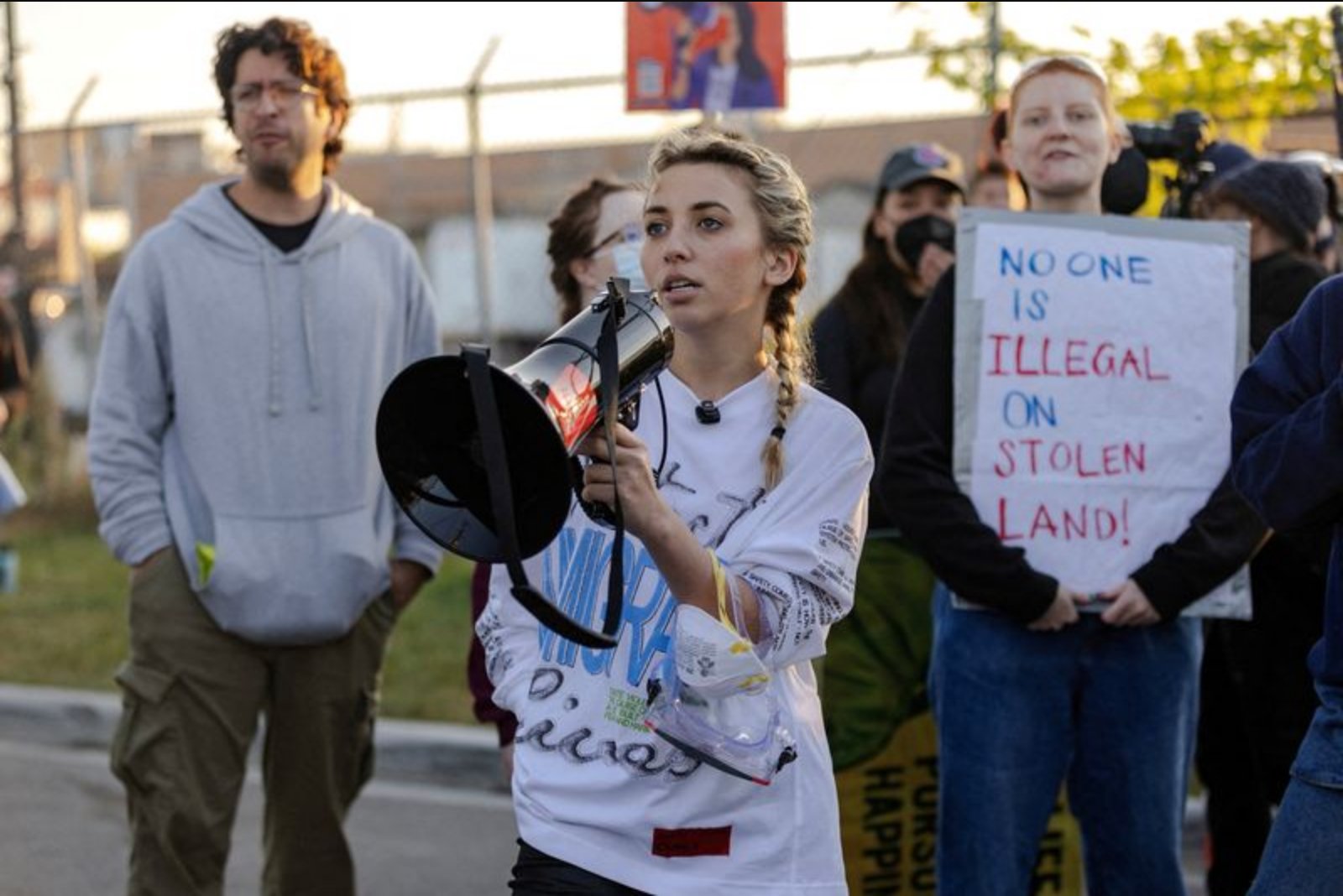
Prosecutors allege that Abughazaleh, Martin, Rabbitt and Straw crowded around a government vehicle operated by a federal agent, deliberately blocking the vehicle's movement as the agent attempted to enter the Broadview facility during the September 26 protest. Those allegations form the basis of the misdemeanor impeding counts that remain pending.

The protest occurred amid a wider federal immigration enforcement initiative known as Operation Midway Blitz. The enforcement surge prompted demonstrations across Chicago that drew residents, candidates and elected officials. During the events, federal agents shot two people - one of whom died - and used tear gas, pepper spray and rubber bullets against protesters. The Broadview facility emerged as a focal point of confrontation during the operation.

A spokesperson for the Chicago U.S. Attorney’s Office did not immediately respond to a request for comment.


Legal proceedings will continue on the remaining misdemeanor counts. The decision to remove the conspiracy charge eliminates the sole felony exposure for the four defendants but leaves unresolved the misdemeanor allegations tied to the September protest and the agents' attempt to access the detention facility.

Risks

  • Ongoing legal uncertainty for the defendants as misdemeanor impeding charges remain active; this affects the individuals involved and the local legal system.
  • Public unrest and enforcement tactics highlighted by the case - including the use of tear gas, pepper spray, rubber bullets and deadly force - may sustain political tensions in the Chicago area, with implications for municipal public safety planning.
  • Potential for further legal or administrative actions tied to protests and enforcement operations, which could influence community relations and local government resource allocation.

More from Politics

Supreme Court Allows Voting Rights Act Ruling to Take Effect Early, Enabling Louisiana Map Changes May 4, 2026 House Democrats Seek New New York Map After High Court Ruling May 4, 2026 Justice Department Sues Minnesota Over State-Level Emissions Regulation May 4, 2026 Defense Seeks End to Suicide Precautions for White House Dinner Shooting Suspect May 4, 2026 Rudy Giuliani Hospitalized; Spokesperson Describes Condition as 'Critical but Stable' May 3, 2026