
Economy May 14, 2026 04:42 AM

Turkish central bank lifts 2026 inflation target to 24% amid regional energy pressures

Governor Fatih Karahan raises multi-year interim inflation goals, cites Iran war and energy supply risks as key uncertainties

By Nina Shah

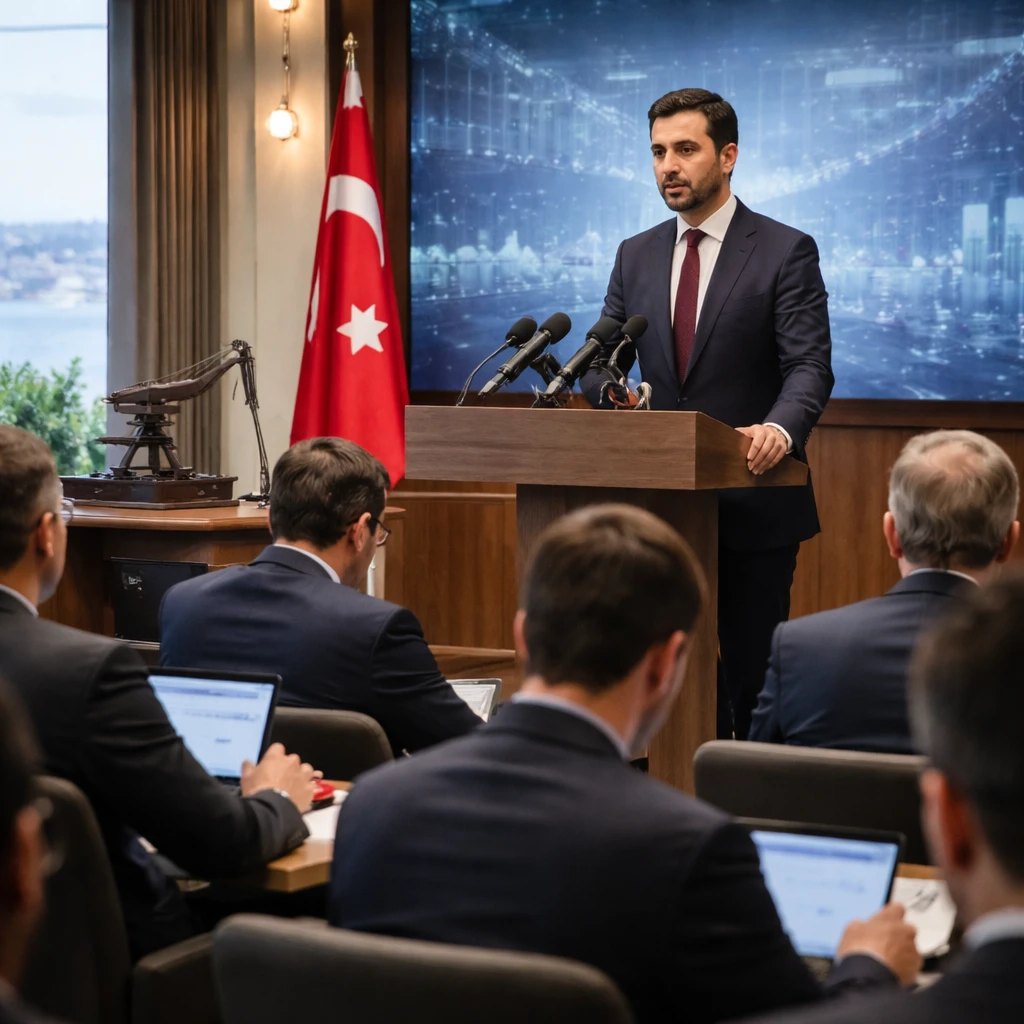
Turkey’s central bank raised its interim inflation target for end-2026 to 24% from 16%, and adjusted targets for subsequent years, citing continued inflationary pressure from the Iran war and uncertainty over energy supplies. Governor Fatih Karahan made the announcement during the bank’s quarterly inflation report presentation in Istanbul and stressed the institution’s resolve to bring down inflation using all available tools.

Turkish central bank lifts 2026 inflation target to 24% amid regional energy pressures

Key Points

  • End-2026 interim inflation target raised to 24% from 16%. The bank also set end-2027 target at 15% (up from 9%) and end-2028 target at 9%.
  • Governor Fatih Karahan attributed pronounced short-term inflationary effects to the Iran war and highlighted pressures on energy supply as a critical risk factor for the inflation outlook. (Sectors referenced: energy)
  • The central bank affirmed it will not compromise on reducing inflation and will continue to use all available tools to pursue disinflation.

Turkey’s central bank announced an upward revision to its interim inflation target for the end of 2026, setting the goal at 24% rather than the previously stated 16%, Governor Fatih Karahan said on Thursday. The change was disclosed at the central bank’s quarterly inflation report presentation held in Istanbul.

At the same event Karahan also said the bank raised its end-2027 interim inflation target to 15% from 9%, and established an end-2028 interim target of 9%.

Karahan pointed to the ongoing Iran war as a source of pronounced, near-term inflationary effects. He framed the principal uncertainty for the inflation projection around the length of regional tensions and the related pressure on energy supplies, saying the duration of that tension is a key risk factor for the outlook.

On the policy stance, the governor emphasized that the central bank will not compromise on its determination to reduce inflation. He said the bank will continue to employ all available instruments in pursuit of disinflation.

The announcement updates the central bank’s multi-year interim targets and places a spotlight on regional developments affecting commodity and energy markets. Karahan’s remarks tied the revision directly to the elevated inflationary forces he said are linked to the Iran war and to the uncertainty surrounding energy availability.

Beyond the revised numerical targets for 2026 through 2028, Karahan’s presentation highlighted two interlinked themes: first, that regional geopolitical tension is having measurable inflationary effects in the short term; and second, that the persistence of those tensions will materially shape the bank’s inflation path.

While the central bank adjusted its planned endpoints for inflation, it reiterated a firm commitment to disinflation and signaled continued readiness to use its policy toolkit to achieve that aim.

Risks

  • Uncertainty over how long regional tensions related to the Iran war will persist - this duration is described as a key risk to the inflation outlook. (Impacts energy sector and inflation trajectory)
  • Ongoing pressures on energy supply linked to regional conflict, which the bank said are contributing to pronounced short-term inflationary effects.

More from Economy

Starmer Confronts Rising Leadership Challenge as Party Figures Press for Change May 14, 2026 UK Confirms Overhaul of Money Market Fund Rules to Boost Liquidity May 14, 2026 Analysts See Romania’s Central Bank Pausing on Rates as Inflation Forecasts Rise May 14, 2026 Markets Tick Higher as Beijing Summit and AI Investments Shape Risk Sentiment May 14, 2026 UK house price falls deepen in April as borrowing costs damp demand May 14, 2026