
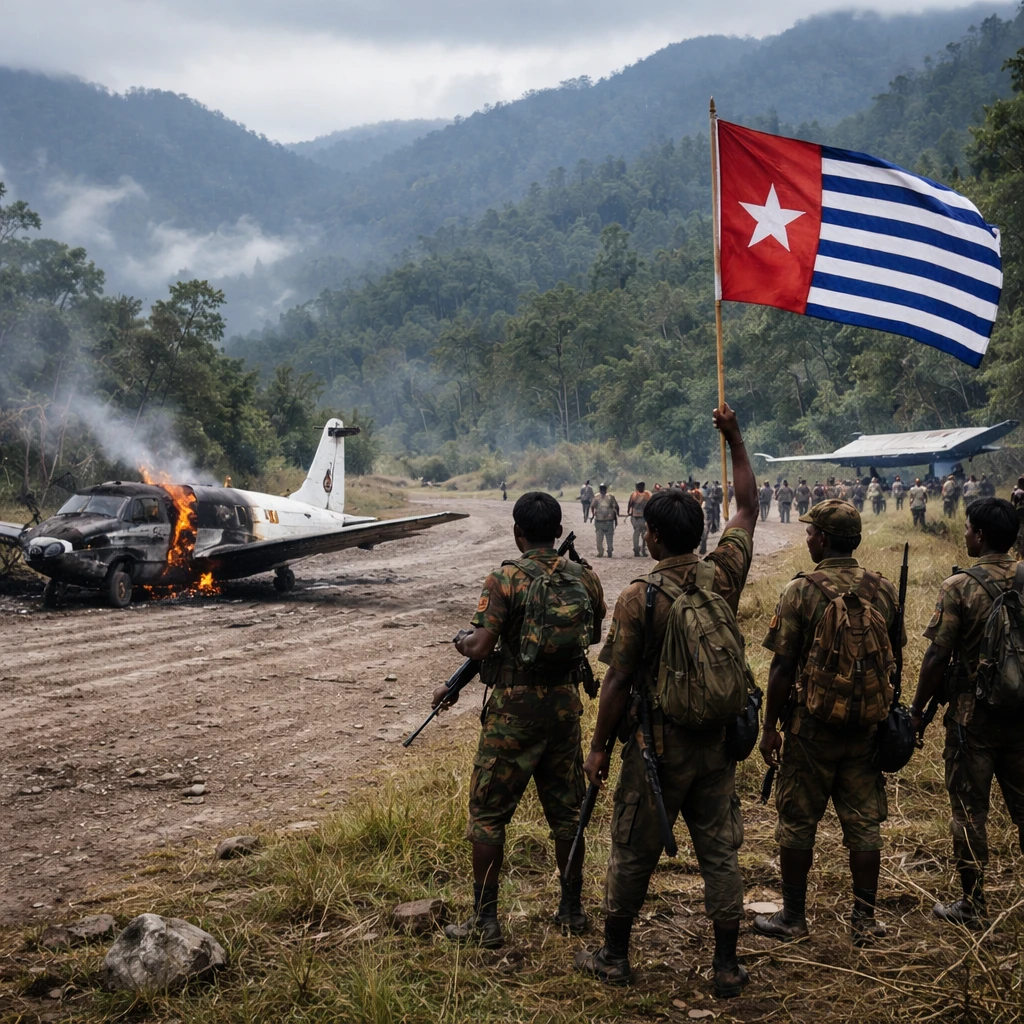
JAKARTA, July 2 - Rebels in Indonesia's easternmost province of Papua said on Thursday that they shot dead an American pilot and set his civilian aircraft on fire after it landed in the Yahukimo area of Highland Papua.
Sebby Sambom, the spokesperson for the West Papua National Liberation Army (TPNPB), said the group's troops were responsible for the killing of the pilot, identified as Nicholas F. Gosselin, and that they burned the plane after it landed in the Yahukimo region. Sambom characterized the operation as a "message" to both the U.S. and Indonesian governments and accused the aircraft of repeatedly carrying Indonesian military personnel into areas the TPNPB had designated off-limits.
Yusuf Sutejo, a spokesperson for Indonesia's joint police-military operations in Papua, confirmed authorities found a burned plane at a local airport in Yahukimo that had an American pilot and seven passengers on board. He said all seven passengers were Papuans. Sutejo added that investigators could not yet confirm whether the aircraft had been attacked by rebels or whether the pilot had been killed.
The incident took place in the Balinggama district of Yahukimo, a part of Highland Papua province where a low-level insurgency has persisted. In a statement carried by the separatists, Sambom said the action was intended to protest what the group described as a failure by Jakarta and Washington to tackle underlying causes of the confrontation between the Indonesian military and the TPNPB.
Sambom warned that the rebels would begin conducting attacks if civilian aircraft continued to land in areas the group regards as red zones under its control. Footage provided by the TPNPB showed fighters armed with guns and axes raising the Morning Star flag, a symbol associated with the Papuan independence movement, while announcing the action.
The U.S. embassy in Jakarta did not immediately respond to requests for comment.
Indonesia's transportation ministry said the flight had departed Wamena in Highland Papua and arrived in Yahukimo with one pilot and seven passengers. Communications from the aircraft ceased after it landed.
The plane is owned by airline operator PT AMA. The company’s fleet is used to deliver essentials such as food, fuel and mail to remote communities in Papua, according to information provided by the operator. PT AMA did not immediately respond to requests for comment.
The episode echoes a previous high-profile incident in which Papuan rebels abducted a New Zealand pilot, Phillip Mehrtens, after he landed a small commercial plane in Nduga in Highland Papua before releasing him in 2024.
Summary
Rebel fighters in Highland Papua claim they killed an American pilot and torched his civilian aircraft after it landed in Yahukimo. Indonesian security officials confirmed a burned plane with an American pilot and seven Papuan passengers but have not independently verified the rebels' account. The separatist TPNPB framed the action as retaliation for alleged military insertions into rebel-held zones.
Key points
- The West Papua National Liberation Army says its forces shot dead American pilot Nicholas F. Gosselin and burned his plane after it landed in Yahukimo.
- Indonesian authorities located a burned aircraft at a Yahukimo airport carrying one pilot and seven Papuan passengers but have not confirmed the cause or casualties.
- Sectors potentially affected include regional aviation services that supply remote communities, and security operations in Papua, given the risk to flights and logistics into contested zones.
Risks and uncertainties
- Unclear attribution - Indonesian officials have not confirmed that rebels carried out the attack or whether the pilot was killed, leaving the precise circumstances unresolved; this uncertainty affects investigative outcomes and potential responses.
- Continued disruption to civilian air services - If the TPNPB carries out threats to target civilian flights entering its designated red zones, transport and supply lines to remote Papuan communities could be further disrupted, impacting operators that deliver food, fuel and mail.
- Escalation risk - The separatists' warning of additional attacks in response to continued flights into rebel-controlled areas creates uncertainty for both security planning and commercial operators serving the region.