
Summary
Search-and-rescue teams from El Salvador and Chile on Thursday removed a 44-year-old security guard from beneath the collapsed remains of a nine-story shopping center in La Guaira, Venezuela, more than a week after two powerful earthquakes struck the nation’s northern coast. The operation, which began on Monday, faced unstable debris and required rescuers to excavate two separate tunnels before reaching the trapped man, who was given fluids through tubing while awaiting extraction.
The rescue operation
Work to free Hernan Alberto Gil from the ruins of the Galerias Playa Grande mall started on Monday, according to updates posted by El Salvador's president on X. Rescuers provided hydration to Gil through tubing while crews dug to create safe access routes. Because the structure remained unstable, teams constructed two distinct tunnels in their effort to reach him.
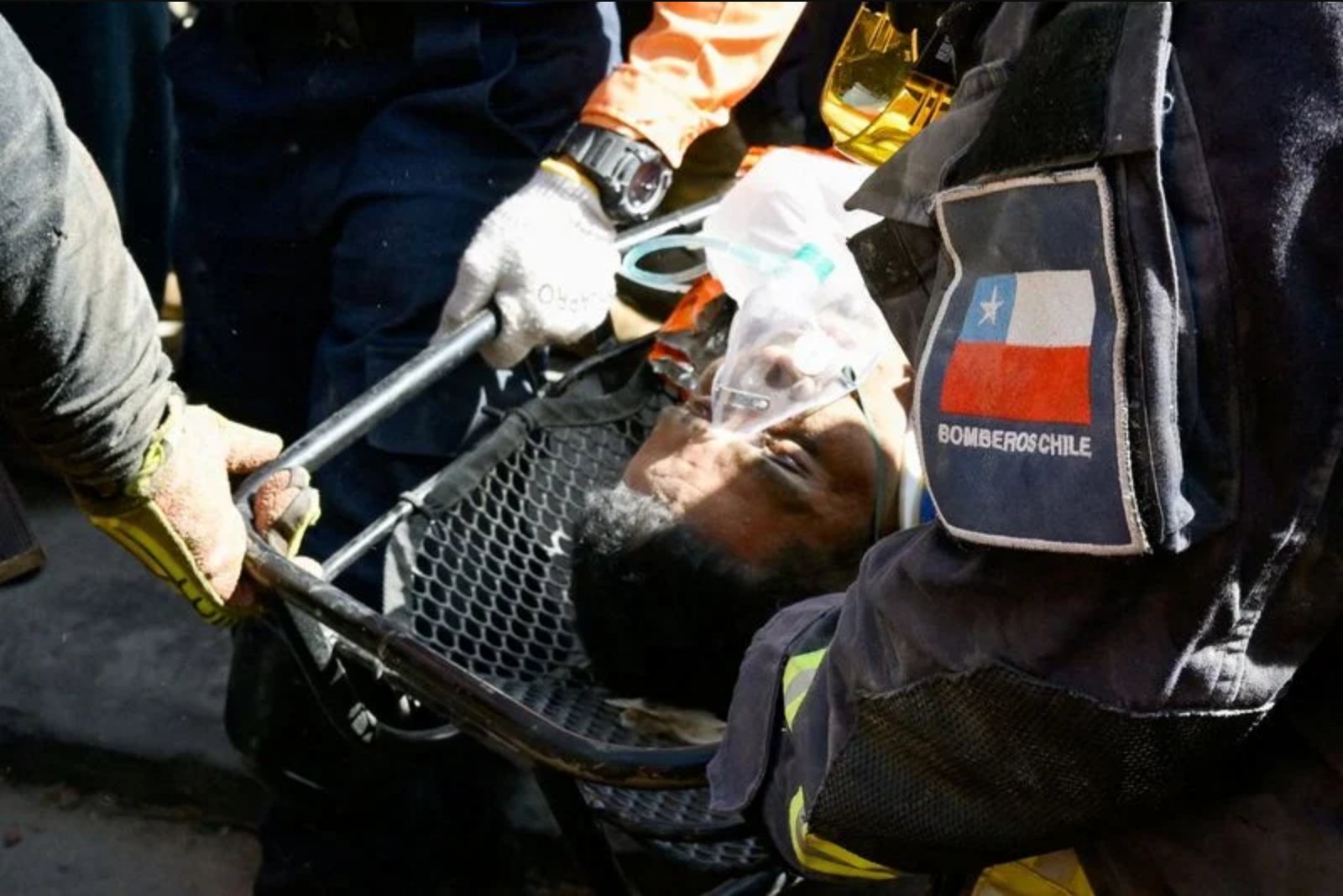
On Thursday morning, Gil was carried out on a stretcher and placed into an ambulance as rescuers and journalists observed. El Salvador’s president credited a multinational effort for the outcome, saying that teams from Chile, the United States, Portugal, Mexico, Costa Rica, Venezuela and El Salvador collaborated to remove debris, stabilize the structure and clear a path to the trapped man.
Chile’s firefighting service said the extraction took roughly 70 hours and reported that Gil was in good condition after being freed.
Scale of the disaster
The twin quakes, measured at magnitudes of 7.2 and 7.5 and occurring less than a minute apart almost eight days ago, inflicted widespread destruction along Venezuela’s northern coastline. Government figures released on Wednesday put the confirmed death toll at 2,295.
An unofficial but widely used online list tracking missing persons showed the number listed as still missing had fallen to about 38,600 on Thursday morning, down from a peak of nearly 60,000 in the immediate aftermath of the tremors. Cellphone service has been intermittent in La Guaira, the state hardest hit by the tremors and located less than an hour from the capital, Caracas.
A United Nations envoy said this week the UN was procuring 10,000 body bags for Venezuela. The U.S. Geological Survey has estimated that more than 10,000 deaths were possible, a projection noted by officials and international observers.
Civilian-led response and logistical shortcomings
Despite the government’s long-standing rhetoric promoting civilian-military-police unity, volunteers have driven much of the immediate rescue and relief effort. Victims and local residents have spent days digging by hand, using shovels and pickaxes to reach loved ones, joined by firefighters, civil protection teams, student medical personnel and foreign rescue contingents.
Thousands of civilians also transported much of the initial water, food and basic supplies into La Guaira, often on motorcycles, in the days after the tremors. Volunteers are now operating shelters for those displaced, receiving limited official assistance while establishing their own rules and even creating independent tracking systems for residents.
Many rescuers have lamented a shortage of heavy machinery needed to lift massive slabs of concrete from collapsed structures. Soldiers and other security personnel have at times worked alongside volunteers; soldiers assigned to the six collapsed towers of a major public housing project said they had volunteered to assist.
Security forces and governance
Venezuela’s security architecture - which government authorities have framed as civilian-military-police unity - includes high-ranking officials who oversee large business interests, a military with a large number of generals, and intelligence organizations such as SEBIN and DGCIM. These agencies are involved in tasks ranging from processing repatriated migrants to surveillance activities. The government has denied allegations of torture leveled against security services.
State television has shown interim President Delcy Rodriguez meeting with military and security leaders, while armed soldiers and numerous police officers have patrolled major roads in La Guaira, in some cases directing traffic. Nevertheless, the immediate disaster response on the ground has been propelled principally by civilians and volunteer groups.
Access restrictions and accountability concerns
After initially praising volunteers, the government imposed a restriction on public access to La Guaira last week, citing concerns that traffic was impeding emergency vehicles and requiring registration for entry. That enforcement lasted roughly one day.
There have been public complaints about security personnel at some collapsed sites. Videos circulated on social media that purported to show officials removing clothing, appliances and cash from the rubble have fueled anger, though the videos have not been independently verified. The Interior Ministry said four crime scene police officials have been detained and removed from their positions for allegedly appropriating financial assets found amid the ruins.
International teams and next steps
Rescue teams from Germany and Switzerland have concluded their missions, while teams from more than a dozen other countries remain active in Venezuela. Authorities indicated that interim President Delcy Rodriguez is expected to hold a press conference later on Thursday to address elements of the response and ongoing needs.
The extraction of Hernan Alberto Gil underscores both the international cooperation in technical rescue work and the persistent challenges facing relief operations in La Guaira - from unstable structures and limited heavy equipment to disrupted communications and large numbers of people still unaccounted for.
Reporting in this piece draws exclusively on official statements, government figures, and public information released by participating rescue organizations.