
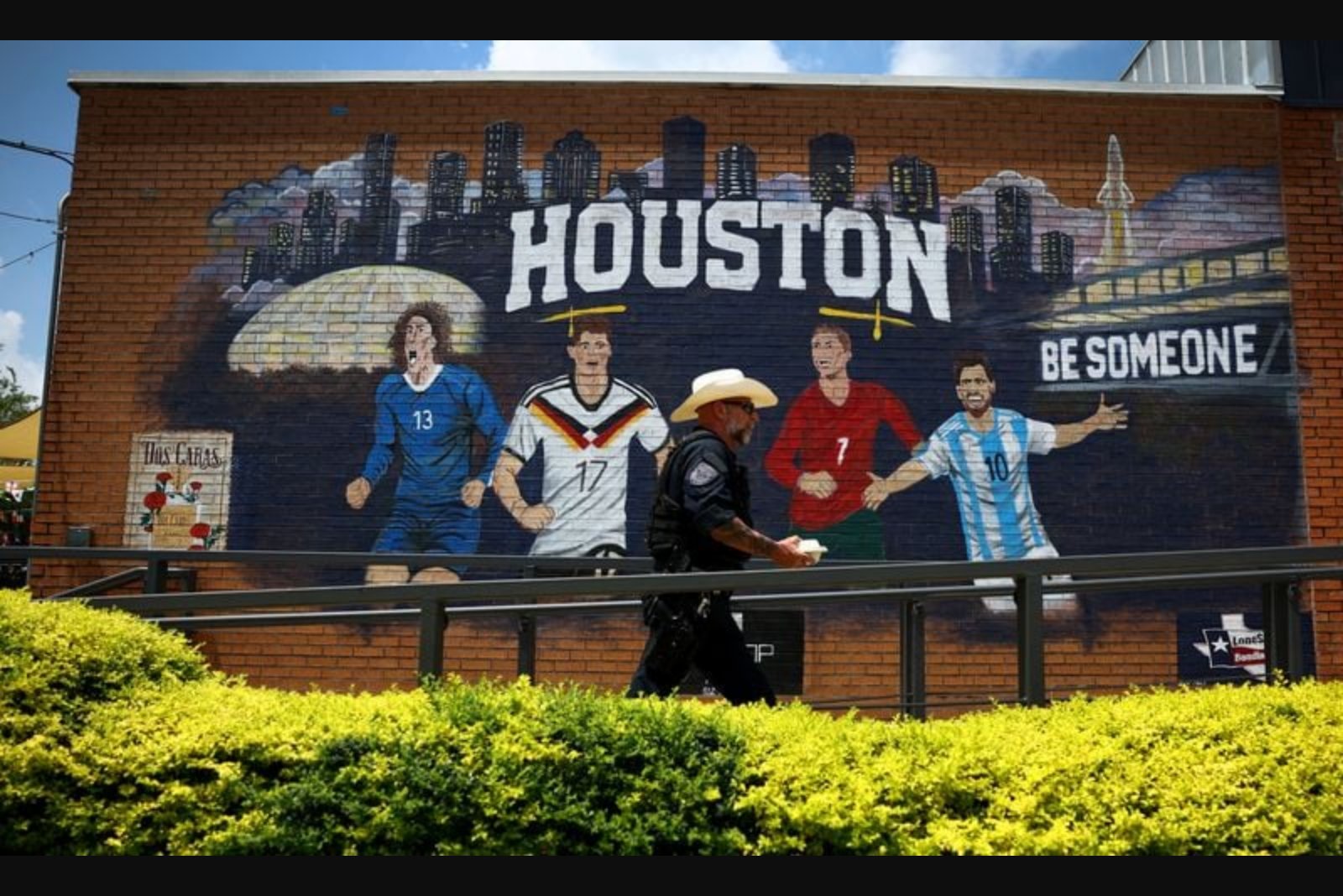
World Cup enthusiasm in Houston is playing out as a distinctly international citywide party, with crowds gathering in a sprawling downtown fan festival and filling bars, restaurants and supermarkets across neighborhoods.
The scale of the city’s diversity helps explain the scene. An estimated one in three Houston residents was born outside the United States and roughly 145 languages are spoken within its population. The fourth-largest city in the U.S. has seen supporters of many nations converge for public viewings and private gatherings during the tournament.
Fans say the large gatherings have been an opportunity to celebrate both sport and cultural identity. "We’ve been to the fan festival in East Downtown and it’s been a fantastic experience to see all cultures kind of mesh and have a great time together and celebrate the sport and celebrate humanity as a whole," said Frank Haces, 27, who recently watched a match alongside family who had travelled from Mexico.
Mexican national representation is particularly visible around match days. Green jerseys appear in abundance at restaurants, bars and supermarkets when "El Tri" plays, reflecting that people with Mexican heritage account for about a third of Houston’s population.
The city-run fan festival in downtown Houston has deliberately reflected the multicultural makeup of attendees with a varied entertainment program. According to festival director Patti Smith, performances have ranged from Tejano to Bollywood, and an array of local communities gather to watch matches on the big screen. For an Egypt match, organisers added a prayer room and a foot-washing area to accommodate Muslim supporters, and Smith estimated as many as 20,000 people were attending the festival daily.
"The cultures are all coming out and it’s every single night," Smith said. "We see when it’s the Turkish, the Iranians or whoever is playing. People from the community are coming out in droves."
Residents who trace their roots to a wide range of countries described how the festival has amplified exchange of traditions and social connections. Thirty-five-year-old South Korean resident Sae Yang said the mingling of different customs and celebrations has been a special part of the World Cup experience in the city.
Canadian resident Saige Antoine described the opening days of the tournament as especially energetic. "I remember like the first few days of it was huge," Antoine said. "It was going crazy. People just want to like show off the flags, their accessories, anything to support the culture and what we have here."
Texas also has the largest Czech American population in the United States, and some Houston residents are marking that heritage as part of the World Cup festivities. Derrick Junek and his wife Jaylen said they planned to celebrate with a beer consistent with the Czech tradition. "I’ll drink some Pilsner beer to celebrate," Derrick Junek said.
Observers point to Houston’s employment landscape, relative affordability and geographic proximity to Latin America as factors that have shaped its demographics. The energy sector and the medical sector, noted components of the local job market, are among the factors that attract and retain an international population.
The result is a city whose public celebrations of the World Cup reflect a broad set of national identities and communal practices. From specialized accommodations at festival venues to visible turnout tied to specific national teams, Houston’s World Cup atmosphere underscores the role of cultural diversity in shaping large-scale public events.