
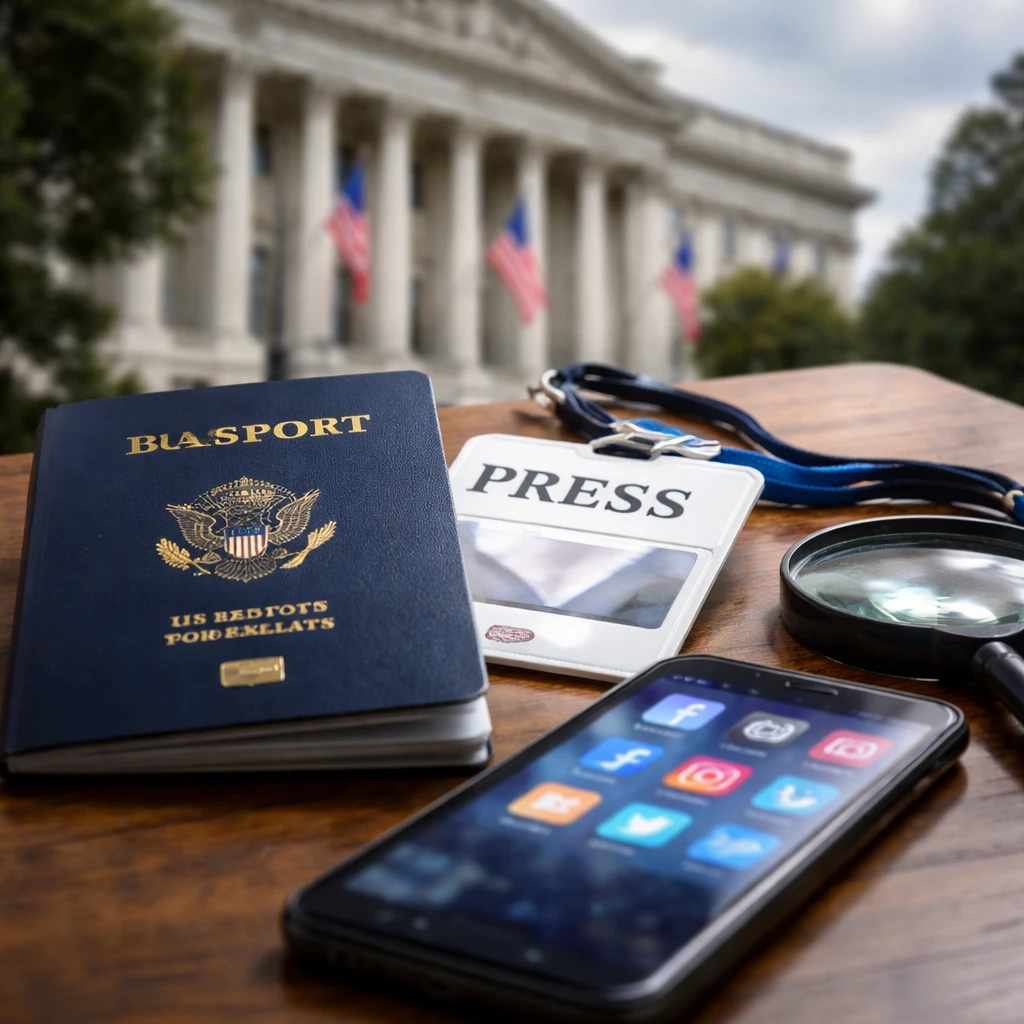
The U.S. State Department is reported to be widening a program that reviews the social media accounts of foreign nationals applying for visas to work in the United States to specifically include foreign journalists, according to a media report that cited an internal memo.
The report, published by a conservative news outlet, said the initiative - originally requiring many visa applicants to make social media accounts available for screening - would now be extended to foreign media representatives. It also said applicants for another visa category covering workers from Canada and Mexico would be added to the screening protocol.
Both the White House and the State Department's official accounts on X shared a link to the article. When asked about the details, the State Department declined to confirm the particulars of the report, invoking a policy of not commenting on "purported internal documents."
Explaining the department's practice, a State Department spokesperson described what the department calls "online presence vetting" as a means to determine whether applicants meet the legal standards for a U.S. visa. The spokesperson said:
"The Department of State is screening and vetting to the maximum extent possible every foreign national seeking admission to the United States to ensure they will respect U.S. law including the terms of their admission and do not pose a threat to U.S. security, public safety or national interests."
The spokesperson added that officers "use a variety of methods to make informed decisions that protect national security, prevent fraud and ensure a thorough review of applicants."
It was not clear from the report when the reported policy expansion would take effect.
The reported change follows recent moves by the Department of Homeland Security to tighten the rules governing how long foreign journalists and other visa holders, including foreign students, may remain in the United States. The reported expansion also builds on a series of actions taken since the start of the current administration's second term in January 2025 to make online speech a factor in immigration and visa decisions - measures that have prompted concerns among civil liberties advocates about freedom of speech.
U.S. Citizenship and Immigration Services has publicly said it will screen social media posts of immigrants and visa applicants, looking for content it deems to be antisemitic and for what it describes as "anti-Americanism." The administration has, in some instances, canceled the visas of foreign students in the United States who participated in pro-Palestinian activism and has in certain cases sought to deport those students.
Separately, the State Department said in October 2025 that it revoked the visas of six foreign nationals over comments related to the assassination of conservative activist Charlie Kirk, and that it would continue identifying visa holders it believed had celebrated the killing.
This reported expansion of social media screening to include foreign journalists and additional worker categories raises questions about how online activity will be assessed in visa adjudications and about the potential effects on press coverage by foreign correspondents in the United States. The timing for implementation, the precise criteria to be used in screening, and the procedures for applicants to respond to findings were not provided in the report.
As described by the State Department, the stated purpose of such screening is to ensure compliance with U.S. law and to protect national security and public safety, while officials say a range of investigative tools are employed to reach determinations on visa eligibility.