
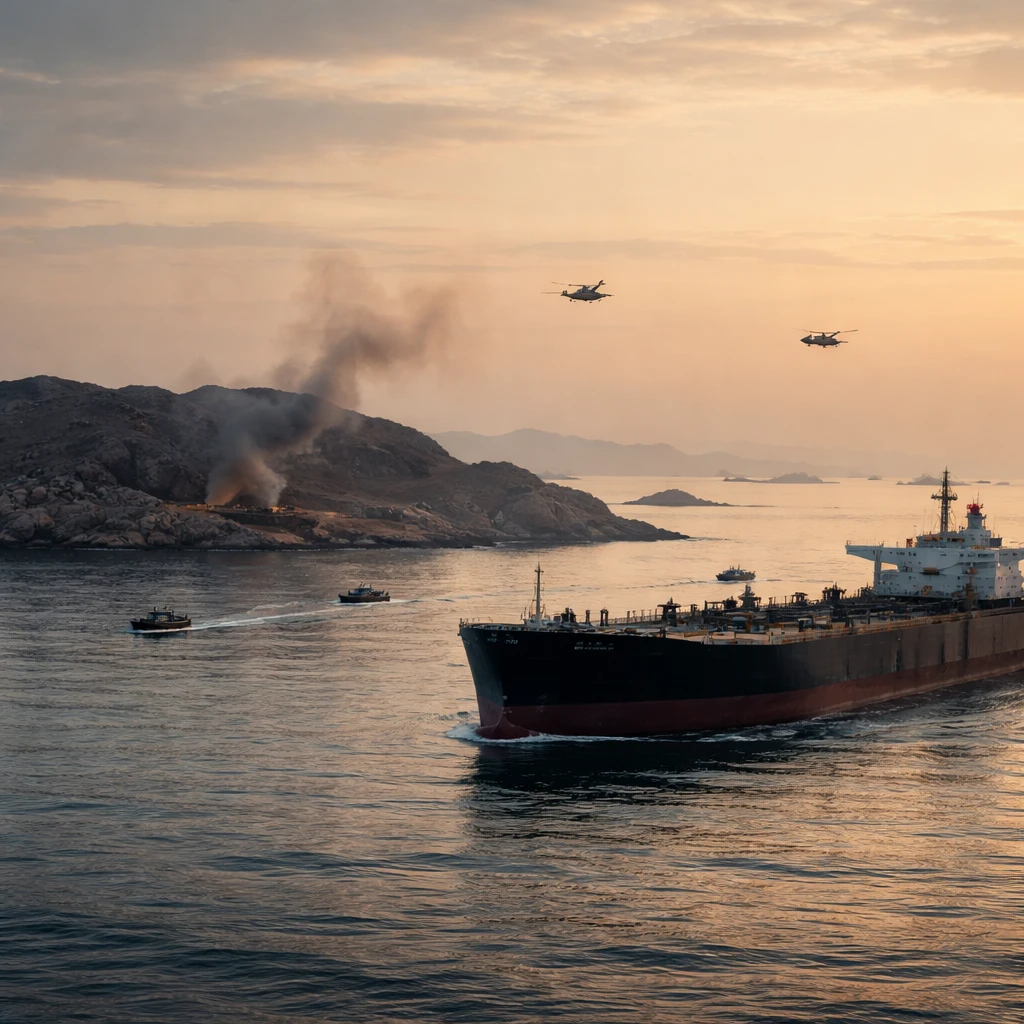
Oil prices ticked upward in Asian trading after a sharp decline the session before, as reports that the United States struck Iran's Qeshm Island heightened worries about possible disruptions to shipments in the Gulf.
As of 20:22 ET (01:22 GMT), Brent futures for January delivery rose 0.3% to $105.4 per barrel, while West Texas Intermediate crude futures gained 0.5% to $96.93 per barrel.
Market movement followed statements from U.S. officials saying the United States attacked Qeshm Island on Monday. Qeshm sits in the Strait of Hormuz, a choke point for global oil transportation, and the reported strike was described as one in a series of limited U.S. actions undertaken in recent weeks. According to the officials, the narrower scope of these strikes reflected an effort to avoid signaling a return to a wider military campaign.
The reported action underscored the delicate balance between military escalation and parallel diplomatic effort, keeping market participants on alert for potential interruptions to oil flows through the Gulf.
Crude earlier slumped on Monday after U.S. officials signalled a preference for negotiations, which eased immediate investor concern that Washington might resume a broader military offensive following Tuesday's midterm elections. Iranian President Masoud Pezeshkian publicly said Tehran was willing to pursue dialogue, and Foreign Minister Abbas Araqchi indicated that discussions with Qatari mediators were ongoing. Those conversations have reportedly centred on a potential framework to end the conflict and restore stability to the region.
Despite these diplomatic overtures, no durable agreement has yet been reached, leaving the outlook for continued safe passage through the Strait of Hormuz uncertain. The ongoing mix of diplomatic and military signals adds a layer of unpredictability for energy markets that rely on unobstructed flows from the Gulf.
The United States and Iran have exchanged divergent public signals on the prospect of renewed military action. One U.S. political figure said on Monday he did not intend to strike Iran after the midterm elections, while reports indicate Israeli Prime Minister Benjamin Netanyahu has urged Washington to resume attacks. Those conflicting messages have contributed to market caution, even as talks progress.
For now, traders appear to be pricing in both the limited immediate impact of recent strikes and the possibility that further escalation could tighten supplies. The balance between diplomatic progress and episodic military actions will likely determine near-term volatility in Brent and WTI prices, given the strategic importance of the Strait of Hormuz to seaborne crude exports.
Observers note the situation remains fluid. With no lasting settlement in place, shipping and broader energy markets remain exposed to shifts in both policy posture and on-the-ground actions.