
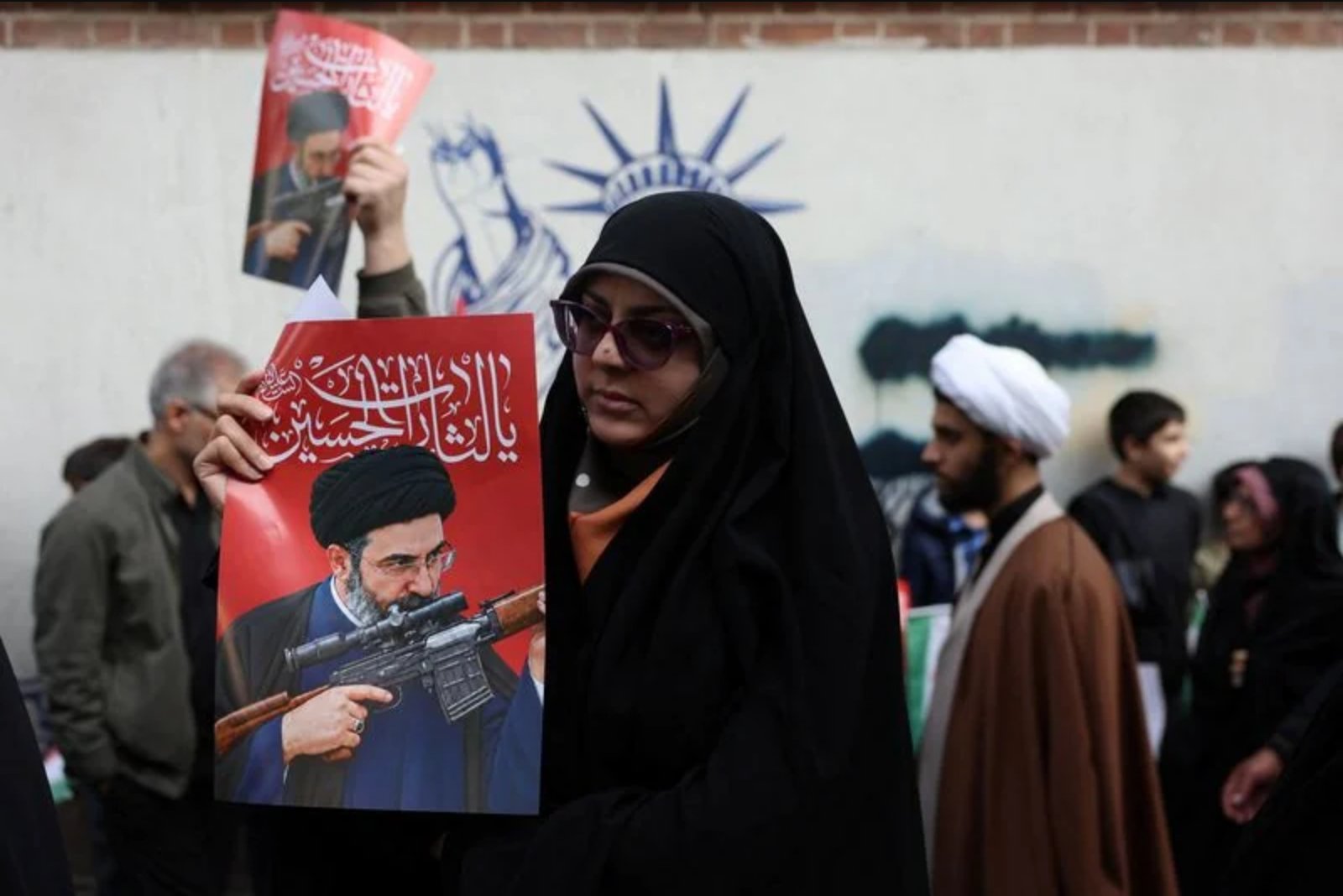
DUBAI, Nov 4 - Iran’s Supreme Leader Mojtaba Khamenei said on Wednesday that hostility from Washington toward Tehran will persist regardless of which party holds power in the United States or of any concessions made to the US, and that those who believe otherwise are "greatly mistaken." The statement followed the Republican Party’s defeats in the US midterm elections.
Khamenei warned that if the United States were to renew aggressive action against Iran, Tehran would respond on a markedly larger scale. He cited recent Iranian actions - the destruction of US bases in the region and Tehran’s conduct in the Strait of Hormuz - as components of a broader campaign directed at US hegemony.
"The US sees the end of its hegemony as distant; we see it as near," he said.
In his remarks Khamenei positioned Iran’s previous strikes on US bases and its management of the strategically critical Strait of Hormuz as deliberate elements of an effort to counter American dominance in the region. He argued that changes in US domestic politics or tactical concessions would not alter the United States' posture toward Iran.
The comments followed the outcome of the US midterm elections, and were framed as a direct rebuttal to any expectations that a shift in Washington’s political leadership might lead to reduced tensions. Khamenei did not provide additional operational details but emphasized that Iran views the decline of US hegemony as imminent, in contrast to what he described as a longer-term view held by the United States.
The statement reiterates Iran’s public posture that its recent military moves - including targeting US bases in the region - and strategic operations affecting shipping through the Strait of Hormuz are not isolated incidents but part of a campaign aimed at challenging US influence.
Summary
- Khamenei said US hostility toward Iran will not change with partisan shifts or concessions and called those who believe otherwise "greatly mistaken."
- He warned Iran’s response to any renewed US aggression would be on a much greater scale.
- Khamenei described Iran’s destruction of US bases in the region and its handling of the Strait of Hormuz as elements of a campaign against US hegemony, and contrasted views on the timing of the end of US dominance.
Key points
- Political stance: Iran asserts that US hostility is structural and not tied to which US party is in power - impacting diplomatic and military relations.
- Military posture: Tehran warns of escalated retaliation to renewed US aggression, highlighting regional security concerns - defense and security sectors are directly implicated.
- Energy and shipping: Iran’s reference to control of the Strait of Hormuz signals implications for maritime transit and energy flows that rely on that route.
Risks and uncertainties
- Risk of escalation: Khamenei’s vow of a "much greater" response to renewed US aggression introduces the possibility of broader regional military confrontation - relevant to defense and insurance sectors.
- Maritime disruption: Iran’s emphasis on the Strait of Hormuz as a strategic lever creates uncertainty for shipping and energy markets that use the waterway.
- Diplomatic unpredictability: The stated view that US hostility is unchanged by political turnover in Washington creates uncertainty for diplomatic and trade engagements with Iran.