
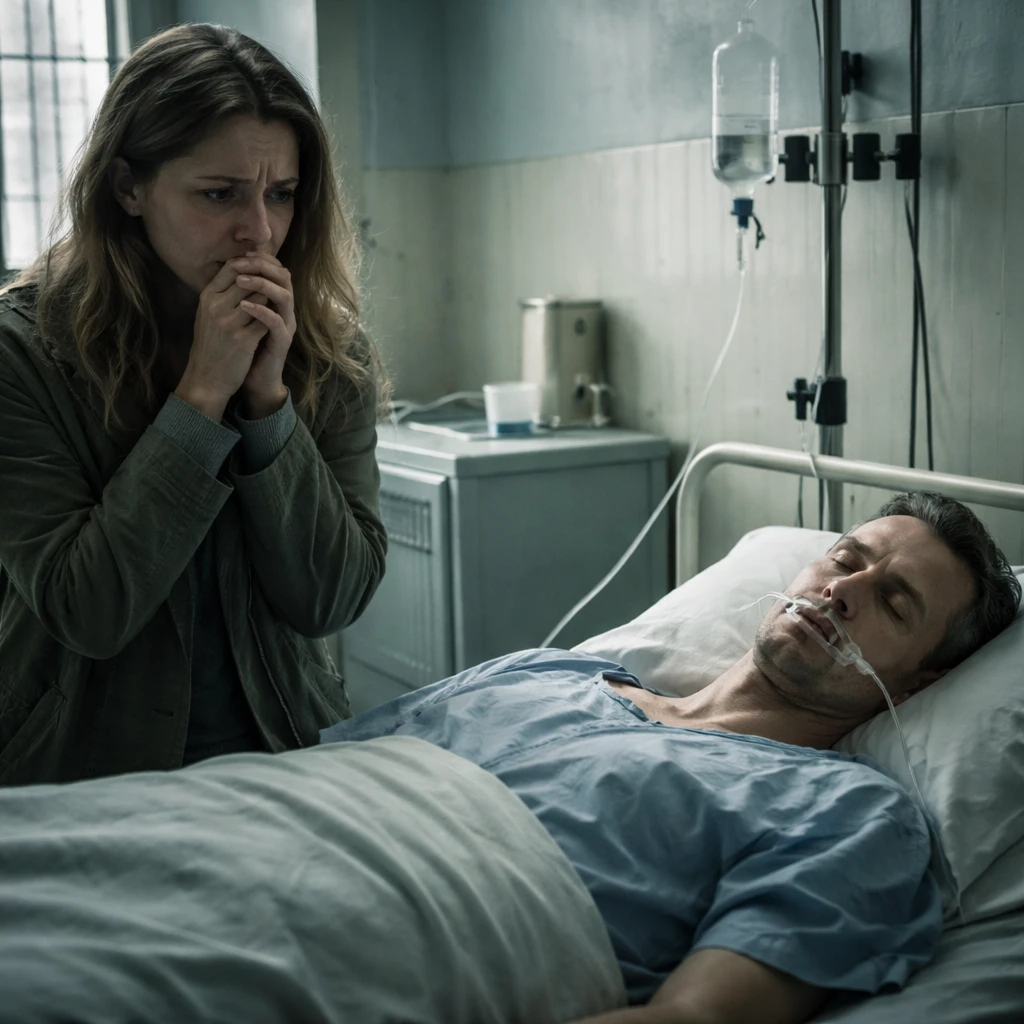
Advocacy organizations representing the family of a former U.S. Marine detained in Russia warn that his health has sharply deteriorated and that he may be close to death after slipping into a stupor in June.
Robert Gilman, 32, who has been jailed in Russia since 2022, is being fed through a tube and has been described by his supporters as having been tortured and injected with mind-altering medications while in custody, according to two hostage advocacy groups and his sister.
Medical condition and hospital move
Eric Lebson, chief strategy officer at Global Reach, the advocacy group representing Gilman’s family, said U.S. officials have urged Russia to free Gilman so he can obtain urgent medical care in the United States. Lebson said Gilman was moved in late June from a prison hospital to the psychiatric ward of a civilian emergency hospital in Voronezh, a city about 340 miles (547 kilometers) south of Moscow, after entering a catatonic-like state assessed as a "dissociative stupor."
The World Health Organization’s ICD-10 diagnostic manual describes a dissociative stupor as "a profound diminution or absence of voluntary movement and normal responsiveness to external stimuli," a characterization Lebson used when describing Gilman’s condition. According to Lebson, Gilman has been unable to communicate, must receive food and fluids through a tube and keeps his eyes closed, a state that has prevented him from appearing at court hearings.
Elizabeth Richards, director of hostage advocacy and research at the Foley Foundation, which has tracked the case, said, "It doesn’t seem like he’s getting the care he needs, and we are very concerned for his life and safety." A Russian newspaper reported on July 9 that Gilman had been moved to a hospital in Voronezh; the report quoted his lawyer as saying it was too early to offer a diagnosis.
U.S. diplomatic engagement
Officials in Washington have taken steps to press for Gilman’s release. Lebson said the White House and the State Department have urged Moscow to allow Gilman to travel to the United States for urgent medical treatment. A source familiar with the matter told U.S. advocates that Secretary of State Marco Rubio raised Gilman’s case with Russian Foreign Minister Sergei Lavrov during a meeting in Manila on July 23, though the source did not know what Lavrov’s response was.
A senior administration official said the U.S. government "is closely tracking Mr. Gilman’s case and has made repeated, concerted outreach to the Russians calling for his return to the United States." In a statement, the State Department said, "We are deeply concerned about Robert Gilman’s health and continued detention." The Russian embassy did not respond to requests for comment.
Family access and legal obstacles
Lebson said Gilman’s mother has been barred from visiting him in the Russian hospital despite holding a judicial order that should permit her to see her son. U.S. consular staff were occasionally allowed to visit Gilman while he remained in prison, but neither they nor his Russian lawyer have been permitted into the hospital, Lebson added.
Gilman’s sister, Lexie Hudson, issued a statement expressing mounting fear about her brother’s condition: "I am more afraid for my brother than I have been since this horrible nightmare started," she said. "I’m worried that I may never see him again if the Russians don’t release him. I’m worried that he could die."
Detention history and contested allegations
Gilman served in the U.S. Marines from August 2019 until August 2020. He was arrested on January 17, 2022, while traveling by train in Voronezh, authorities representing his family say. Russian state media reported he was detained for allegedly kicking a police officer while intoxicated.
Vladimir Gilman, Robert’s father, wrote in an October 11, 2024 op-ed that the charge was false, saying his son had fallen ill at the time of the incident and accidentally kicked the officer. Vladimir Gilman said the officer was uninjured, the charges were dropped and no evidence was presented at Robert Gilman’s trial. Robert Gilman was sentenced to 4-1/2 years in jail.
The family sought a wrongful detention designation from the U.S. State Department in March 2023, a step that would elevate efforts to secure his release, Vladimir Gilman wrote. Officials have not publicly explained why the designation has not been granted. Lebson told advocates that Secretary Rubio has not designated any American being held in Russia since the start of the current presidential term.
Russian state media later reported that Gilman’s sentence was extended in 2024 to 10 years for allegedly assaulting prison staff. Lebson and Richards deny those allegations, saying Gilman was held in extremely harsh conditions, tortured and injected with mind-altering drugs by guards, treatment that prompted his transfer to the civilian hospital.
Comparisons and concerns
Lebson said advocates fear the case could echo other instances in which U.S. citizens were returned to the United States in a comatose state. He warned, "We are seriously worried that we could see another situation like Otto Warmbier," referencing a U.S. citizen who was comatose when freed from foreign detention and later died after returning to the United States.
Gilman is one of at least 10 Americans known to be imprisoned in Russia. His potential death, advocates say, would complicate an already tense relationship between Washington and Moscow that is strained over the wars in Iran and Ukraine and other issues.
As the family presses diplomats and advocacy groups amplify the case, questions remain about access to medical care, transparency from Russian authorities and whether formal U.S. designations on detention status will change the level of governmental commitment to securing Gilman’s return for treatment.