
Summary
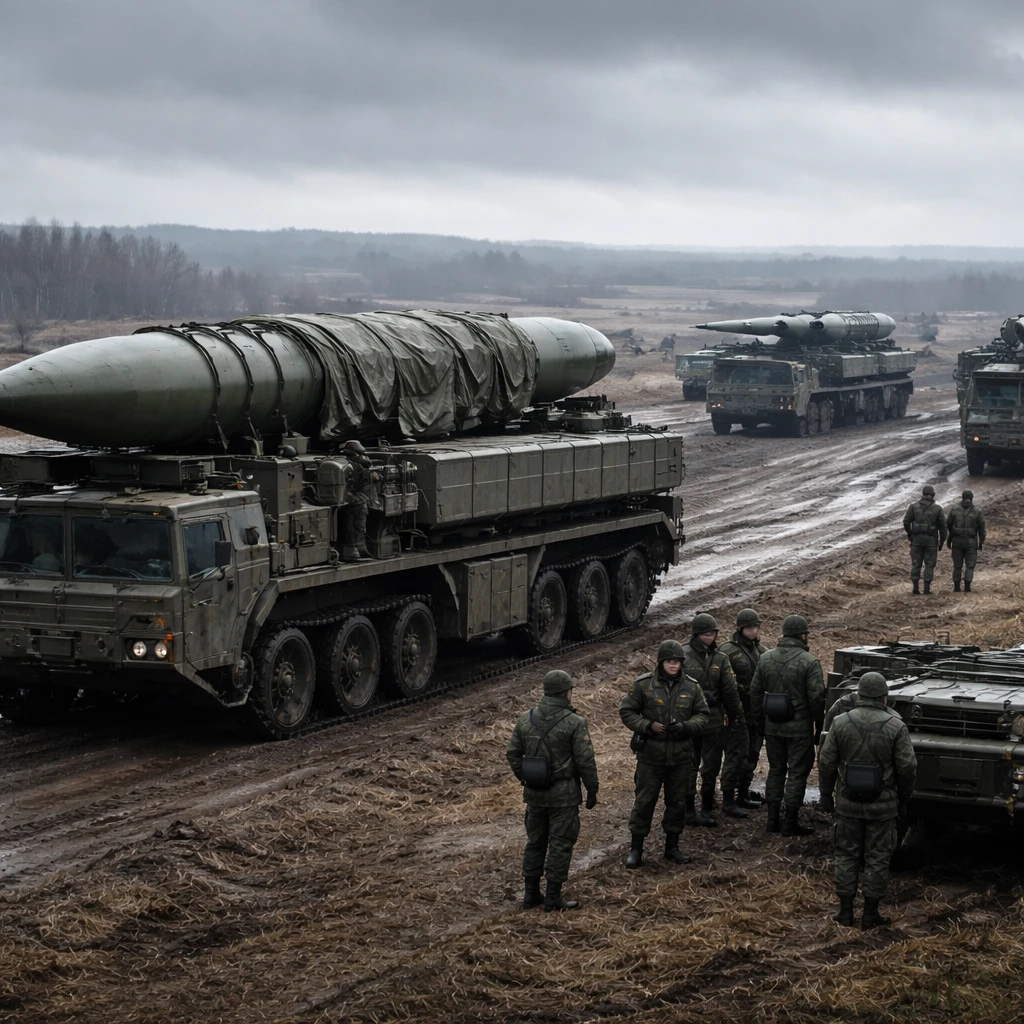
Ukraine's Main Directorate of Intelligence has reported that a North Korean missile unit is deploying to western Russia and may be equipped with up to 120 ballistic missiles and six mobile launchers for operations targeting Ukraine. The unit is said to consist of about 90 North Korean personnel who would be attached to the Russian 112th Missile Brigade based in the Voronezh region. The United States is reported to be aware of the deployment, while Russian and North Korean officials have not publicly commented, according to Ukrainian statements and media inquiries.
Deployment details and official statements
Andrii Cherniak of Ukraine's Main Directorate of Intelligence provided the primary public account of the deployment, saying the missile unit of about 90 North Korean personnel is planned to be based in Voronezh within the 112th Missile Brigade. Ukraine's statement indicates Russia expects the deployment to include 120 ballistic missiles and six launchers. Cherniak said the intelligence on which his statements were based could not be publicly disclosed because of sensitivity.
A source familiar with the matter told Reuters that the United States is aware of the North Korean deployment, but provided no further details. The CIA declined to comment, and the White House did not immediately respond to requests for comment. The Russian Defence Ministry and North Korea's mission to the United Nations in New York did not reply to written inquiries.
What has already been transferred
Ukrainian officials say North Korea has already sent a new batch of 40 KN-23 and KN-24 missiles and accompanying personnel to Russia. Cherniak said the exact configuration of the wider deployment and the total number of missiles would be finalised at top-level talks next month. He also said the strike recorded last week that flattened a home in the central Ukrainian village of Radushne - killing at least five members of the same family - was the first recorded use of North Korean ballistic missiles since August 2025 and was drawn from the new batch of 40 missiles.
Cherniak added that North Korea supplied 150 KN-23/KN-24 missiles between the end of 2023 and August 2025. Those missiles, Ukrainian military sources say, have greater range and larger payloads than Russia's Iskander but are less precise, and have been associated with strikes causing substantial civilian casualties.
Context of military cooperation
The account from Kyiv places the reported deployment within a broader deepening of military ties between Moscow and Pyongyang since Russia's full-scale invasion of Ukraine in 2022. The two countries signed a mutual defence pact in 2024, and Ukrainian officials say North Korea has supplied millions of artillery shells to Russia's war effort. Ukraine also alleges that 14,000 North Korean troops were sent to Russia's Kursk region in 2024 to repel a Ukrainian ground incursion, and Cherniak said there are around 9,500 North Korean troops in the Kursk region, although he said these forces are not currently directly engaged in operations against Ukraine.
President Volodymyr Zelenskiy was quoted by Ukrainian officials last month as saying the Kremlin sought another 30,000 North Korean troops and that Russian preparations were under way in the Voronezh region to receive them. The Ukrainian account places the latest missile deployment as a further expansion of already extensive cooperation rather than an isolated transfer of weapons.
Operational and defence implications
Kyiv is short of high-end air-defence systems, and the increased use of ballistic missiles presents a particular challenge because they are more difficult to intercept than many other types of munitions. Russia has used North Korean ballistic missiles at Ukraine since late 2023, and the deployment of North Korean missile forces inside Russia would represent a deeper level of integration in Moscow's missile operations.
Rob Lee, a senior fellow at the Foreign Policy Research Institute, said the additional North Korean resources are a serious threat to Ukraine. He emphasized that ballistic missile defence is a major Ukrainian vulnerability and that any increase in the quantity of ballistic missiles will create greater difficulty for Kyiv. Lee further noted concern about Ukraine's air-defence posture heading into winter, when Russia has in the past targeted the power grid in large attacks.
Civilian impact and recorded strikes
Ukrainian military sources link the KN-23 and KN-24 missiles to strikes that have produced high civilian death tolls. The recent strike on the central Ukrainian village of Radushne, which Ukrainian authorities said flattened a residential home and killed at least five members of the same family, was cited by Cherniak as the first recorded use of North Korean ballistic missiles since August 2025, and as drawn from the recently delivered batch of missiles.
Uncertainties and next steps
Key questions remain about the exact operational role North Korean personnel would play within Russian missile operations, and about the final configuration and total number of missiles to be positioned in western Russia. Cherniak said the total numbers and deployment configuration would be finalised at top-level talks next month, indicating a degree of fluidity in the arrangements.
Multiple official actors either declined to comment or did not respond to inquiries, and Kyiv said some intelligence underpinning its claims cannot be disclosed because of sensitivities. These factors contribute to uncertainty about the operational details, timeline, and possible escalation paths associated with the deployment.
Conclusion
The deployment reported by Ukrainian intelligence, if confirmed, would mark an escalation in the military cooperation between Russia and North Korea by placing North Korean missile forces in western Russia. Kyiv and independent analysts warn that the further inflow of ballistic missiles will exacerbate Ukraine's air-defence challenges and could increase the lethality of strikes on civilian infrastructure and populations. At the same time, public details on the deployment remain limited and the situation may be clarified at the planned high-level talks next month.