
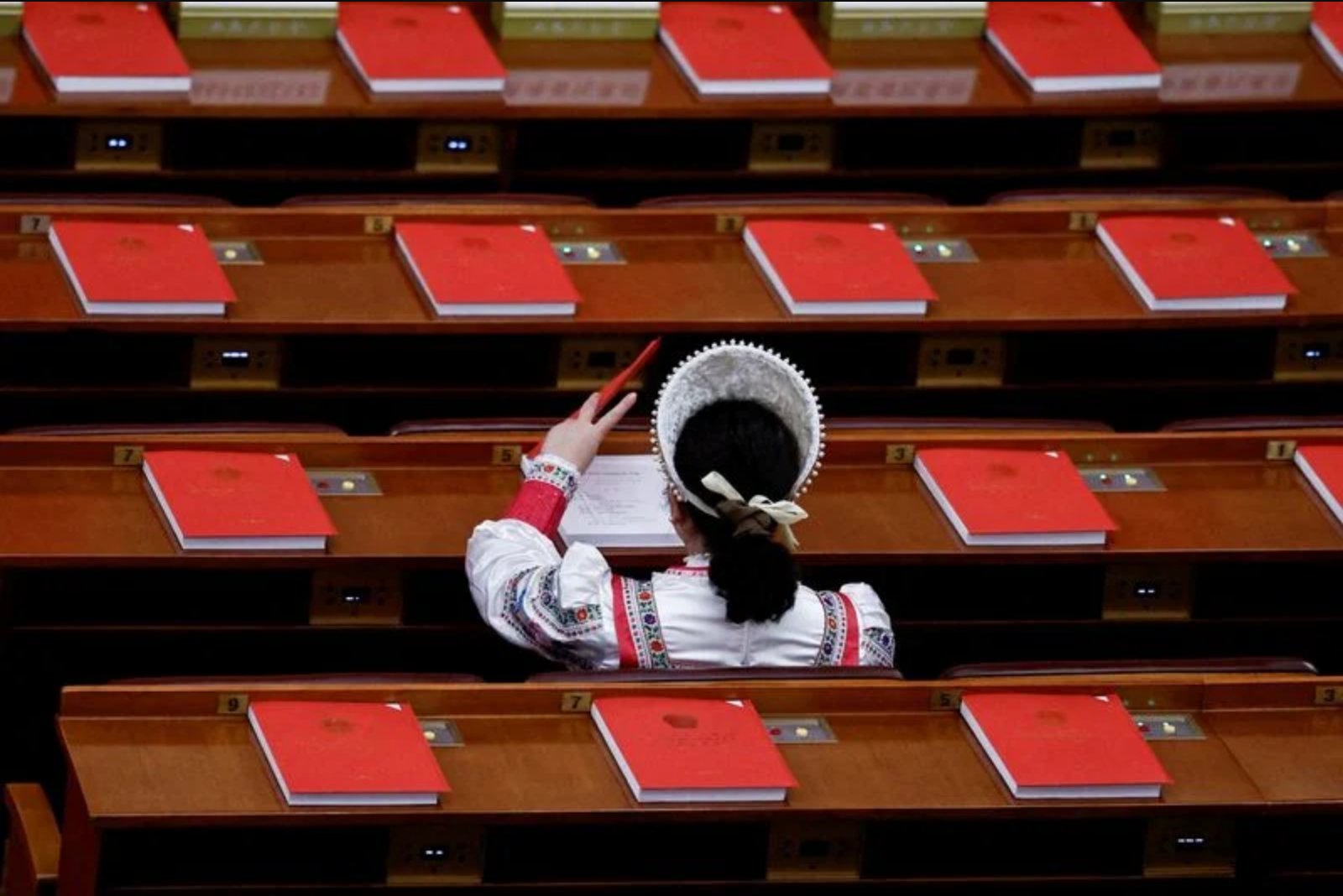
The European Union on Thursday publicly expressed concern about a new Chinese law on ethnic unity that took effect this week and appears to give Beijing legal grounds to pursue action against people and organizations located outside the People's Republic of China.
China adopted the law in March with the stated aim of promoting a "shared" national identity across the country's 55 officially recognised ethnic minority groups, among them Tibetans and Uyghurs. The law arrives against a backdrop of long-standing tensions: some members of these minority populations have protested Chinese rule over the years, sometimes in violent confrontations.
A key element of the statute, which entered into force on Wednesday, is a clause that extends potential legal accountability to people and groups beyond China’s territorial boundaries for conduct that Beijing deems to undermine "ethnic unity and progress or inciting ethnic separatism."
In a formal statement, an EU spokesperson warned that the new legal text may further restrict cultural, linguistic and religious rights of ethnic minorities. The spokesperson stressed that such rights should be upheld in line with international human rights standards and with China’s commitments under the U.N. framework.
The EU statement also voiced specific concern about the law’s extraterritorial dimension. "We are concerned about the extraterritorial application of the law. The EU opposes the extraterritorial application of third-country legislation in breach of international law," the spokesperson said, adding a call for third countries to refrain from attempts to conduct transnational repression within the European Union or elsewhere.
China’s foreign ministry did not immediately respond to a request for comment on the EU position. Separately, a senior Chinese official last week affirmed the government’s right to hold people outside its borders accountable if they contravened the law, describing such measures as consistent with international practice and as legal and necessary.
Rights groups have previously accused Chinese authorities of pursuing critics abroad through mechanisms such as Interpol "red notices," seeking arrests of individuals wanted for political offences at home. Those concerns have been cited in debates over the potential for extraterritorial tools to be used against dissidents and activists living overseas.
The law has also provoked unease in Taiwan, which China claims, where officials fear it could provide an additional legal basis for Beijing to target Taiwanese whom it regards as separatists. In a separate statement on Thursday, Taiwan’s Mainland Affairs Council said its government will coordinate with like-minded countries "to resist the Chinese communists' threats," and described the measures as intimidation and coercion amounting to malicious transnational repression.
Taiwan’s statement noted that China’s legal system has no jurisdiction or authority in Taiwan, whose government rejects China’s sovereignty claims. The differing legal positions underline the diplomatic sensitivity and potential for cross-border disputes linked to the new legislation.
As the law enters into force, states and organisations in Europe and the region are likely to be watching closely to see whether Beijing seeks to press claims against individuals or groups overseas under the new provisions, and how third countries will respond to any attempts to apply the law beyond China’s territory.