
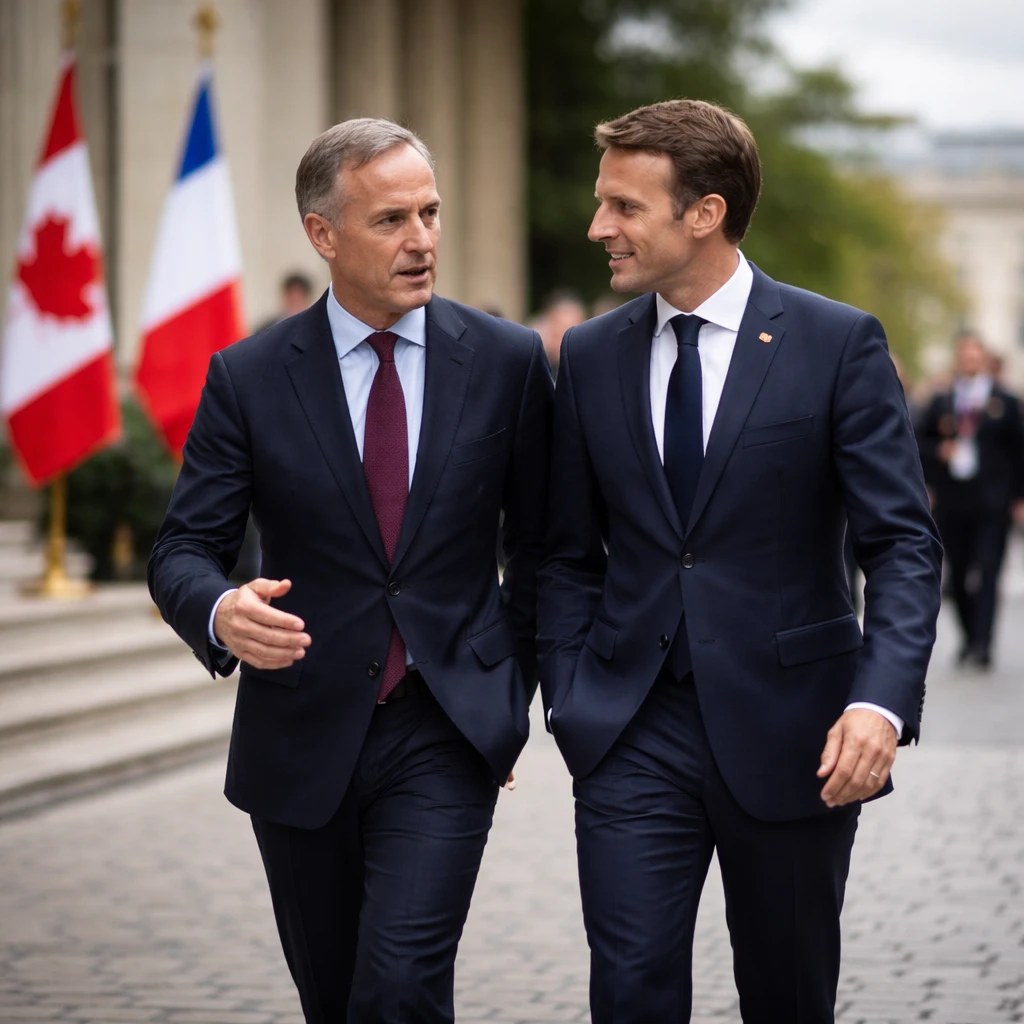
Canadian Prime Minister Mark Carney and French President Emmanuel Macron concluded talks in Paris that will deepen defense and industrial collaboration between the two countries and simplify exchanges of classified information. The agreement explicitly covers cooperation in defense, space, artificial intelligence and aerospace sectors.
Speaking ahead of the meeting on Friday, Carney said the two governments had signed the pact to improve the flow of sensitive information across a range of strategic industries. Carney arrived in Paris ahead of schedule to meet Macron and is due to travel next to Ireland for a two-day visit - one stop in a series of European trips that reflect his broader strategy of strengthening ties among mid-sized powers.
Carney outlined that approach in his January Davos speech, framing it as a dual-purpose strategy: to provide a counterweight to larger geopolitical actors and to support Canada’s economic resilience. That economic focus has become more pressing amid U.S. tariffs on steel, aluminum, autos and lumber, measures that have strained elements of the Canadian economy.
Macron characterized France as an important bridge between Canada and the rest of Europe, underscoring Paris’s role in facilitating closer transatlantic cooperation with European institutions and industrial partners.
On procurement and industrial commitments, Canada is increasing military spending and has joined the EU’s SAFE procurement program. Ottawa is also evaluating a range of European defense purchases, including fighter jets and submarines, and is reconsidering a prior plan to buy U.S.-built F-35 jets in favor of Sweden’s Saab AB Gripen.
In parallel with defense moves, commercial energy ties are also advancing: German utilities have positioned themselves as early buyers of Canadian liquefied natural gas as new Canadian export projects progress. These developments suggest a broader reorientation of some Canadian procurement and export strategies toward Europe.
Officials framed the Paris agreement as a step to facilitate closer industrial integration in strategic sectors and to smooth intelligence-sharing protocols relevant to defense, space and AI collaboration. The meetings form part of a deliberate diplomatic rhythm intended to bolster alliances among countries affected by shifting trade policies.