
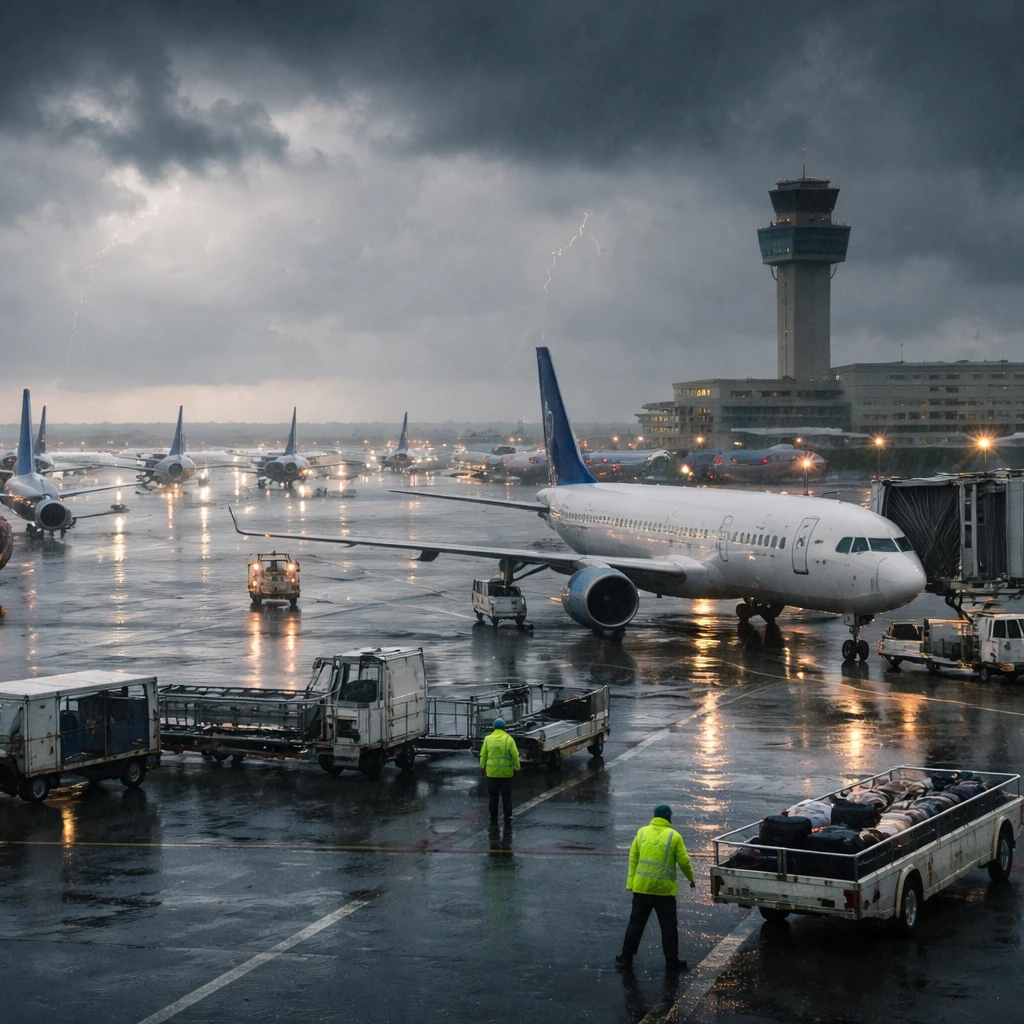
Federal regulators said on Monday they were reducing arrival rates into John F. Kennedy, LaGuardia and Newark Liberty International airports as well as Philadelphia International Airport, citing both severe weather and persistent shortages of air traffic control personnel.
Operational metrics released by the FAA show sizable disruption at the four airports. FlightAware reported that cancellations ranged from 20% to 30% across the impacted airports, while the FAA said average ground delays were between 71 minutes and 149 minutes.
In New York, the FAA pointed to staffing challenges at the New York Air Route Traffic Control Center and at New York Area Terminal Radar Approach Control. The number of certified controllers at New York Area Terminal Radar Approach Control is still just 57% of targeted levels, a deficit that has contributed to delays and required controllers at many facilities to work mandatory overtime and six-day weeks.
To manage the capacity shortfall, the FAA has continued issuing regulatory relief. The agency extended flight limits at Newark through the summer of 2027 and at JFK and LaGuardia through late October 2028. It has also prolonged relief from minimum flight requirements at JFK, LaGuardia and Reagan Washington National Airport through late 2027.
The FAA reiterated that staffing deficiencies at Newark "will not significantly improve" before October 2027. Those deficiencies prompted the agency in May 2025 to impose significant flight cuts at Newark after a series of major disruptions at the United Airlines hub. The FAA is maintaining those cuts through October 2027.
Under minimum flight requirements, airlines risk losing their takeoff and landing slots at congested airports if they do not use them at least 80% of the time. The FAA's current waiver permits airlines to operate 10% fewer flights without triggering slot forfeiture. The agency has issued similar waivers previously to address the years-long staffing shortfalls at JFK and LaGuardia.
Those managing airline schedules and airport operations face an extended period of constrained capacity in the New York region and at Newark in particular. With relief measures in place through 2027 and into 2028 for some airports, carriers will continue to plan around reduced authorized operations and longer average ground times when routing aircraft and crews.
The combination of severe weather events and the uneven recovery in certified staffing levels has left operations vulnerable to both short-term weather-related spikes in delays and longer-term throughput limitations tied to personnel availability.