
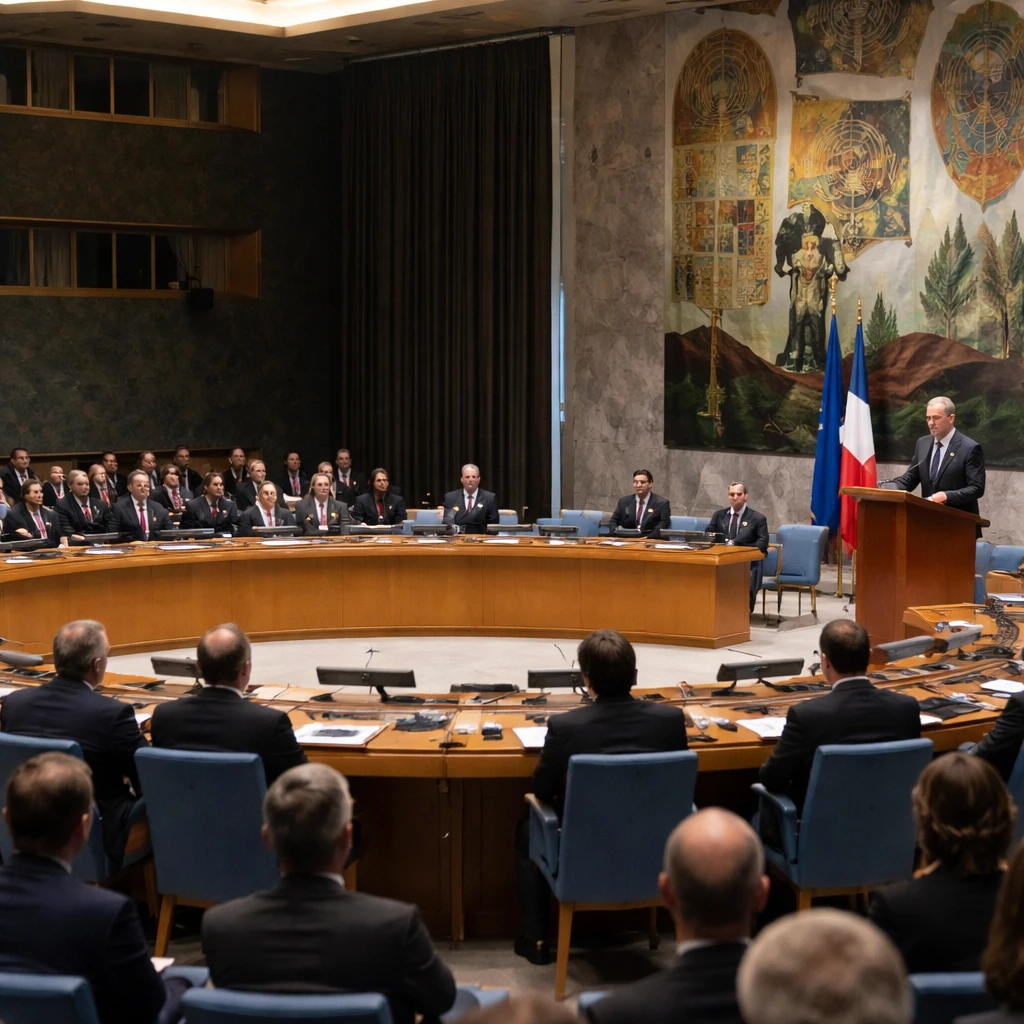
The United States staged a walkout from a United Nations Security Council meeting on Ukraine on Monday as France delivered remarks that Washington described as insulting and politicized. The departure came amid a sharp exchange between the two permanent council members over recent votes on the continuation of Volker Turk as the U.N. high commissioner for human rights.
The dispute intensified after France publicly criticized the U.S. for joining Russia, North Korea and seven other states in voting against a proposal to renew Turk's mandate for another four years. In response, U.S. Ambassador to the United Nations Mike Waltz accused France of supporting a rights chief who, in his view, attacks democratic governments including the United States and Israel while "cozying up to the world’s worst oppressors." Ambassador Waltz did not elaborate further on that charge.
During the Security Council session focused on Russia's war in Ukraine, Dan Negrea, the alternate U.S. representative to the United Nations, said the U.S. delegation left the chamber while France was speaking and signaled the delegation would remain absent until France rescinded what he called its "condescending and disrespectful rhetoric." He characterized France's comments as "politicized drivel" and "disingenuous grandstanding."
The contention over Turk's reappointment followed a vote in the U.N. General Assembly the prior Friday, where the measure to extend his term was put forward by U.N. Secretary-General Antonio Guterres. That vote passed with 144 states supporting the extension, 10 voting against and 13 abstaining.
Volker Turk has been a vocal critic of Russia's military campaign in Ukraine and of Israel's actions in Gaza. He has also called for inquiries into deaths that occurred in U.S. immigration custody. Those stances have drawn opposition from several states, and Russia, Israel and others opposed the term extension. According to the reporting, Washington has warned it may reassess its financial support and engagement with the U.N. in light of the vote.
Observers and rights groups cited in the discussion say the human rights post remains important as influence from autocratic governments grows internationally. The clash over Turk's second term was presented as symptomatic of broader strains between the current U.S. administration and the United Nations. The reporting notes prior actions by Washington that include reductions in funding for U.N. agencies and withdrawals from multiple U.N. bodies.
Asked for comment on the U.S. walkout, deputy U.N. spokesperson Farhan Haq declined to provide a direct response and reiterated the U.N.'s expectation that member states accept a decision that emerged from the General Assembly.
Context and process
The procedural sequence is documented: the General Assembly approved the extension of Turk's mandate, the vote prompted dissent from several states including the United States, France criticized that dissent, and the U.S. delegation subsequently left the Security Council chamber while France was speaking, citing France's remarks as unacceptable.