
World September 18, 2026 02:51 AM

Three-day Russian parliamentary vote opens as Kremlin frames it as yardstick for support of the Ukraine war

Balloting begins for the 450-seat State Duma amid exclusions of many anti-war candidates and concern over economic strains at home

By Leila Farooq
Share
Twitter Reddit Facebook LinkedIn

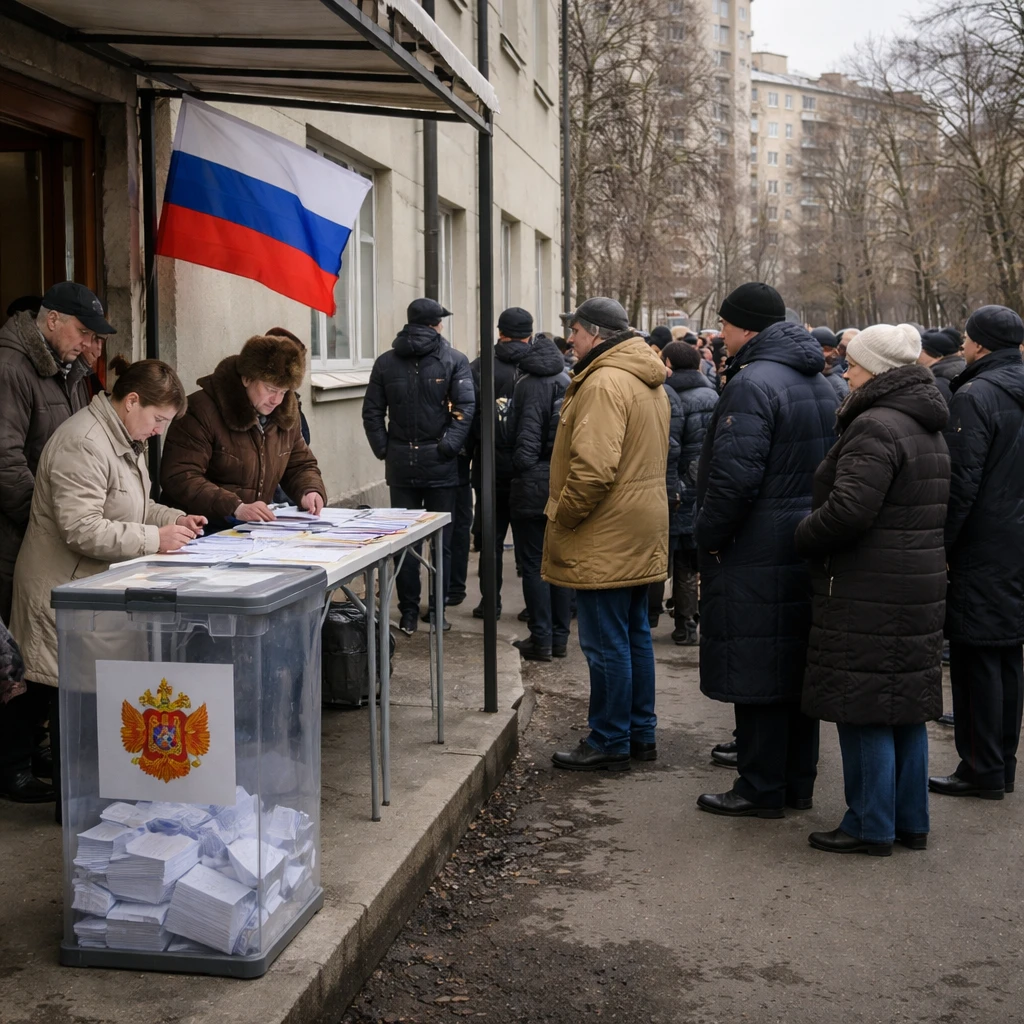
Voting commenced in Russia on Sept 18 for a three-day parliamentary election that will shape the 450-seat State Duma. President Vladimir Putin has presented the ballot as a measure of backing for Russia's campaign in Ukraine. The contest is expected to reinforce the dominance of the pro-Putin United Russia party in a tightly controlled political environment. Many anti-war contenders were removed from the ballot after the Supreme Court found that the liberal Yabloko party breached electoral rules, though a limited number of Yabloko candidates remain on ballots in individual districts.

Three-day Russian parliamentary vote opens as Kremlin frames it as yardstick for support of the Ukraine war
Summarize with
ChatGPT Perplexity Claude Grok Gemini

Key Points

  • The three-day election will decide the 450-seat State Duma and is presented by the Kremlin as a gauge of support for the war in Ukraine - relevant to political stability and governance.
  • Most anti-war candidates were disqualified after a Supreme Court ruling against the Yabloko party, though some Yabloko candidates remain in individual districts - affecting the electoral competitiveness of opposition forces.
  • Economic strains including fuel shortages from Ukrainian drone strikes, high interest rates, a labour crunch and Western sanctions are prominent issues that the authorities may seek to measure through the vote - impacting energy, business operations and financial sectors.

MOSCOW, Sept 18 - Voting opened on Friday for a three-day parliamentary election that will decide the composition of the 450-seat lower house of Russia's parliament, the State Duma. President Vladimir Putin has cast the vote as a test of public support for Russia's military campaign in Ukraine.

This is the first parliamentary contest since Russia launched its full-scale invasion of Ukraine in February 2022. Observers expect the ruling United Russia party, which supports the president, to maintain its leading position within what is described as a tightly controlled political system.

Most candidates who oppose the war were removed from contention after the Supreme Court concluded that the liberal Yabloko party had violated electoral rules. Despite that ruling, some Yabloko-affiliated candidates remain listed on ballots in individual constituencies.

In a televised address ahead of the opening of polling, President Putin urged citizens to vote, saying that participation would help ensure Russia's victory in Ukraine and display national resolve in the face of outside pressure. The Kremlin has emphasized the need for national unity, citing what it says are increasingly dangerous efforts by Ukraine's intelligence services and other adversaries to foment unrest inside Russia.

Voting is taking place against a backdrop of growing public anxiety in some quarters over how the conflict affects daily life. Polls cited in reporting indicate an uptick in concern among Russians about the local consequences of the war.

Economic pressures are also evident. Authorities are expected to use the election as a gauge of the depth of society's war weariness as the country contends with fuel shortages in parts of Russia attributed to Ukrainian drone strikes, and as businesses face elevated interest rates, a labour crunch and Western sanctions.

Officials said that initial and partial results would begin to appear at 1800 GMT on Sunday, with near-complete counts expected on Monday.


Context and process

  • The three-day span of voting will determine the makeup of the 450-seat State Duma.
  • The political environment is characterized as tightly controlled, with the pro-Putin United Russia party favored to retain dominance.
  • Legal rulings removed most anti-war candidates from the ballot, though a few Yabloko candidates remain in certain constituencies.

Timing of results

  • Initial, partial tallies are scheduled to start at 1800 GMT on Sunday.
  • Near-complete results are expected to be available on Monday.

Risks

  • Public war weariness and rising anxiety about the conflict could influence social stability and consumer confidence - posing risks to domestic demand and business investment.
  • Fuel shortages in some regions, linked to Ukrainian drone strikes, create operational disruptions for energy-dependent industries and regional services.
  • Continued high interest rates, labour shortages and Western sanctions may compound economic strain on companies and markets, limiting growth and adding financial pressure.

More from World

Russia Widens Missile Campaign Using Repurposed Training Rockets, Escalating Damage in Ukraine Sep 18, 2026 From Highland Insurgents to Regional Force: How the Houthis Came to Control Bab el-Mandeb Sep 17, 2026 Guterres Urges Accountability for States Supplying Weapons Used Against Civilians in Sudan Sep 16, 2026 Family Sues Texas Officials After Pregnant Woman’s Death, Saying Abortion Would Have Been Life-Saving Sep 16, 2026 UK Prime Minister to Host Canada's Carney at Everton Match During Liverpool Visit Sep 16, 2026