
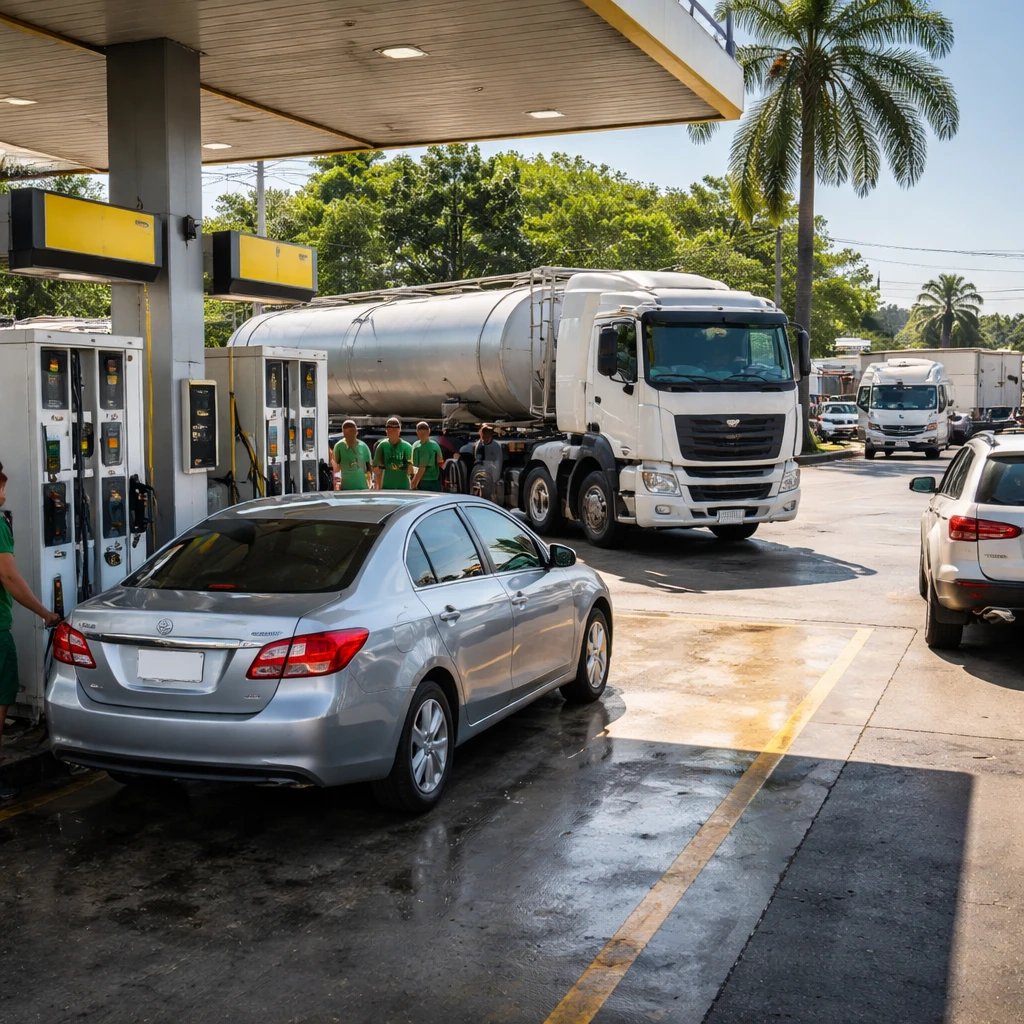
Brazil plans to withdraw support for fuel prices at different speeds for gasoline and diesel, with diesel receiving a slower timetable for removal, Planning and Budget Minister Bruno Moretti announced on Thursday.
According to Moretti, the gasoline subsidy of 0.44 Brazilian real per liter will be eliminated over a "much shorter" period, and its removal is expected in the coming days. By contrast, the larger diesel subsidy of 1.12 real per liter will be tapered off over a longer interval.
The minister said the staggered approach for diesel is intended to prevent abrupt price hikes or interruptions to fuel supply. "The diesel market has the predictability needed to operate and supply society," he said, characterizing diesel markets as requiring a gentler transition to maintain continuity of delivery.
Officials framed the policy as consistent with the government's aim of fiscal neutrality. The administration intends for any fiscal impact from removing subsidies to be offset by extraordinary oil revenues that remain payable to the Treasury.
Moretti warned that a rapid removal of the diesel support could produce a sharp increase in diesel prices, noting that recent declines in oil prices have not yet fully translated into lower pump prices for consumers. That recent fall in crude followed a preliminary peace deal involving the U.S. and Iran, which eased some of the supply uncertainty earlier in the year.
Brent crude, which surged above $118 a barrel following the outbreak of conflict in the Middle East in late February, was trading at $71.51 a barrel on Thursday.
Separately, the government is evaluating whether to terminate or scale back a 12% export tax on crude oil that was introduced in March. No decision was announced, and Moretti did not provide a timeline for any change to that tax.
Context and next steps
- The gasoline subsidy of 0.44 real per liter is slated for removal over a short period, with changes expected in the coming days.
- The diesel subsidy of 1.12 real per liter will be phased out more slowly to reduce the risk of sudden price increases or fuel shortages.
- The government intends to remain fiscally neutral by using extraordinary oil revenues still due to the Treasury to offset costs associated with subsidy withdrawal.