
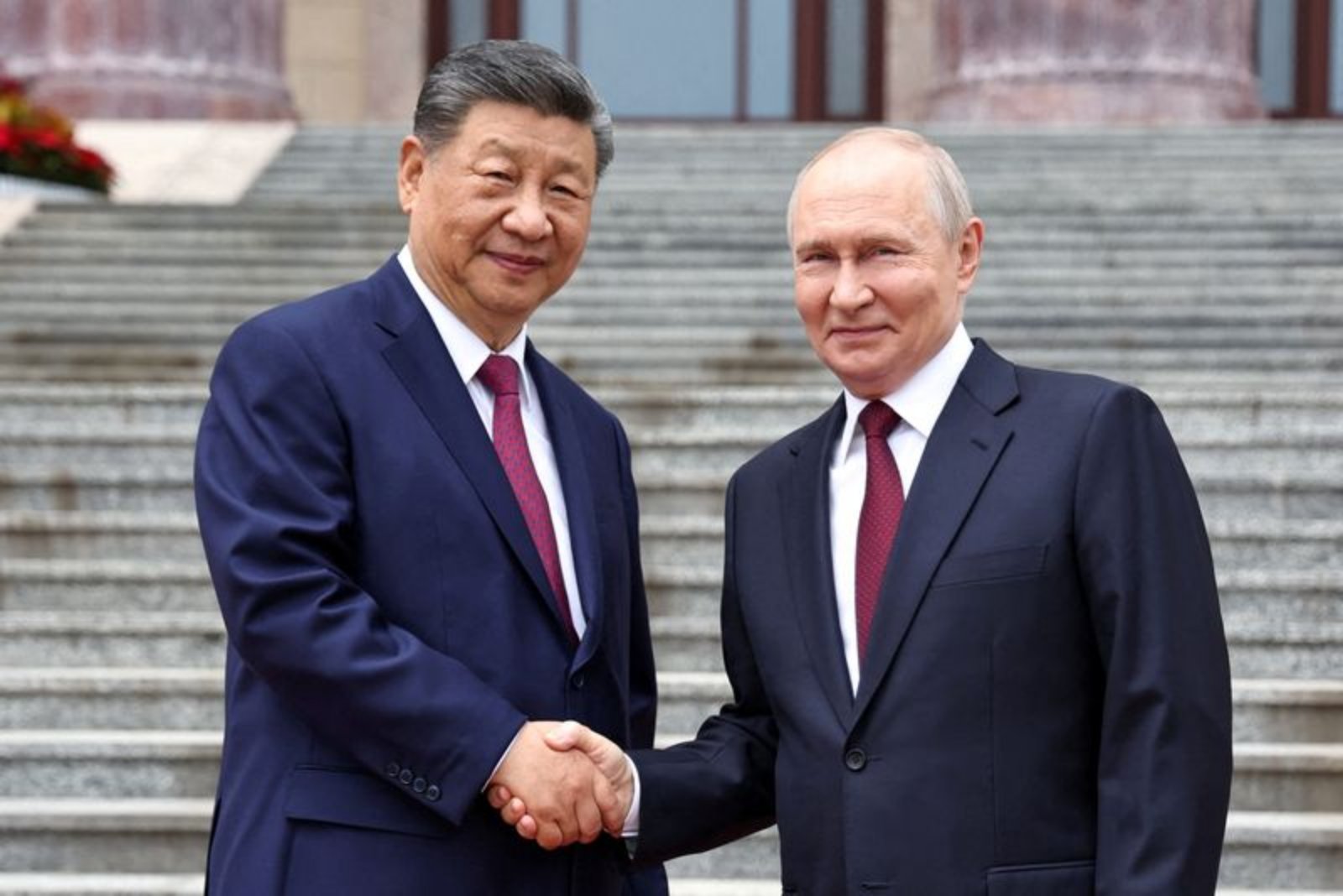
Chinese President Xi Jinping and Russian President Vladimir Putin held formal talks on Wednesday that both celebrated an advancing bilateral relationship and reiterated shared criticisms of U.S. strategic moves, while stopping short of finalising a headline natural gas pipeline deal.
The visit opened with full state honours at the Great Hall of the People, where an honour guard performed and a gun salute was fired as children waved Chinese and Russian flags. Later in the day the two leaders were scheduled to participate in a tea ceremony.
What the leaders said and signed
Xi and Putin issued a joint statement spanning 9,935 words that addressed an array of topics, from nuclear security and the status of Taiwan to cultural and environmental subjects such as Amur tigers, giant pandas and golden snub-nosed monkeys. Alongside that extended statement, the two countries released a shorter joint declaration. Officials also signed roughly 20 additional documents covering areas including sanitary norms, state media cooperation and nuclear energy.
The joint declaration explicitly criticised efforts by some countries to dominate global affairs in a manner likened to the colonial era, and warned of a risk that international competition could revert to a 'law of the jungle'. The document also named U.S. President Donald Trump's so-called Golden Dome missile defence plans as a threat to strategic stability and accused Washington of shirking responsibility for negotiating a replacement to a landmark nuclear arms treaty.
State of China-Russia relations
Historically, ties between Moscow and Beijing have shifted across decades. Following a period of estrangement, the two nations rebuilt a working partnership after 1991. More recently, the relationship has seen a power shift in Beijing's favour as China has grown into a major economic and technological presence.
Since Russia's military action in Ukraine in 2022, economic interactions between the two have deepened. Russia now counts China as its largest trading partner, with bilateral trade running to roughly $240 billion according to Russian figures, and China remains the biggest purchaser of Russian crude. For China, Russia ranks as its fifth-largest trading partner behind the United States, Japan, Korea and Vietnam according to Kremlin figures cited by officials.
Comparing the recent state visits
The scheduling of state welcomes for both President Trump and President Putin within a short window highlighted the diplomatic prominence of Xi and the rise of China under his leadership since 2012. Russian officials emphasised that the substance of the visits - rather than purely ceremonial elements - should be the primary measure of impact, noting that not all outcomes are visible at the surface.
In the case of the U.S. visit, no major breakthroughs on trade or substantive steps on the Iran conflict were announced publicly when President Trump departed. Similarly, although the Putin meeting generated extensive joint language and multiple signed documents, as of the time of reporting no singular major commercial deal between Russia and China had been reported.
Energy and technology threads
One of the most consequential items on the bilateral agenda was the long-discussed Power of Siberia 2 natural gas pipeline. The Kremlin stated that both sides have reached a general understanding on the project, which would carry gas across Mongolia from northern Siberia to China. However, officials acknowledged that essential details, including pricing and a construction timetable, remain to be negotiated. The two countries have been engaged in talks for years and have yet to resolve outstanding commercial and technical questions.
The meeting also touched on technological collaboration. Russian officials expressed interest in powering a flagship GigaChat artificial intelligence model using Chinese-manufactured chips, as Western sanctions continue to restrict Russia's access to advanced computing hardware abroad, according to a statement from a senior Russian banking executive.
Bottom line
The state visit reaffirmed an increasingly close China-Russia partnership, produced a lengthy joint statement and several supplementary documents, and registered pointed criticism of U.S. strategic initiatives. At the same time, a headline energy project remains without a concrete agreement, leaving significant commercial and implementation questions unresolved.