
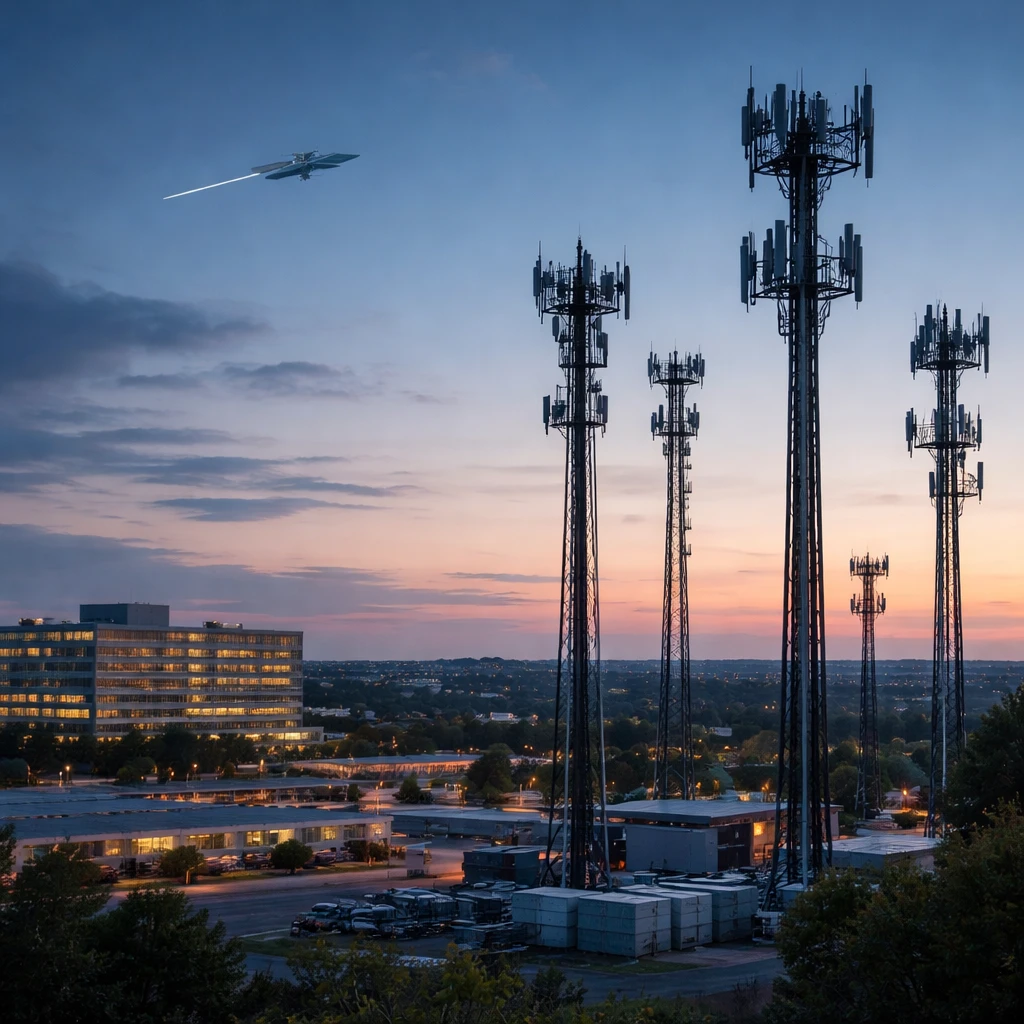
Wolfe Research has moved to temper expectations for Crown Castle Inc., lowering its rating from "Outperform" to "Peer Perform" after concluding that the company's long-term growth outlook has weakened materially. The brokerage also withdrew its $94 price target under firm policy once the stock neared that level, noting the shares were trading at $92.34 as of May 19.
Analysts at Wolfe acknowledged they had underestimated the risk that DISH Network would default on lease payments. That development, together with a backdrop of rising interest rates, has led the firm to reduce its projected earnings and to recalibrate Crown Castle's sustainable growth profile.
Specifically, Wolfe trimmed its 2027 adjusted funds from operations estimate by roughly 14%, and cut its expected long-term growth rate from 6.9% to 5.4%. The brokerage said the loss of DISH-related revenue not only damaged current rental income but also removed an element that had been contributing to the company's annual organic growth.
Those revisions have altered how Crown Castle stacks up against peers. Wolfe noted valuation metrics look less attractive relative to other companies in the cell tower, data center, and net lease REIT sectors, given the reduced growth outlook and earnings pressure.
In recent corporate moves, Crown Castle completed the sale of its fiber and small-cell business. Proceeds from that sale are slated in part for debt reduction and to fund $1 billion in share repurchases. Wolfe cautioned, however, that while buybacks may provide near-term support for the share price, they are not necessarily a durable substitute for the organic growth that was diminished by the DISH default.
Looking ahead, the report identified several potential catalysts that could move the stock. Ongoing litigation related to unpaid DISH lease obligations is one such factor; Wolfe said a favorable settlement could produce meaningful upside, though it also noted that some degree of optimism on this outcome may already be priced into the shares.
The brokerage also highlighted growing investor interest in SpaceX and its Starlink satellite network. Wolfe characterized current satellite systems as complementary to traditional wireless towers, but warned that improvements in future satellite technology could eventually increase competition for terrestrial infrastructure providers.
Other risks flagged in the report include higher interest rates, technological disruption to cell towers, and uncertainty linked to industry consolidation. Wolfe added that potential privatization transactions involving other tower operators, such as SBA Communications, could nevertheless provide support to valuations across the sector.
Summary
- Wolfe Research downgraded Crown Castle from Outperform to Peer Perform and withdrew its $94 price target after the stock approached that level, citing weaker long-term growth prospects.
- The firm cut its 2027 AFFO estimate by roughly 14% and lowered its long-term growth forecast from 6.9% to 5.4% following DISH Network's lease payment default and a higher-rate environment.
- Crown Castle's sale of its fiber and small-cell business will fund debt reduction and $1 billion in share repurchases, but Wolfe warned buyback support may fade over time.
Key points
- Sector effects: The downgrade and revised forecasts affect valuation comparisons among cell tower, data center, and net lease REIT peers.
- Balance sheet actions: Asset sale proceeds are being used for debt reduction and a $1 billion repurchase program, altering the company's funding mix and shareholder return strategy.
- Potential catalysts: Litigation outcomes over unpaid DISH lease obligations and technological shifts in satellite-capable networks could meaningfully influence the share price.
Risks and uncertainties
- Higher interest rates could further pressure valuation multiples and REIT financing costs, affecting the sector broadly.
- Technological disruption from evolving satellite systems could intensify competition for terrestrial tower operators.
- Uncertainty around industry consolidation and possible privatization deals may cause valuation swings across tower companies.