
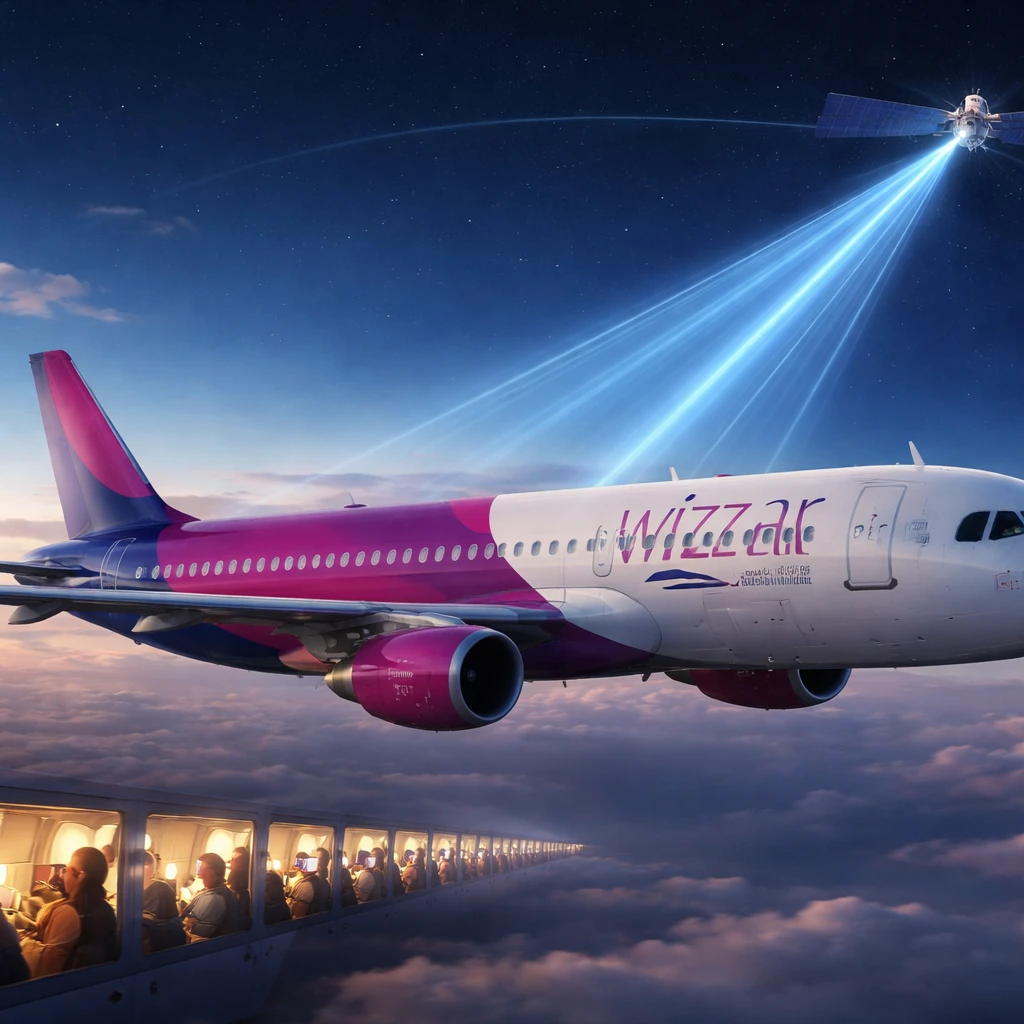
Wizz Air said on Monday it plans to make Starlink satellite internet available across its aircraft beginning next year, marking the first deployment of the SpaceX-backed service by a European ultra-low-cost carrier.
The airline did not provide any financial details surrounding its arrangement with Starlink. Those commercial terms remain undisclosed.
The timing of Wizz Air’s announcement coincides with SpaceX’s preparations to list publicly. The airline’s decision also follows public comments from budget rivals on the cost pressures of adopting the system. Both Ryanair and EasyJet have previously signaled that integrating Starlink into their operations would be expensive.
Ryanair’s chief executive, Michael O’Leary, has estimated that providing the satellite service could cost that carrier up to $250 million per year, a figure he said includes additional fuel expenses. Wizz Air did not provide its own cost estimates or projections tied to the rollout.
Starlink is already the largest operator in the commercial satellite internet sector and has struck connectivity agreements with a range of airlines. The company has secured partnerships with several U.S. carriers, including American Airlines, Southwest, United and Alaska, as well as with long-haul operators such as Singapore Airlines and Emirates.
In related corporate news, Wizz Air said in May that it expects to break even or post slightly positive full-year earnings for its 2026 financial year, which ended on March 31. The company’s guidance did not connect profitability estimates directly to the Starlink deployment.
Wizz Air’s announcement represents a notable step for inflight connectivity adoption among cost-sensitive carriers in Europe. While the airline moves ahead with fleetwide availability next year, several financial and operational questions remain unanswered in the public disclosure, including the contract price and the impact on unit costs or ticketing strategies.
Observers will likely watch how Wizz Air’s implementation compares with existing Starlink agreements held by other international carriers and whether the rollout affects competitive dynamics among European budget airlines. For now, the only confirmed elements are the start date - next year - and the fact that the company will offer Starlink across its fleet.