
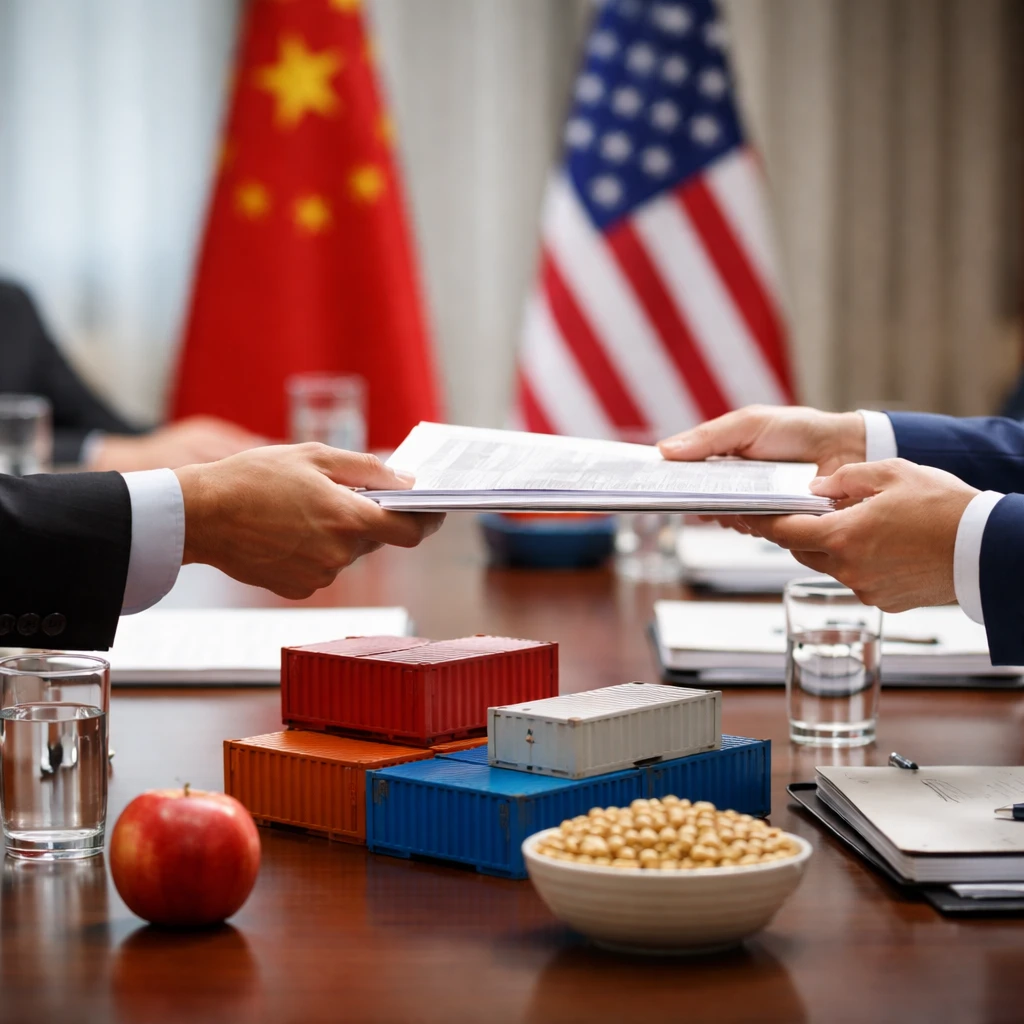
BEIJING, July 23 - Chinese authorities have launched a broad consultation seeking feedback from enterprises, trade associations and local governments on planned reciprocal tariff reductions with the United States that would cover about $30 billion in goods, the commerce ministry said on Thursday.
The ministry said teams representing both sides have kept close contact while working through the design of the tariff-reduction framework and the setup of a Board of Trade. That Board is intended to examine where duties could be lowered within the roughly $30 billion scope agreed earlier this year.
According to the commerce ministry, the two governments reached a trade truce late last year that halted the escalation of tariffs, and subsequently agreed to create the Board of Trade this year as a mechanism to identify areas for reciprocal duty cuts.
The ministry also reiterated that agricultural products would be included in the tariff-cut framework, a detail it had signaled in May.
"China is widely soliciting opinions from domestic enterprises, business associations, local governments, and U.S. business associations on relevant tariff reduction arrangements," said Meng Huating, a commerce ministry official.
Meng added that the United States is undertaking a parallel process of seeking public views on potential tariff cuts. The ministry said Beijing and Washington will finalize specific arrangements as soon as possible and move forward with implementation to broaden bilateral trade.
Summary
China is collecting input from a range of domestic stakeholders and engaging with U.S. counterparts as both sides prepare the operational and governance details of a joint Board of Trade and a reciprocal tariff-cut package covering about $30 billion of goods, including agricultural items.
Key points
- China is inviting feedback from domestic enterprises, business associations and local governments on tariff reduction arrangements; U.S. business groups are also being consulted.
- Teams from China and the United States are in close communication regarding the tariff reduction framework and the Board of Trade's structure, functions and operating model.
- The tariff-cut effort targets roughly $30 billion in goods and explicitly includes agricultural products, as previously indicated by the ministry.
Risks and uncertainties
- The exact timing and specific terms of the tariff reductions have not been set and await agreement by both governments, leaving implementation schedules uncertain.
- Outcomes of the public consultations could influence the design and pace of the arrangements, introducing uncertainty into the final scope and operational details.
- The initiative is limited in scale to about $30 billion of goods, which may constrain the overall reach of duty relief for bilateral trade and affected sectors such as agriculture.