
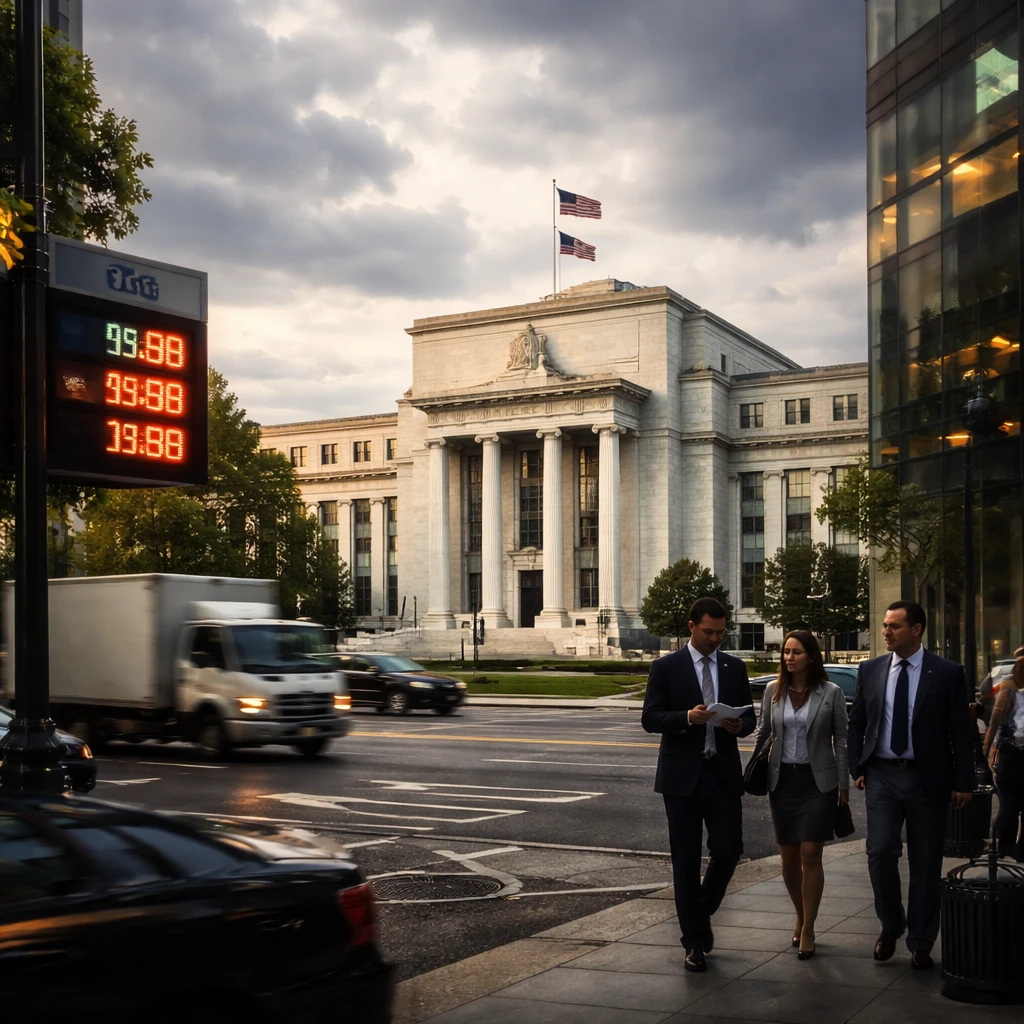
Federal Reserve Chair Kevin Warsh has chosen a muted public posture on the likely path of interest rates, but recent developments on energy prices and trade combined with a hawkish cast among his colleagues threaten to make that restraint increasingly difficult to maintain.
The central bank is widely expected to leave its policy rate where it has been since December, in the 3.50%-to-3.75% range. Still, building consensus around that outcome may prove more fraught for Warsh than in prior meetings. Oil prices have moved higher again, President Donald Trump has prepared further tariff actions, and several Fed officials appear to be positioning for a potential rate increase if inflation fails to trend down.
Officials at the Fed have spent more than five years dealing with inflation above the 2% target and real incomes that have fallen when adjusted for inflation. That history has hardened opinions among some policymakers that mere rhetoric is insufficient - as Warsh has put it, the Fed should have "no tolerance" for inflation that threatens price stability - and that decisive policy moves may be required.
In congressional testimony last week, Warsh reiterated his assessment that inflation remains too high, but he stopped short of offering guidance on future rate moves. He limited his comments to saying the Fed would examine its "tools" and weigh whether policy needed adjusting. That reticence contrasts with starker language from other officials.
"Sternly staring at inflation until it melts before our withering gaze is not an option," Fed Governor Christopher Waller said earlier this month. Observers interpreted Waller's comments as a rebuke of Warsh's strategy not just to avoid forward guidance on the path of rates, but also to curb commentary on the economy and on how he would react to changing conditions.
While measures of inflation expectations have looked subdued recently, Waller warned that low expectations alone do not justify delaying policy action until headline inflation accelerates again. "It does not mean we can be lackadaisical" and put off rate adjustments until later, he said. Waller is among those who have been publicly explicit about willingness to raise rates should inflation fail to fall.
The Fed will meet on July 28-29, with a policy announcement scheduled for 2 p.m. EDT (1800 GMT) on Wednesday. The central bank's policy committee faces a different backdrop than earlier in the year: during the pandemic-era spike, the Personal Consumption Expenditures price index climbed above 7% in June 2022, prompting the Fed into an unusually rapid campaign of rate hikes after an interval that Warsh later criticized as a mistake he would not repeat.
Inflation did ease from its peak and the PCE index moved closer to the 2% target across 2024. Yet over the past 18 months tariffs and higher energy costs have pushed inflation upward again, reversing some of the forces that had been expected to moderate price pressures. Foremost among those are a renewed rise in oil prices, fueled in part by a flare-up in the Middle East, and the prospect of additional tariffs announced by the president.
For some Fed officials, such developments have been weakening the case for patience. That reasoning has given Warsh a basis to argue against forward guidance, suggesting the current juncture is not one where committing to a future policy path is appropriate. But his approach of deflecting questions by asserting that inflation cannot become entrenched because the Fed will not allow it - a circular logic critics say risks sounding like denial rather than a strategy - may reach its limits if momentum behind a rate increase grows among his colleagues.
On the official inflation readings front, the PCE index that the Fed uses as its preferred gauge rose 4% year-on-year in May, double the central bank's 2% goal and showing a notable rise in recent months. Those developments, combined with renewed cost pressures from oil and tariffs, have heightened worries that public confidence in the Fed's commitment to restoring price stability could erode.
Not all officials are as guarded as Warsh. Regional Fed presidents and other governors have adopted a firmer posture. In what were her final public remarks before the upcoming meeting, Cleveland Fed President Beth Hammack said that business leaders in her district had actually been urging for higher rates - a striking departure from the usual business preference for cheaper credit.
"For the first time in my tenure, I’m hearing from businesses who say they think we need to take action to curb inflation, and from consumers who can’t make ends meet, about a growing sense of despair," Hammack wrote on LinkedIn. Her account underscores a rising sense among some business contacts that inflation remains a pressing problem.
Survey evidence lends weight to these anecdotal reports. A quarterly Fed poll of corporate finance chiefs released in June identified inflation as the top concern for businesses, with firms indicating that although they had absorbed rising energy and other costs so far, many were prepared to pass on higher expenses through price increases. In the prior iteration of the survey, inflation ranked sixth behind issues such as trade and worker quality.
Signals from the Fed's Beige Book for July also point to price increases moving through supply chains and contracts. The St. Louis Federal Reserve highlighted one example: "A Memphis-area firm observed that vendors are increasingly adding inflation-indexed price adjustments to their service contracts, a practice that was previously uncommon." Such behavior suggests businesses are adapting to a higher-price environment or expecting continued cost pressures.
Recent work by major banks reinforces concerns that elevated inflation is not confined to a few energy- or tariff-related categories. Analysts at JPMorgan and Goldman Sachs have flagged broader price pressures. Goldman economist Jessica Rindels estimated that in June nearly 60% of categories in the PCE index were experiencing annualized price increases above 3% - a figure lower than the near-80% share seen during the height of the COVID-19 spike but well above the 37% average from 1990 to 2019 when inflation was generally near the Fed's target.
The Fed's formal adoption of the 2% inflation target in 2012 followed a long period in which inflation often ran below that level. By February 2021, the PCE index was more than 5% below where it would have been had the Fed consistently hit its 2% goal. The subsequent run-up in prices has erased that cushion: the PCE index is now around 5.5% higher than it would have been under continuous adherence to the target, a gap that has reduced household purchasing power across the economy.
A rate increase at the upcoming meeting is not certain. Gasoline prices, for example, have climbed back toward $4 a gallon as the U.S. enters the peak summer driving season. Tariff threats also pose a reason for caution, since they could translate into higher import costs and transient price moves. Several forecasters included in recent notes expect that the breadth of price pressures will narrow later in the year, a point Rindels and others have cited as a basis for patience.
Still, that expectation of improvement makes the data for the next few months more consequential, and raises the stakes for Warsh's no-guidance stance. If inflation readings continue to surprise on the upside, the tension between Warsh's reluctance to telegraph policy and the growing appetite among other officials to act could intensify.
"There is a growing sense of frustration with inflation," said Dario Perkins, managing director of global macro at TS Lombard. "After six years of overshooting their target, people are starting to ask difficult questions about 'credibility.' The Fed’s plausible deniability is gone. There is no tolerance for further misses."
As the Fed's policy committee approaches the July gathering, officials will weigh the trajectory of inflation, the durability of recent price increases across many categories, and the risks posed by energy and trade policy developments. How they reconcile those factors with Warsh's preference for limited guidance will shape not just the immediate policy statement, but also market and public perceptions of the Fed's determination to restore price stability.
Summary
Chair Kevin Warsh's avoidance of forward guidance faces tests from rising oil prices, potential tariffs, and a more hawkish cohort of Fed officials. With inflation still above target and several measures pointing to broad-based price pressures, the Fed's July meeting and subsequent data releases will be pivotal in determining whether the central bank stays on hold or pivots toward higher rates.
Key points
- The Fed is expected to keep its policy rate at 3.50%-3.75% at the July 28-29 meeting, but building consensus may be harder amid rising inflation risks.
- Recent rises in oil prices and threats of additional tariffs have reversed trends that were moderating inflation, increasing the chance of policy action if inflation does not recede.
- Several Fed officials, including Christopher Waller and regional presidents, have signaled openness to raising rates, reflecting concern that inflation remains too elevated.
Risks and uncertainties
- Energy price shocks - A renewed rise in oil and gasoline prices could push headline inflation higher, impacting consumers and sectors sensitive to fuel costs, such as transportation and retail.
- Tariff-driven import cost increases - Additional tariffs could raise costs for businesses that rely on imported inputs, leading to pass-through into consumer prices and affecting manufacturing and consumer goods sectors.
- Broad-based inflation persistence - If price pressures remain widespread across PCE categories, it may force the Fed to tighten policy, affecting borrowing costs for households and businesses and influencing markets sensitive to interest rates.