
Overview
The businessman who helped arrange the Trump administration’s expansive long-term oil agreement with Venezuela had, until recently, been the subject of U.S. money-laundering inquiries tied to funds alleged to have been misappropriated from Venezuela’s state oil firm PDVSA. He now stands as a central partner to Washington under a high-profile petroleum deal with Caracas that effectively grants U.S. agencies privileged access to a significant portion of Venezuela’s crude for decades.
Under the terms announced last week, the Pentagon’s Office of Strategic Capital acquires a 35% ownership stake in North American Blue Energy Partners - NABEP - the company associated with the businessman. Separately, the State Department secures the right to purchase 20% of NABEP’s oil at cost and obtains preferential access to the remaining 80% of the venture’s production. Officials have characterized the package as giving the United States access to approximately one-fifth of Venezuela’s crude reserves over an extended period.
Role in U.S. policy and prior investigations
Sources familiar with U.S. policy in Venezuela say the businessman played a central role in U.S. strategy and planning in the run-up to the January 3 operation that removed former President Nicolas Maduro and transferred him to New York to face drug-trafficking charges, which Maduro denies. Those same sources say he provided information to U.S. authorities that assisted enforcement of a U.S. naval blockade targeting sanctioned tankers servicing Venezuela. That effort reportedly led to the seizure or interdiction of more than a dozen vessels.
U.S. federal prosecutors had investigated the businessman in connection with an alleged scheme to embezzle over $1 billion from PDVSA and launder funds through Miami real estate and bank accounts in Malta and Switzerland. Officials familiar with the case say that the probe in Florida was paused earlier this year. Reuters could not determine exactly when the inquiry was suspended or whether the pause was linked to cooperation with U.S. authorities. A lawyer for the businessman, Sarah Chouraqui, said the allegations had been thoroughly examined across multiple jurisdictions and that no charges had been filed against him. She did not address questions about any assistance he may have provided to U.S. officials or the status of legal matters.
Operational credentials and commercial role
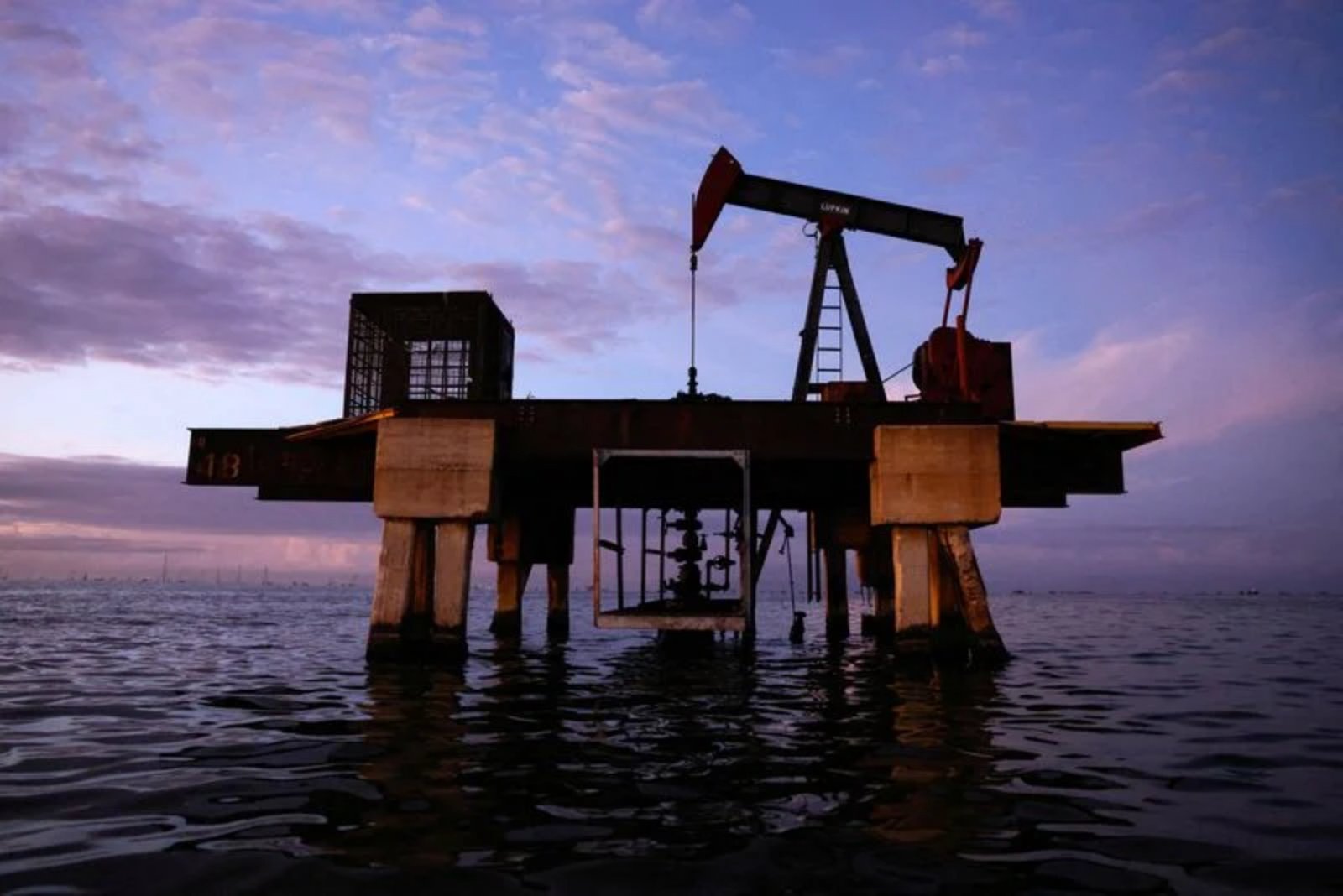
Officials involved in the deal pointed to NABEP’s operational history producing crude in Venezuela as a key factor in selecting the businessman as a partner to ramp up output under the new agreement. NABEP was co-founded in April 2024 together with Florida billionaire Harry Sargeant. Sargeant sold his stake in NABEP last month.
Following Maduro’s removal, the businessman continued as an intermediary, facilitating oil transactions, promoting partnerships and helping maintain channels of communication between Washington and Caracas aimed at reviving Venezuela’s economy. Sources say he helped negotiate a trading arrangement in January that, according to vessel monitoring data and individuals with knowledge of the negotiations, has resulted in exports of more than 135 million barrels of crude and fuel to the United States, Europe, India and the Caribbean through the end of August. Those exports represent roughly half of Venezuela’s oil shipments over that period, according to those sources.
Observers said he has attended meetings at Venezuela’s Miraflores presidential palace on multiple occasions. He was present during a recent visit to Miraflores by the U.S. Energy Secretary, though he did not join the signing ceremony for oil deals involving the U.S. Energy Secretary and interim President Delcy Rodriguez.
Legal scrutiny across jurisdictions
Beyond the United States, Spain and Switzerland have each pursued inquiries involving the businessman for alleged money-laundering connected to misappropriated PDVSA funds. Spanish authorities opened a probe last year related to claims of roughly $4 billion being siphoned from the state oil company; the reporting does not specify any further findings. Switzerland had sought the businessman’s extradition from the United Kingdom as part of its inquiries but withdrew that request in May. The Zurich Public Prosecutor’s Office said the extradition request was withdrawn because of certain aspects of UK extradition law and that criminal proceedings otherwise continue. A Swiss legal scholar and anti-corruption expert described the withdrawal as unusual, saying "You would not do that if the case is continuing." The United Kingdom’s Home Office declined to comment.
Sources familiar with the U.S. investigation said prosecutors in Florida were reportedly discouraged by supervisors from continuing their inquiry; the prosecutors were not provided an explanation, according to four people with knowledge of the matter. After the Florida probe stalled, U.S. officials purportedly urged the Swiss government to scale back its inquiries into the tycoon, according to those sources. The Zurich prosecutor’s office declined to comment on whether U.S. pressure influenced Switzerland’s decision to pull the extradition request.
Background on business ties and past contracts
The businessman is a notable member of a cohort of younger business leaders who amassed wealth during the administration of former president Hugo Chavez, often referred to in political and business reporting as Bolichicos. His company, Derwick Associates, secured roughly $2 billion in state contracts to build power plants during Venezuela’s electricity crisis in the 2010s. Some of those contracts were awarded without competitive bidding despite the company’s limited construction experience, according to government data referenced by sources. Subsequent official information showed many of those plants operated below capacity or not at all, while the country continued to experience widespread blackouts. Derwick and the businessman have denied wrongdoing and have said the plants were completed and later failed due to state mismanagement. Interim President Delcy Rodriguez said at a press conference that legal actions against the businessman’s companies in Venezuela had been dismissed years ago.
In 2012 the businessman entered a partnership with the state-controlled PDVSA to operate mature fields in western Venezuela. Those operations later formed the core production base for NABEP, the firm that became central to the recent U.S.-Venezuela oil arrangement.
Reactions and domestic concerns
Some former U.S. intelligence officials, prosecutors and diplomats privately expressed unease about the degree of the businessman’s influence on U.S. policy, citing the prior U.S. investigation, ongoing Swiss inquiries and his ties to senior figures from both the Chavez and Maduro governments. A former prosecutor described federal prosecutors as "scratching their heads" over the situation. Prosecutors previously identified him as an unnamed unindicted co-conspirator in an alleged scheme by former Venezuelan energy officials and associates to launder more than $1 billion taken from PDVSA; since 2018 ten people have been indicted in connection with that matter.
Mauricio Claver-Carone, a Miami businessman and former Trump administration adviser who worked on U.S. policy in Caracas in an unofficial capacity, described the businessman as a useful intermediary between the Trump administration and interim President Rodriguez because of his knowledge of the oil industry in both countries, and said he had been helpful to the first Trump administration.
Movements and travel
After the United Kingdom allowed him to travel, the businessman returned to Venezuela in late June and again in July, flying out of West Palm Beach, Florida on both occasions, according to flight manifests. His lawyer did not comment on his travel arrangements.
What remains unresolved
Key questions about the timing and rationale for the pausing of U.S. federal investigations remain unanswered. It is unclear whether the suspension of the Florida probe was tied to cooperation with U.S. authorities or any diplomatic agreement. Authorities in Spain and Switzerland remain involved in inquiries of varying scope, and Swiss prosecutors say criminal proceedings will continue despite the withdrawal of the UK extradition request. Multiple sources said U.S. prosecutors handling the Florida matter were not given a reason for being discouraged from pursuing the case further.
Officials involved in the new oil arrangement cited NABEP’s Venezuelan production record as the practical reason for choosing the firm as a partner to increase output under the agreement; beyond those operational justifications, the sequence of legal and political events that led to the businessman’s central role in the deal has prompted concern among some former U.S. officials and legal experts.
Reporting indicates the agreement has already facilitated large-scale exports and established direct commercial relationships between U.S. agencies and a private energy firm tied to a businessman previously under legal scrutiny in several countries. Many legal and diplomatic threads remain active, and some investigators and experts continue to question aspects of the process that led to the current arrangement.