
Overview
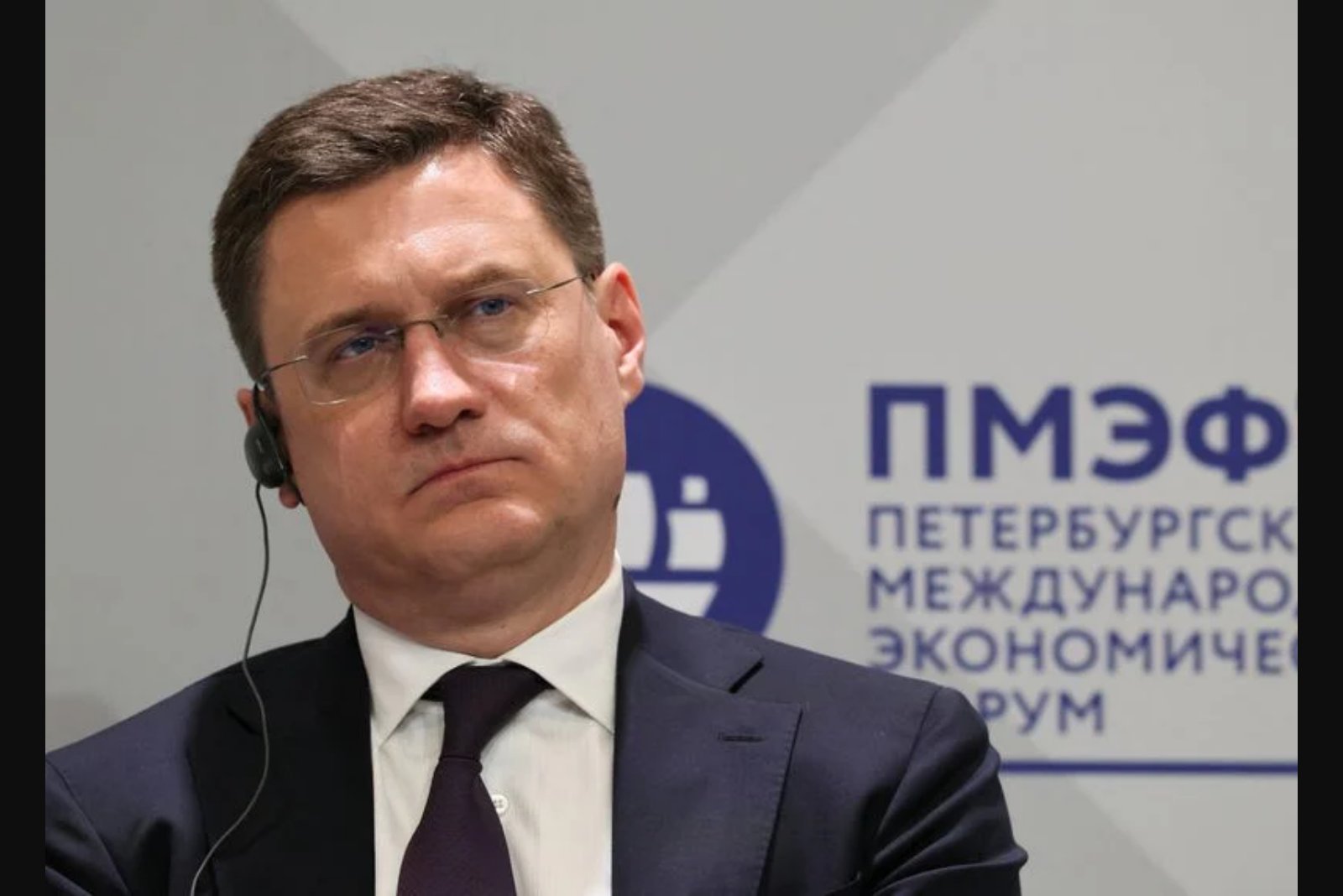
Russia says it can boost diesel shipments to international markets beyond the amounts publicized by the U.S. president, according to Deputy Prime Minister Alexander Novak. Novak, who leads on oil matters for President Vladimir Putin, told state television that Moscow has room to expand exports and that monthly flows could return to levels seen before recent disruptions.
Novak's assessment and projected volumes
On state-run Rossiya-24, Novak said, "We will see how the situation develops further, but Russia has the capacity to increase diesel fuel exports." He added that by the end of the year exports could reach 3.0-3.5 million metric tons per month, returning to the levels seen before the crisis. Those figures would put Russia’s shipments back to a scale matching pre-crisis monthly flows cited by Russian officials.
Context: supply disruptions and ongoing shipments
Russian diesel exports have fallen sharply after a combination of Ukrainian attacks on oil refineries and Moscow’s own restrictions on overseas sales. The government has at times imposed a ban on exports, but under state-mediated arrangements Russia has continued to supply diesel to certain countries, principally in Central Asia. Industry sources cited by Russian officials say shipments to Central Asia totaled 427,000 metric tons last month.
Novak and other Russian officials point to sustained attacks on Ukrainian energy infrastructure since the launch of Russia’s full-scale invasion in 2022 as a factor in the regional energy disruption. Before a wave of drone attacks on Russian refineries in 2024-2025, Russian diesel exports reportedly exceeded 3 million metric tons per month.
U.S. announcement and international reaction
Last Friday, the U.S. president announced that Russia had agreed to supply diesel to global markets, and the U.S. administration temporarily lifted sanctions on Russian fuel that had been intended to limit Moscow’s wartime revenues. The president said Russia would immediately supply more than 300,000 metric tons of diesel - a volume equivalent to roughly 2.25 million barrels - followed by another 500,000 tons in November and a further 1 million tons "immediately thereafter."
To provide scale, U.S. Energy Information Administration data indicate that U.S. daily diesel use in the transport sector is about 2.94 million barrels, making the initial 2.25 million-barrel shipment less than a single day’s U.S. transport-sector consumption.
Political pushback and diplomatic messaging
The deal has drawn criticism from some U.S. lawmakers who argue it risks providing Moscow with cash that could be used to continue military operations without securing concessions. Ukrainian President Volodymyr Zelenskiy called the arrangement a reversal of Western policies intended to isolate Russia’s economy. Zelenskiy also pointed to recent Russian airstrikes against at least six energy targets during a deadly wave of attacks and said those strikes indicate Moscow has no interest in an energy ceasefire.
U.S. envoys, according to three people familiar with a recent meeting, told Ukrainian officials that the diesel agreement was aimed at encouraging Russia to return to negotiations after prior efforts to establish sustained talks failed.
Market effects and Russian trade figures
Novak said the restored supplies under the deal will partially rebalance global diesel supply and demand, and he pointed to an observed drop in prices. "We are already seeing this effect, including in global diesel markets, where prices have fallen by around five to six percent," he said on Rossiya-24.
Separately, Novak challenged U.S. estimates for the value of Russian energy resources sold to Europe since 2022. He said the figure of $250 billion was "significantly" understated and put the value at $320.7 billion, describing that sum as the volume of energy resources supplied to European Union countries from 2022 to the present day.
Implications for markets and policy debates
The public exchanges underline competing priorities: efforts to ease fuel shortages and reduce prices for consumers and industry, and concerns that resuming sizable purchases from Russia could relieve financial pressure on Moscow without achieving diplomatic concessions. The arrangement and the debate it has sparked may influence diesel market liquidity and pricing in the near term while keeping trade and geopolitical risks in focus.
Reporting here is based on statements by Russian officials and public comments from U.S. and Ukrainian figures as described above.