
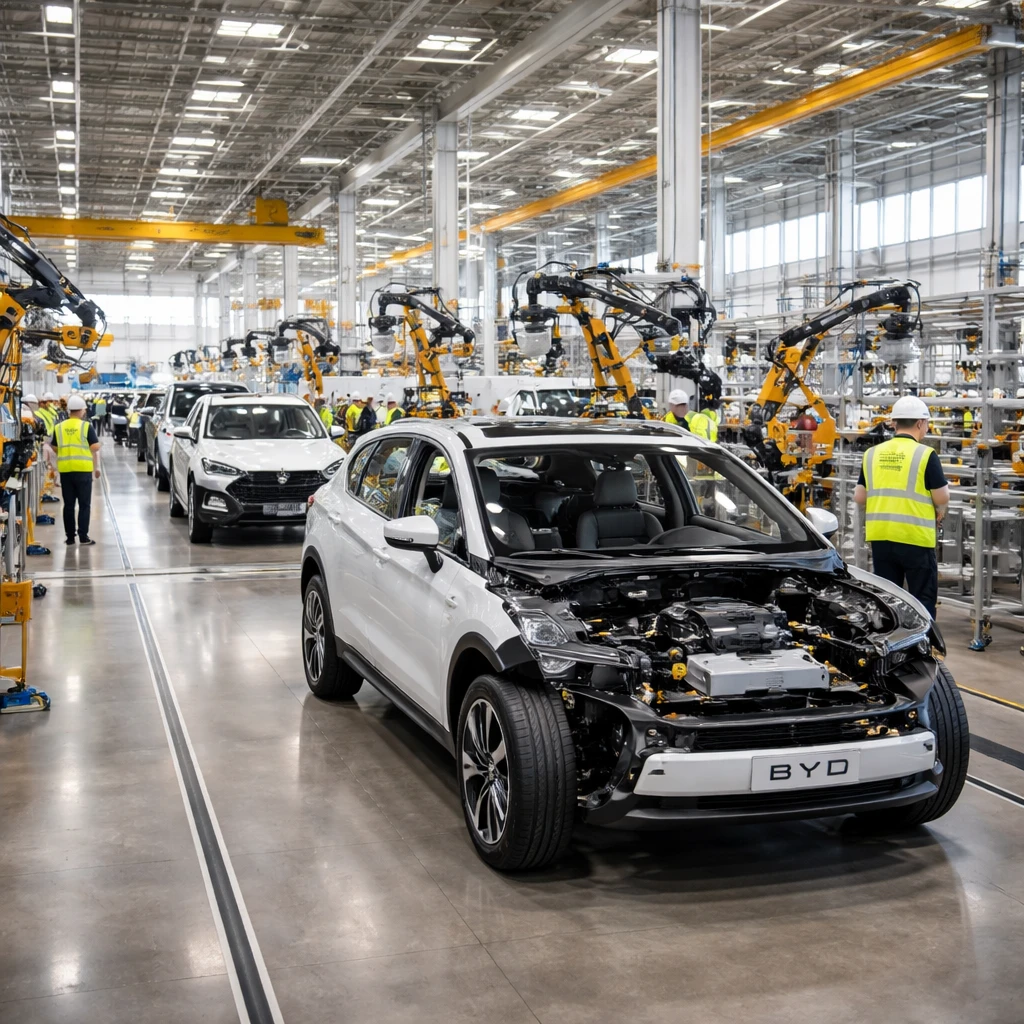
BYD Co is moving to deepen its industrial footprint in Europe with an ambitious hiring and manufacturing strategy that aims to shift the company from a primarily export-focused model to one rooted in local production.
According to Executive Vice President Stella Li in an interview with Bloomberg TV, the Shenzhen-based electric vehicle maker is targeting a European workforce that tops 40,000 employees by the end of the decade. In the near term, BYD expects to pass the 10,000-employee mark in the region and plans to expand that base to roughly four times its size by 2030.
To meet those staffing goals, BYD intends to recruit broadly across traditional automotive occupations and into adjacent industries. That hiring campaign explicitly includes the absorption of workers impacted by recent layoffs in local industries, as the company seeks to draw experienced talent into its European operations.
Concrete steps toward localized production are already in motion. BYD is preparing its first European factory in Hungary and is finalizing preparations there ahead of commercial production, which the company is targeting for the fourth quarter. The automaker is also weighing sites for additional plants in the region, with France and Spain under consideration for subsequent facilities.
The push to manufacture more vehicles inside Europe is unfolding in a more restrictive trade environment. European regulators have been tightening oversight of Chinese vehicle imports, and recent framework discussions between Beijing and Brussels have addressed possible import limits on hybrid vehicles. BYD says it is assessing how such trade restrictions would affect its financial and operational plans while continuing efforts to entrench its industrial presence on the continent.
The company’s combined approach - hiring at scale, building local plants and evaluating further sites - is presented as a strategy to anchor long-term industrial operations in Europe even as regulatory scrutiny on imports increases.
Sector impacts - The plan touches the automotive manufacturing sector directly and has implications for labor markets and regional industrial supply chains. It also intersects with trade and regulatory policy affecting vehicle imports.