
When local deputies stopped a horse trailer near the tiny border town of Redford, Texas, in late May, what began as an enforcement action for a livestock violation revealed a wider problem: animals moving into the United States outside regulated channels. The six horses taken into custody had crossed the Rio Grande from Mexico through an illicit network that sidestepped U.S. veterinary inspections, health certifications and quarantine requirements.
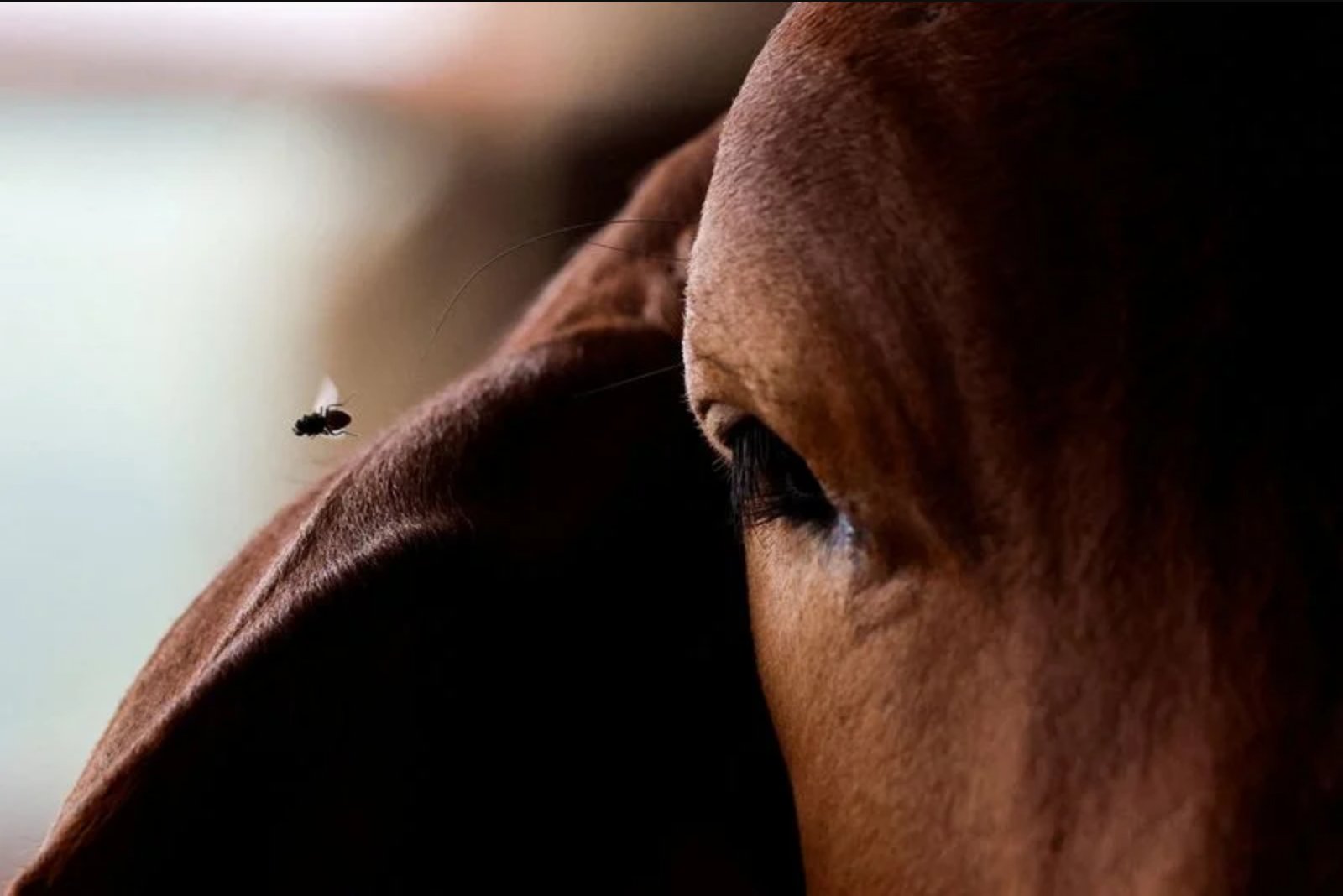
The seizure did not turn up cases of New World screwworm among the animals, but it offered a stark example of how trafficked livestock can slip through controls intended to protect animal health. The parasite, which consumes living tissue, began infesting U.S. cattle in June despite multiple containment measures - including a U.S. ban of more than a year on Mexican livestock, a mounted team of government inspectors and releases of sterile flies meant to interrupt breeding.
Federal and state officials have concentrated on legal trade routes and targeted interventions in an effort to keep the pest from spreading. Meanwhile, a parallel market for smuggled animals has continued to move animals - from horses destined for racing, rodeos and farm work to dogs used in fighting rings and cattle - along remote stretches of the border. Investigations and on-the-ground patrols indicate many of these illicit movements trace the same paths traffickers use to move drugs and people.
Public health and agricultural experts have warned for more than a year that illegal livestock trafficking from Central America and Mexico could hasten the northward movement of screwworm. Mexico’s animal health agency Senasica has reported more than 2,000 equine cases of screwworm since the outbreak began in 2024, and U.S. officials say the parasite first appeared in U.S. cattle this year.
In Texas, where authorities recorded the first confirmed animal cases in the U.S. this year, researchers estimate a widespread outbreak could produce severe economic damage - up to $1.8 billion in the state if a broader infestation takes hold. Those potential costs sharpen the stakes for rural communities and industries that depend on livestock and related services.
Smuggling networks and enforcement gaps
Patrols and interviews conducted in remote counties along the Texas-Mexico border portrayed a landscape that is difficult to police: hundreds of miles of rugged terrain where animals, contraband and people can cross with little detection. Local law enforcement, state operations and federal partners all confront a practical challenge when vehicles common to rural life - like horse trailers - are used by traffickers to conceal illicit activity.
Presidio County Sergeant Deputy Sheriff Jaime Sanchez, who led the Redford investigation, described the illicit horse market as lucrative. He said trafficked horses can command at least $30,000 on the black market because smugglers avoid import paperwork, taxes and required veterinary care. Those savings allow traffickers to undercut legitimate sellers, he said, frequently moving animals to large Texas population centers such as Houston and Dallas for resale.
Sanchez’s unit has intercepted more than 50 smuggled horses over the past two years by stopping horse trailers - a conspicuous occurrence in this dry border region. He described Redford - sometimes referred to locally as "El Polvo" - as a near-ghost town with fewer than 20 families and long stretches of isolated land that can provide cover for cartel-directed crossings. "It’s easy for them to pay someone $500 or $1,000 per horse to cross it, load it onto the trailer, and drive off," he said.
Local officials have linked that smuggling to organized crime groups operating across the border. Presidio County officials said they are working with federal authorities to address the animal trafficking they associate with La Linea, a cartel group that federal authorities have connected to criminal activity along the border.
Mexico’s environmental regulator Profepa said it cooperates with the U.S. Fish and Wildlife Service to exchange information on trafficking cases, joint enforcement operations and the return or repatriation of live wildlife specimens. Spokespeople for Mexico’s security, agriculture and foreign ministries declined to comment on the broader picture.
Undocumented crossings and the surveillance challenge
U.S. officials have not linked any of the country’s 48 confirmed screwworm cases to smuggled animals. Still, experts and investigators interviewed in border communities say that number could understate the scope of the problem because wildlife and animals trafficked outside regulated channels are less likely to be seen by inspectors or veterinarians.
The U.S. Department of Agriculture has not reached a determination on how screwworm entered the country, noting that epidemiological investigations are ongoing. Scientists, veterinarians and epidemiologists told investigators that unregulated animal movements pose many of the same transmission risks that authorities have already associated with illegal cattle shipments from Central America, since animals outside legal trade routes frequently miss inspections and treatments that could reveal or prevent infections.
USDA Inspector General John Walk commented on the trend from his office in Washington, D.C., saying the recent smuggling at the southern border "seems more pronounced" and that animal trafficking has implications beyond agriculture. "It could be a vector," Walk said, framing trafficking as a national security concern intensified by the screwworm outbreak. In July, Walk traveled to Brownsville, Texas, to urge local law enforcement to remain vigilant about the risks posed by animal-trafficking networks.
U.S. Secretary of Agriculture Brooke Rollins posted on X in early August that the department was "cracking down" on illicit livestock movements as part of its response to the screwworm situation.
Ranchers, operations and community response
On a ranch in Zapata County, about 500 miles southeast of Presidio, 57-year-old rancher Ricardo Ramirez described the outbreak as both surprising and unsettling for families who have grazed cattle there for generations. Ramirez said his family has owned the land since the 1940s and that screwworm "didn’t affect us for the last 50 years and lo and behold, here we are again with this thing upon us." His remark underscores how the reappearance of the parasite has altered the risk calculus for longtime livestock owners.
State and local multiagency operations have sought to disrupt illicit crossings. In Zapata, around 80 officers from Operation Lone Star Task Force - a state coalition assembled to deter illegal crossings and smuggling - staged a coordinated sweep that included highways, back roads and waterways. The operation’s scope reflects the emphasis on finding signs of illegal activity where borders cut through remote ranchland and river channels.
Officials say horse trailers pose a particular problem for detection because they are common in rural areas and seldom draw attention. A 2024 case cited by Goliad County deputies illustrates how trailers can be misused: officers stopped a livestock trailer and discovered 14 people hidden inside, alongside a neglected horse. The vehicle was subsequently linked to human smuggling, and the driver told authorities he had been paid $10,000.
"Most people, when they think about the cartel, they think about either drugs or illegal aliens," said Goliad County Sheriff Roy Boyd. "The revenue streams for the cartels are far more diverse than people have ever suspected." That diversity of criminal income sources, officials warn, can include trafficked animals alongside other illicit commerce.
Operational realities and animal welfare concerns
In Terrell County, where the border runs through rocky desert, Sheriff Thaddeus Cleveland - a former Border Patrol agent - pointed to feral cattle moving across the river and to debris left behind by undocumented crossings. "A lot of times the smugglers would use horses to bring the drugs across the border due to the terrain," Cleveland said, noting that seized animals are often handed to the USDA to be used by mounted agents.
Animal-smuggling routes complicate screwworm control because infected animals may not come into contact with veterinarians or inspectors. That gap increases the chance that infections will go undetected and that animals could move farther without treatment.
Tawnee Preisner, founder of the Tennessee-based Horse Plus Humane Society, said her organization has encountered horses with neck wounds, metal tracheotomy tubes and deep tissue pockets - injuries that raised concerns traffickers might be concealing drugs or other contraband within animals. Preisner also said the FBI contacted her organization in 2025 for information relating to horse smuggling.
Reflecting the brutal calculus of trafficking operations, Preisner warned that if horses are used in smuggling and become infested with screwworm, smugglers are unlikely to report the animals. "When horses are being used to move drugs and humans, if a horse gets (screwworm), they’re not going to report it," she said. "They’re just going to shoot the horse, bury it and keep going." That prospect underscores both animal welfare and disease-detection concerns for communities along the border.
Trade, policy and market implications
Policy responses have included restrictions on legal imports. The administration lifted and tightened portions of border trade policy in different phases - including a partial reopening of Mexican livestock imports intended to ease consumer pressures amid record-high beef prices following the ban. Yet the reopening has coincided with rising infestations in Mexico, complicating the balance between market needs and biosecurity precautions.
Authorities have also intercepted a range of exotic species in recent years - including primates, bears and tigers - demonstrating that smuggling operations extend beyond common livestock. The variety of animals reported in seizures further complicates identification and inspection efforts because different species present distinct detection and containment challenges.
Where uncertainty remains
Officials have not determined how the current U.S. screwworm cases originated, and epidemiological investigations continue. While some experts point to illegal cattle movements from Central America as a likely contributor, the role of undocumented crossings along the U.S.-Mexico border remains difficult to quantify because many trafficked animals evade standard surveillance.
Local law enforcement and federal agencies are attempting to close enforcement gaps through patrols, joint operations and information sharing across borders. Still, community leaders and animal health professionals caution that the combination of remote terrain, common rural equipment like trailers and the incentives offered by black-market prices will sustain smuggling pressures unless enforcement and biosecurity measures adapt to those operational realities.
Conclusion
The Redford seizure was notable not for the presence of screwworm but for the way it highlights a weakly policed route animals can take into the United States. With confirmed cases in U.S. cattle and thousands of equine cases reported in Mexico since 2024, officials face a twofold challenge: containing the parasite through inspection, treatment and sterile-fly releases while also disrupting criminal networks that move animals outside regulated channels. The outcomes of ongoing investigations and enforcement efforts will shape the near-term risk to agricultural markets, rural livelihoods and the broader economy in states where livestock production is a central industry.