
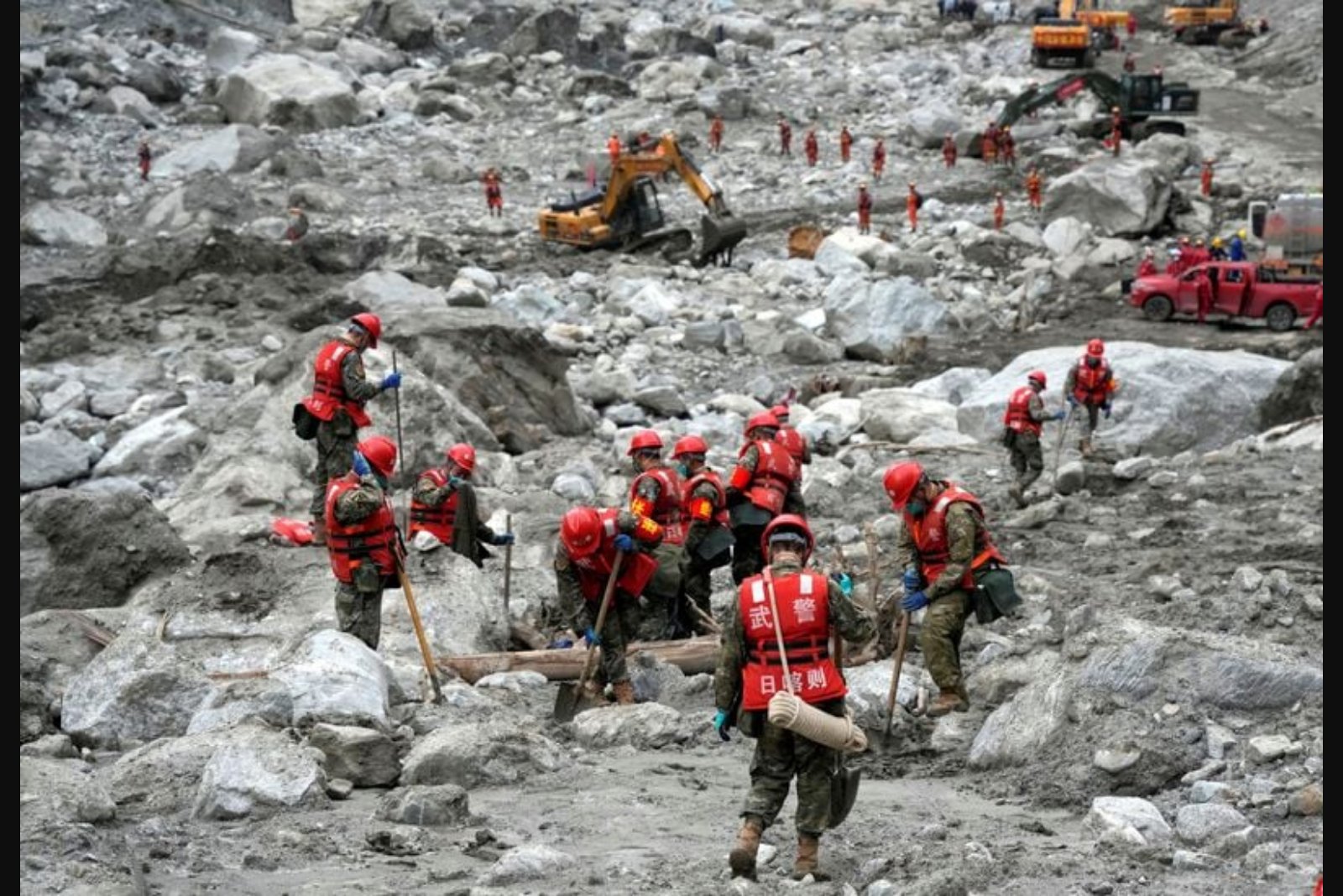
Ten days after a catastrophic mudslide struck the Tibet-Nepal border region, families of foreign nationals who remain unaccounted for say they have been left largely in the dark by Chinese authorities.
Among those missing is Priyanka Choudhary, an Indian-born Finnish citizen who was at a land crossing with Nepal after a Hindu pilgrimage when the slide occurred. Her brother, Tarun Choudhary, said frustration is growing over the lack of information from China's side of the border. "There is no information on the China side," he said. "We can’t go to China and talk to anyone, so I’m not able to understand how things are... There is no update from China about what is happening at Ground Zero, what is the situation over there."
The mudslide that struck last week has had a devastating human toll. More than 1,300 people died and over 5,600 were reported missing across both countries, according to the figures cited after the disaster. In Tibet specifically, state news agency Xinhua reported on Friday that at least 31 people have been confirmed dead and 531 are missing.
Several families of those unaccounted for allege an information blackout inside China, compounding their distress. Naresh Goyal, whose sister Neetu Goyal Tiwari is among those missing, said relatives have received virtually no information from Chinese authorities. "We are not getting anything from China, whether my sister is safe or alive or dead," he said. Neetu Goyal Tiwari is a 51-year-old British national, according to Goyal.
Goyal said UK police visited his sister’s family home a few days ago to collect a DNA sample from her daughter to present to Chinese authorities.
China’s foreign ministry did not immediately respond to requests for comment regarding the allegations of an information blackout, the timeline for identifying victims, or the DNA collection procedures being applied on the Tibetan side.
Beijing has said it has been briefing embassies representing 23 countries and, on Monday, stated that its release of information about the floods was "transparent and timely." Officials in Beijing have also said they stand ready to cooperate with other countries and agencies to identify the dead, and that a team of DNA identification experts has been dispatched to Nepal, which has borne the brunt of the devastation.
In Nepal, authorities including the police have been regularly sharing updates on those missing and those confirmed dead through social media channels, and search operations there have been accompanied by active DNA testing.
China summoned diplomats from countries with citizens reported missing in Nepal to a briefing in Beijing last week. Diplomats who attended that meeting said Chinese officials did not provide details on how they planned to conduct DNA identification for victims.
Diplomats in contact with China’s foreign ministry also said Beijing has not offered video footage from the Chinese side of the land port, including facial-recognition images, that could be shared with families or used to help identify the deceased. Those diplomats spoke on condition of anonymity because the discussions remain private.
What relatives are asking for
Families are seeking clearer channels of communication and concrete steps to identify those who remain missing. They have pointed to DNA testing and other identification methods as critical, and some said samples had been taken in their home countries to present to Chinese officials.
Beijing's public statements emphasize cooperation and briefings with foreign missions, while families and some diplomats report gaps between those statements and the information available to relatives on the ground.