
The European Central Bank left interest rates unchanged at 2.25% on Thursday, as market participants expected, while flagging heightened uncertainty from an energy price shock linked to the continuing conflict in the Middle East.
In its decision statement the ECB described the outlook for energy prices as "highly volatile," noting that current levels sit "close to the baseline" in its June staff projections but remain markedly above pre-conflict norms. The bank emphasized that the full inflationary consequences of the energy shock have not yet been realized.
"Uncertainty remains high and the full inflationary impact of the energy shock has yet to play out," the ECB said. The Governing Council added that it is "therefore closely monitoring the intensity and duration of the shock, as well as its indirect and second-round effects."
Only last month the ECB increased its deposit rate by 25 basis points to 2.25%, a move it described at the time as intended to show readiness to address inflation pressures related to the Iran war.
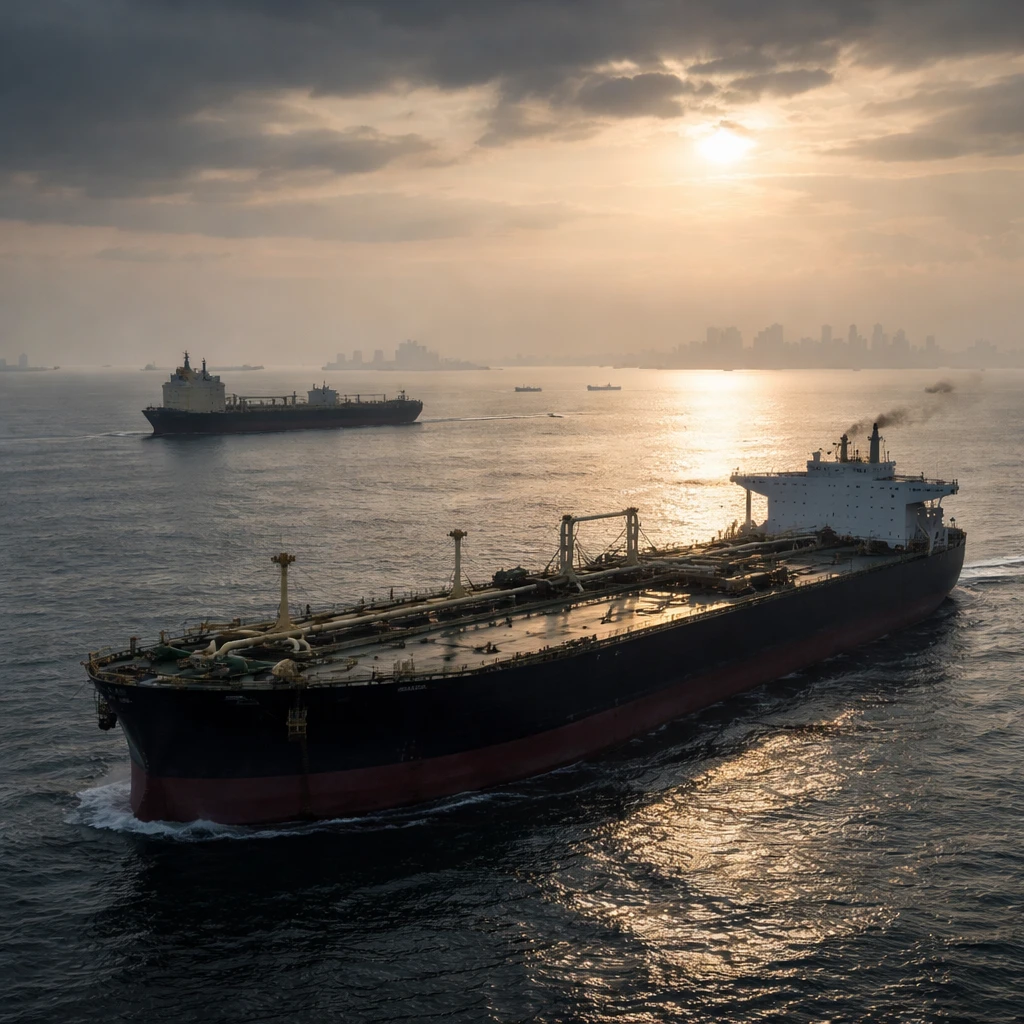
The geopolitical developments cited by the bank include new restrictions on tanker movements. Tehran has again moved to close tanker traffic through the Strait of Hormuz, a key shipping lane off Iran's southern coast through which about one-fifth of the world's oil and liquefied natural gas typically passes. Separately, Iran-backed Houthi forces in Yemen have taken responsibility for strikes on two Saudi tankers in the Red Sea; those attacks are the first since the militia announced a blockade on Saudi vessels this week. In response to the tensions, Brent crude futures traded above $98 a barrel on Thursday.
When the ECB raised rates in June it explicitly warned that the conflict, which began with a joint U.S.-Israeli assault on Iran in late February, has generated "inflation pressures." At that meeting the bank characterized the rate hike as a "robust" policy action across various scenarios that map how the shock could evolve and influence the medium-term outlook.
On current measures of price growth, consumer inflation across the 21-member euro area is running at nearly 3% on an annual basis, a pace clearly above the ECB's 2% target. Officials expressed concern that sustained higher inflation could prompt stronger wage demands from workers, potentially leading to a persistent price-wage spiral.
The ECB revised its headline inflation projections upward for the near term. It now expects average headline inflation of 3% this year, followed by 2.3% in 2027 and 2% in 2028. Those forecasts were adjusted from earlier projections of 2.6% for this year, 2% for 2027 and 2.1% for 2028.
Growth expectations for the euro area were trimmed as well. The bank now projects gross domestic product to expand by 0.8% this year, down from its prior forecast of 0.9%.
Context and monitoring
The ECB framed its pause as a close-watch approach: with energy prices volatile and not yet fully factored into inflation dynamics, the Governing Council intends to follow developments in energy markets and the broader pass-through to prices and wages. The statement underlined vigilance over both direct effects from energy costs and indirect second-round effects that may amplify inflationary pressures.
What the statement leaves open
- The bank stressed that uncertainty is high and did not set out an explicit forward path for rates as the energy shock continues to evolve.
- Officials highlighted the potential for stronger wage growth if consumers seek higher pay in response to elevated inflation, but noted the influence of such dynamics remains to be seen.