
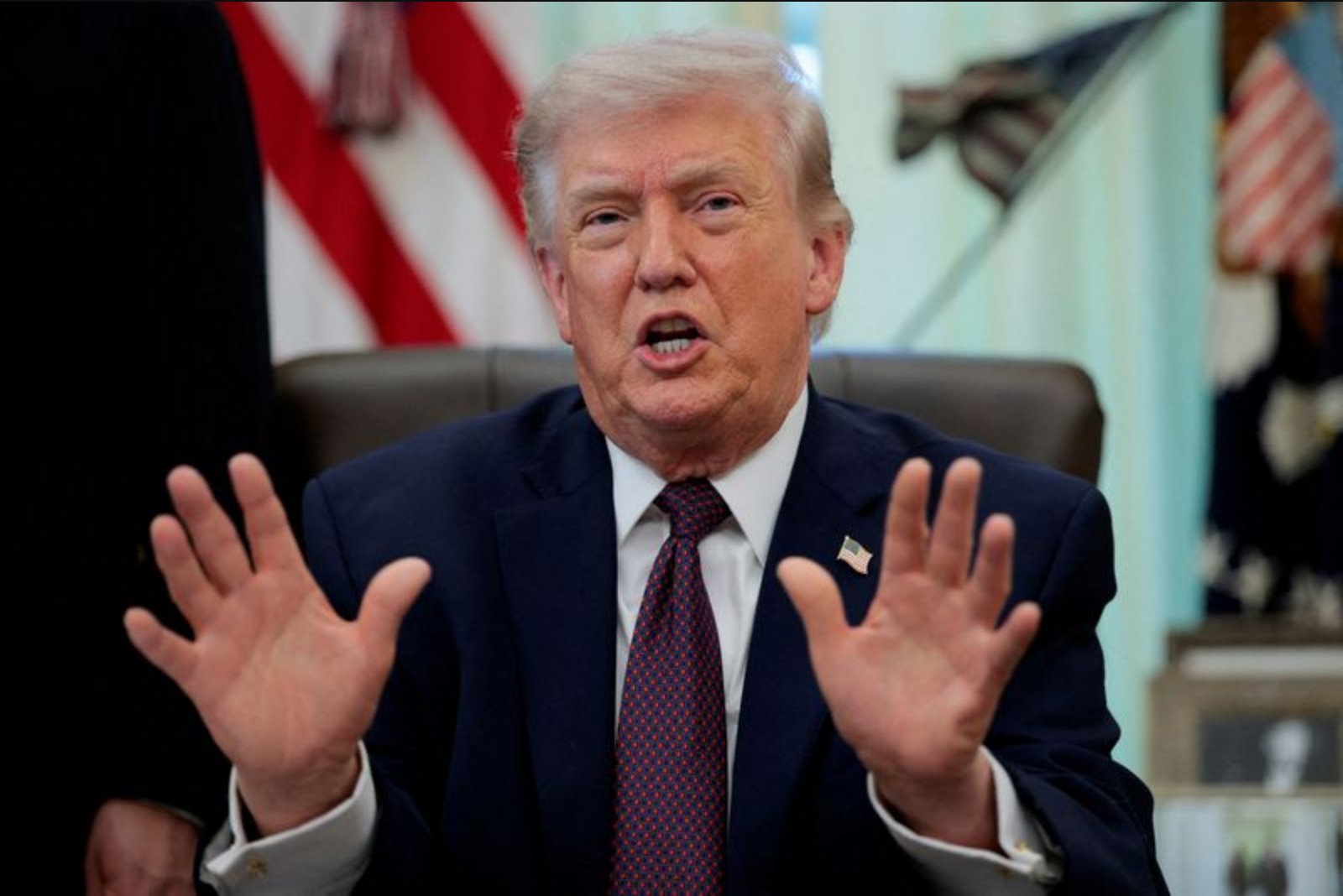
The White House is poised to sign an executive order focused on artificial intelligence and cybersecurity as soon as Thursday, according to people familiar with the matter. The directive would set up a voluntary framework asking AI developers to coordinate with federal officials prior to publicly releasing advanced models.
Under the framework described by sources, companies would be asked to provide their models to government reviewers 90 days before public release. In addition, developers would be expected to grant pre-public access to key operators of critical infrastructure, including banks, so those entities could evaluate potential risks before models are widely deployed.
Those proposing mandatory testing and those resisting such requirements are vying for influence within the president's coalition. On one side, MAGA-aligned activists and organizers - among them former White House aide Steve Bannon and political organizer Amy Kremer - have urged the administration to require that the most capable AI systems be submitted to government security testing prior to release. On the other side, prominent technology backers and some of the president's tech advisers have pushed back against compulsion.
Several well-known figures featured in the debate. Venture capitalist Marc Andreessen and former presidential adviser David Sacks have opposed mandatory submission. Sacks stepped down from his role as the administration's lead AI official in March and now co-chairs the president's tech advisory committee. Senior administration policy choices earlier in the president's current term have generally tracked the technology industry's preferences, according to sources.
Officials contacted about the evolving policy described public discussion of details as speculative. A White House spokesperson called any discussion about AI policy details "speculation." A National Security Agency spokesperson referred inquiries back to the White House. National Cyber Director Sean Cairncross, described as the president's principal adviser on cybersecurity policy and strategy, did not respond to requests for comment.
Observers inside the administration say the release of new, highly capable systems has shifted the balance of influence. Companies have rolled out models such as Anthropic's Mythos and OpenAI's GPT-5.5-Cyber, which the developers and some others warn could be leveraged to amplify complex cyberattacks. Some cybersecurity executives have challenged how significant that threat is.
The arrival of these models prompted a high-stakes debate within the president's political supporters about how the administration should respond. That debate could materially affect the AI sector: a presidential decision that slows the rollout of large language models, or that forces companies to alter model behavior for safety reasons, could influence commercial performance and margins for affected firms.
Republican opposition to regulation has historically been strong, yet pressure from vocal populist supporters to impose guardrails on AI is growing. That faction has pressed the White House to require government approval of what they call "potentially dangerous" systems before deployment. In a letter sent to the White House last Friday, they laid out those demands.
Amy Kremer explained her position in an interview, saying that advocating for new rules is normally "antithetical" to her political views but that AI presents different circumstances. She said she could not rely on leaders of AI companies to always act in the public interest or to protect Americans. Kremer was active in organizing a January 6, 2021, rally that preceded the Capitol riot, and she stated she was not among the people who entered the Capitol that day.
Major technology executives are among the president's most prominent political supporters and donors. At the president's January 2025 inauguration, several tech leaders were seated close by, highlighting their visibility in political circles. Advocates for the industry have urged that the Commerce Department's Center for AI Standards and Innovation play a primary role in the administration's approach to advanced AI models.
Those industry advocates say companies are prepared to cooperate voluntarily with scientists and cybersecurity experts at the center. According to people acquainted with administration deliberations, the National Security Agency has also been involved in conversations about how to respond to Mythos, alongside National Cyber Director Cairncross. Lawmakers asked Cairncross to coordinate with federal agencies to create a process for monitoring "sudden frontier AI capability jumps."
Former U.S. Representative Brad Carson, who now helps manage a super PAC network with funders that include Anthropic, said recent months have served as a wake-up call about AI-driven vulnerabilities. Carson framed federal review as a measure to address those vulnerabilities in the short term.
Those who lean toward the technology sector offered a contrasting view about the likely effects of holding back model releases. Neil Chilson, head of AI Policy at the Abundance Institute, a nonprofit frequently aligned with the tech industry, said briefly delaying releases while the federal government vets models might provide a short-term advantage over adversaries, but it would not keep the technology out of adversaries' hands long term. He argued the priority should be deploying the technology while strengthening defensive measures.
Voluntary federal testing of AI systems is not new. Firms such as OpenAI and Anthropic have previously submitted models for review by the Commerce Department's Center for AI Standards and Innovation, which operated under a different name during the prior administration. In May, the Commerce Department announced that Google, xAI and Microsoft agreed to submit their models for security testing, although the specific details of that announcement were later removed from the department's website. The White House and Commerce Department did not provide explanations for why the information was removed when asked.
The executive order under consideration would formalize a voluntary engagement channel aimed at enabling pre-release review and providing early access to critical infrastructure operators. Whether that approach satisfies the administration's populist supporters who seek mandatory controls remains uncertain, as does the reaction from industry figures who oppose compulsion. The debate unfolding within the president's coalition could have clear consequences for the pace at which new large language models are released and for the companies that develop them.