
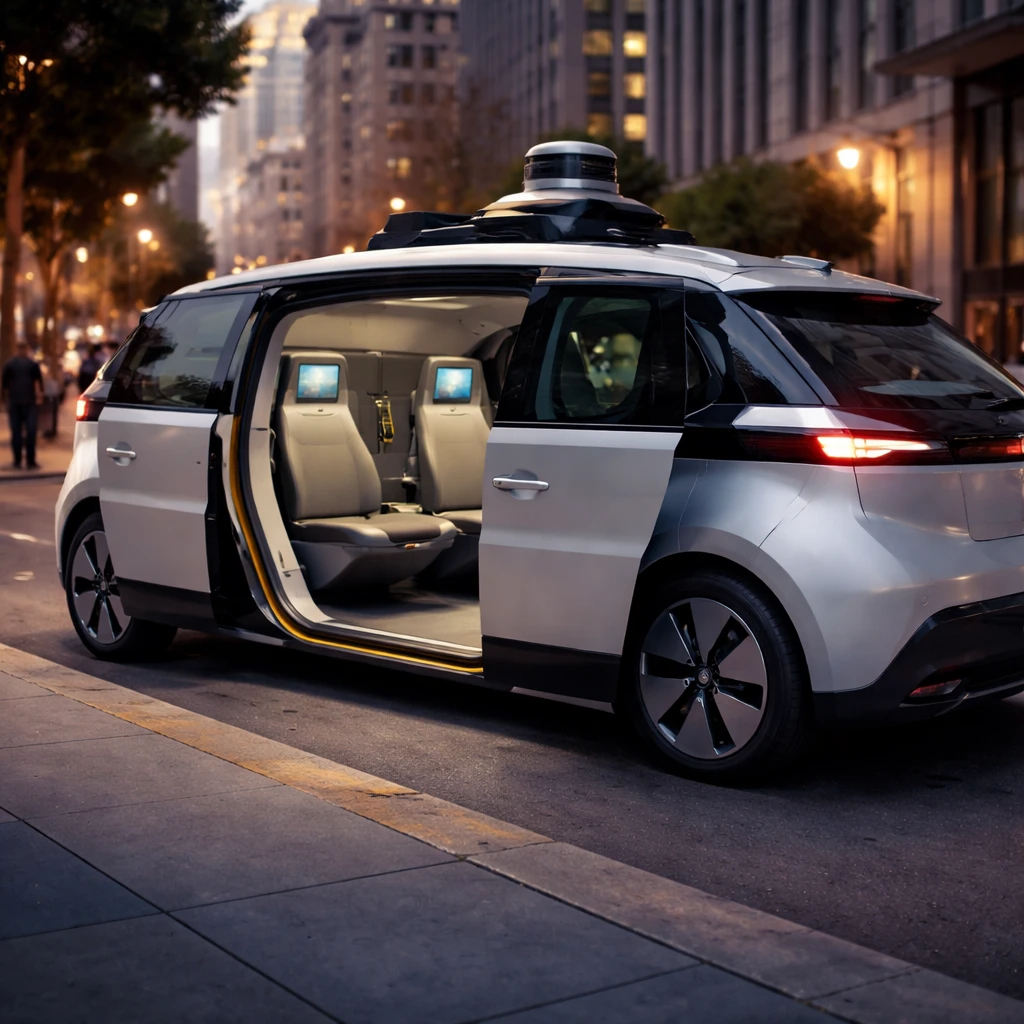
Waymo, the autonomous vehicle arm of Alphabet Inc., said it will begin public ride service in the coming weeks using its newly designed Ojai robotaxi in San Francisco, Phoenix and Los Angeles. The rollout marks the debut of a vehicle engineered expressly for robotaxi operations rather than retrofitting a conventional car.
The Ojai's interior departs from traditional automotive layouts. It includes elevator-like doors and a flat floor, and is equipped with three large LED screens that riders can use to adjust temperature and entertainment options. Accessibility was integrated into the design with embedded braille, compatibility with screen-readers and a handle built into a seat to assist with entering and exiting the vehicle.
Under the hood, the Ojai will be driven by Waymo's sixth-generation Waymo Driver. Waymo said the driver technology is an evolution of systems that have already completed more than 20 million fully autonomous trips across over 11 cities. The latest generation is intended to expand operational capability - it enables driving in snowier conditions and supports broader service areas compared with previous iterations.
On the manufacturing side, Waymo reported it is scaling production of vehicles equipped with its technology at a factory in Mesa, Arizona, with an eye toward building tens of thousands of units per year. The company will initially invite select riders to take free trips in the Ojai so they can provide feedback on the vehicle and the service.
Waymo said the Ojai will be introduced to additional markets - specifically Denver, Las Vegas and San Diego - before the company opens the service more broadly later this year. The rollout follows a period during which Waymo employees have been taking fully autonomous trips in the Ojai for months to validate performance ahead of public availability.
Summary
Waymo will launch public rides in its purpose-built Ojai robotaxi in San Francisco, Phoenix and Los Angeles. The vehicle features passenger-focused amenities and accessibility aids, and operates on the sixth-generation Waymo Driver, which supports expanded conditions and service areas. Production is being scaled at a Mesa, Arizona factory, with plans to widen deployment to Denver, Las Vegas and San Diego ahead of a broader rollout later this year.
Key points
- Deployment begins in three cities - San Francisco, Phoenix and Los Angeles - with additional expansion planned to Denver, Las Vegas and San Diego.
- The Ojai is a purpose-built robotaxi featuring elevator-like doors, a flat floor and three large LED screens for rider controls, plus accessibility features such as embedded braille and screen-reader compatibility.
- It operates on the sixth-generation Waymo Driver, which has supported over 20 million fully autonomous trips across more than 11 cities and is designed to work in snowier conditions and across larger service areas.
Risks and uncertainties
- Scaling production to the targeted tens of thousands of Waymo-enabled vehicles per year presents execution risk for manufacturing and supply chains - this affects automotive manufacturing and mobility services.
- Early public rides are limited to select cities and select riders receiving free trips to provide feedback, leaving uncertainty about broader consumer acceptance and operational performance in new markets - this impacts ride-hailing and urban mobility sectors.
- The company is expanding the vehicle into additional climates and geographies; while the sixth-generation driver is described as capable in snowier conditions, the pace and success of geographic expansion remain uncertain - this has implications for regional transportation planning and autonomous vehicle deployments.