
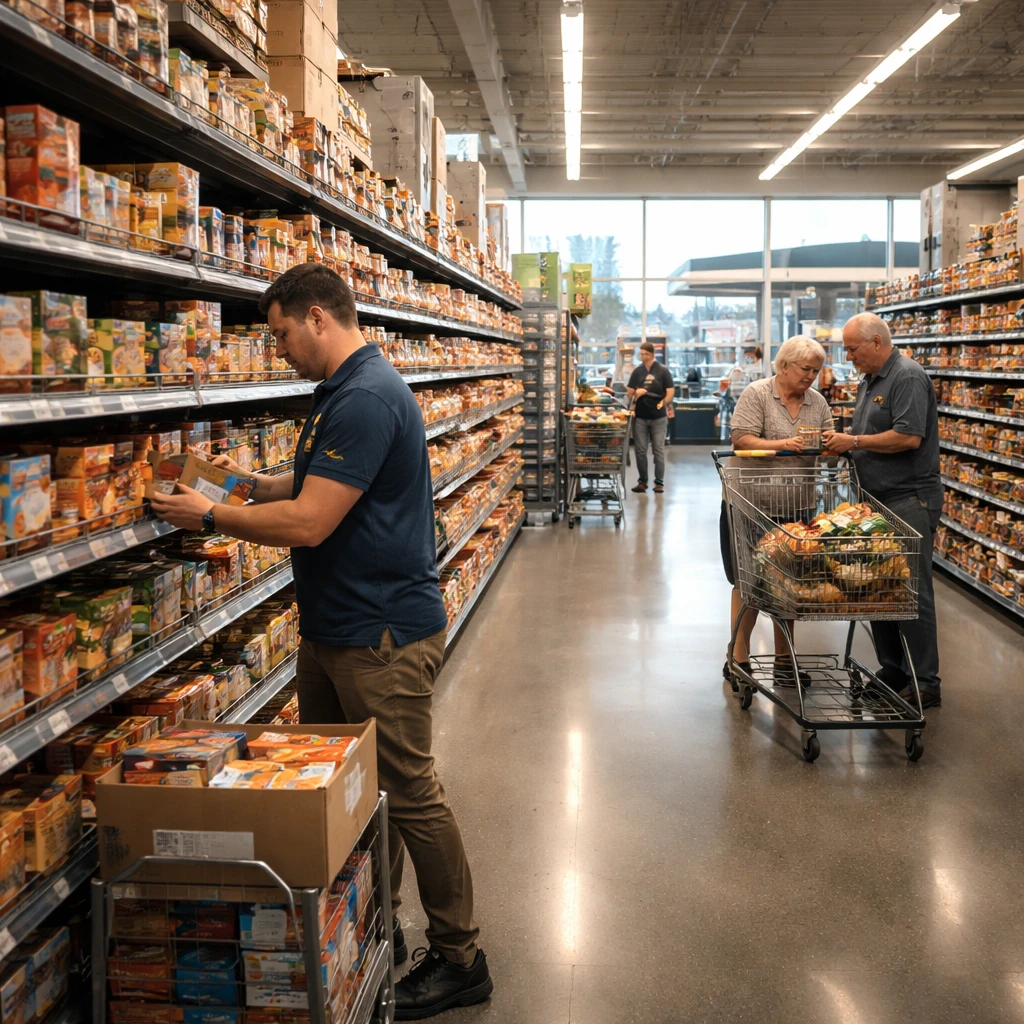
Walmart reported that it absorbed about $175 million in unanticipated fuel expenses during the first quarter of fiscal 2027, a move Barclays estimates translated into a roughly 250 basis point headwind to operating income growth across the retailer's global distribution and fulfillment network.
The company said the choice to take on those costs was deliberate, aimed at sustaining price investments designed to reinforce customer trust and maintain gains in market share. Barclays noted, however, that Walmart signaled it would likely need to implement modestly higher retail price inflation if elevated cost pressures persist - with such increases expected to begin in the second quarter of fiscal 2027 and extend through the remainder of the year.
Barclays' analysis extended beyond the retailer to packaged food makers, suggesting these firms may prioritize profitability protection through pricing actions even if that approach postpones a return to volume growth. The bank observed that while pricing carries consumer resistance risk, historical patterns show food companies often outperform during pricing cycles because higher prices support revenue and preserve profit margins.
The investment bank pointed to a group of packagers and processors discussing operational adjustments as part of margin-defensive strategies. General Mills (NYSE:GIS), JM Smucker (NYSE:SJM) and Kraft Heinz (NASDAQ:KHC) were cited as companies talking about footprint optimization, which Barclays said implies that capacity rationalization could become a larger feature of transformation plans in the sector.
Barclays also framed the current food retail environment as unusually complex, given the concurrence of upward cost pressure and rising price investments across the industry. Walmart's first quarter results, the bank noted, showed accelerated unit share gains that were supported by increased price rollbacks - price rollbacks that rose by 20% in the period. Other grocery players are responding in parallel: Kroger (NYSE:KR) is reported to be overhauling its pricing model under new management, and BJ's Wholesale Club (NYSE:BJ) discussed further price investments last week.
Even if Walmart moves to raise prices, Barclays said the retailer has demonstrated an ability to absorb more cost and pass through less inflation than many competitors, which is likely to keep Walmart's price gap with peers relatively wide.
For executives and investors tracking pricing power, input-cost pass-through and distribution economics, the current mix of absorbed costs and selective price investment underlines an important trade-off facing retailers and food manufacturers: protect margins now through pricing and footprint actions, or prioritize volume recovery at the risk of compressing profitability.