
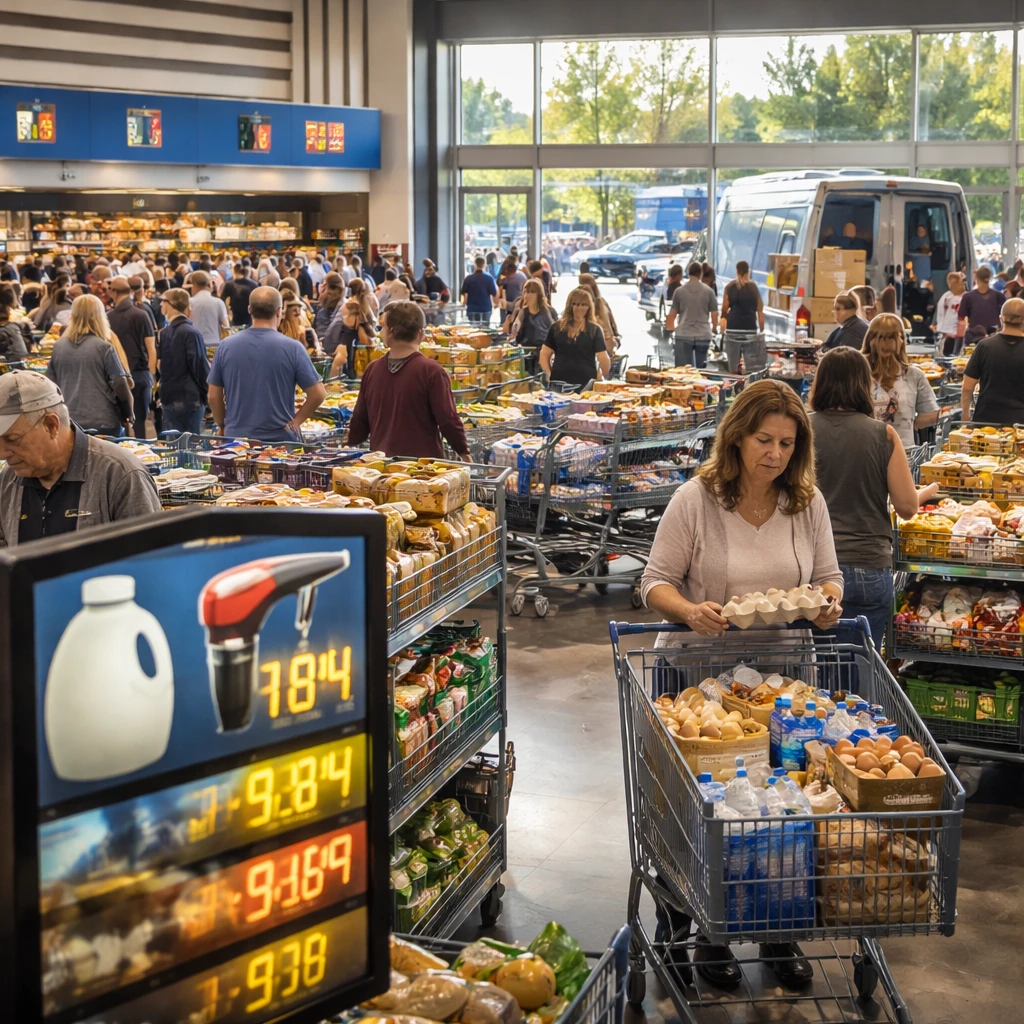
Walmart said it would maintain its cautious full-year outlook even after reporting a solid first quarter, as higher fuel prices and ongoing inflation push more shoppers to seek lower-priced groceries and everyday items.
The retailer explained that it has held grocery and everyday item prices down to help households cope with tighter budgets, as U.S. pump prices climbed to more than $4 a gallon and inflation stayed elevated. Executives said those dynamics have driven consumers toward value offerings at its stores.
Walmart reaffirmed its annual targets of net sales growth of 3.5% to 4.5% and adjusted earnings per share of $2.75 to $2.85. Analysts had regarded that guidance as conservative when it was issued in February, with some expecting the company to raise targets later in the year. Despite topping first‑quarter comparable sales estimates, Walmart warned that its second quarter would likely fall short of analyst forecasts, a stance that left the company’s shares down roughly 2% in premarket trading.
Cautious outlook for the second quarter
While Walmart said it has been relatively insulated from the weakest parts of consumer spending, management emphasized caution for the near term. The company forecast second‑quarter net sales growth of 4% to 5%, below the roughly 5.09% increase analysts had expected, and projected adjusted earnings per share of $0.72 to $0.74 versus consensus of $0.75.
Walmart identified higher fuel costs as a material headwind to operating income, estimating an impact of about 250 basis points. The company said it attempted to absorb those costs within its delivery and fulfillment operations in order to keep customer prices low.
“While consumers are telling us they’re feeling some pressure, sales strength has persisted and we saw one of our strongest quarters of share gains,” the company said.
Competitive context and business drivers
Smaller rival Target raised its annual sales forecast as it continues to work through a turnaround plan, though Target’s executives also urged caution. Grocers Kroger and Albertsons provided conservative annual forecasts as well.
Walmart reported that its first‑quarter total U.S. comparable sales, excluding fuel, increased 4.1%, compared with expectations of a 3.8% rise in data compiled by LSEG. The retailer said e-commerce sales rose 26% in the first quarter, with online contributions to total sales markedly higher than a year earlier.
U.S. gross profit improved by 29 basis points, a gain Walmart attributed in part to membership revenue and advertising growth. The company said it has been attracting more higher‑income customers looking for convenience, many of whom have signed up for delivery services.
“Our results reflect our continued focus on delivering across the enterprise - better shopping experiences, a broader assortment, and faster delivery,” said the company’s chief executive.
Supply‑chain and cost pressures
Retailers have flagged growing pressure on household spending this year, with consumer sentiment falling to a record low in May and inflation posting its largest gain in three years, the company noted. The Iran war has also pushed up the costs of some raw materials — including resin and other packaging goods — adding pressure to supply chains that are still adjusting to tariff changes enacted last year.
Walmart’s approach has been to keep prices competitive for consumers, even as the company navigates these upward cost pressures and a conservative guidance posture for the remainder of the year.