
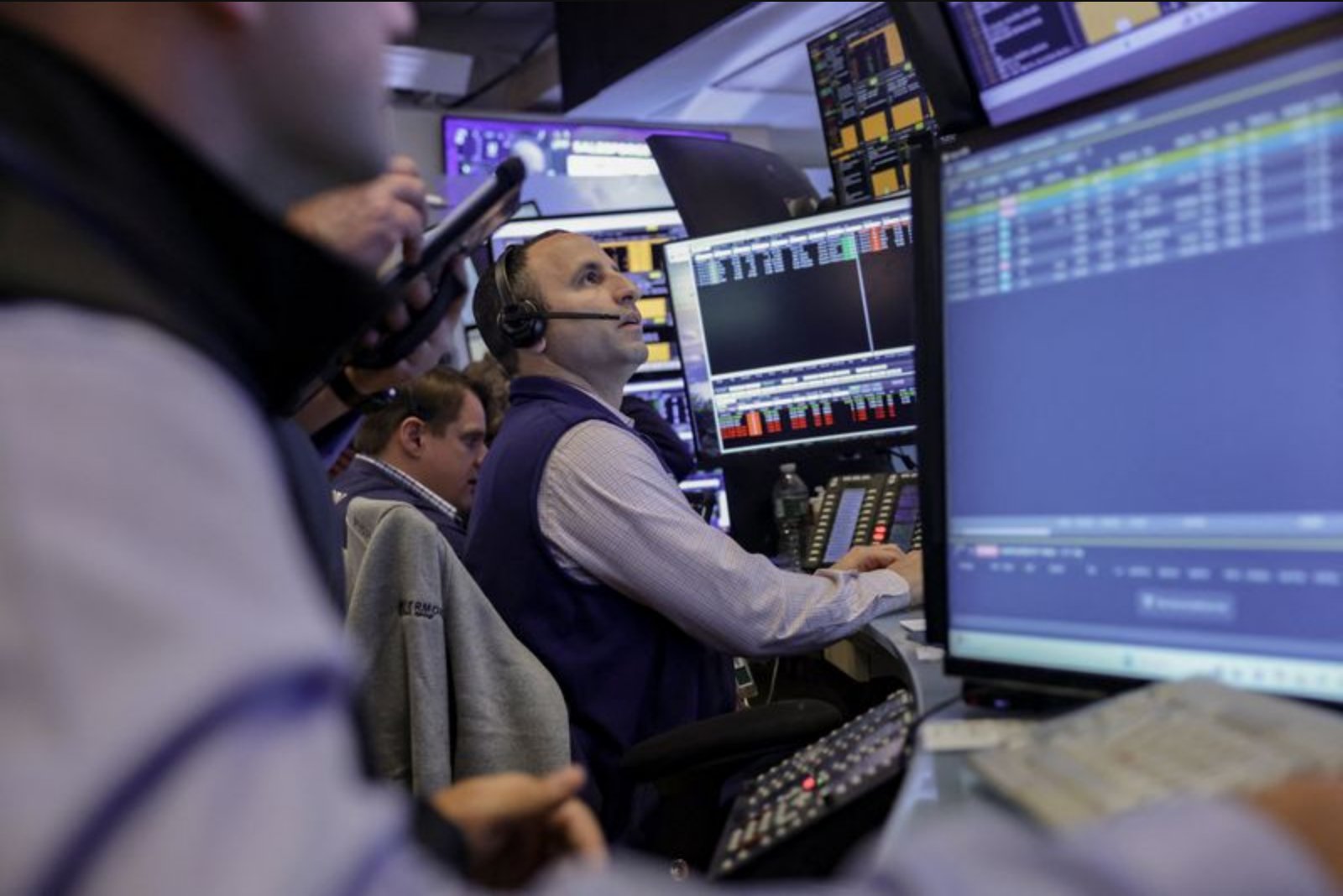
U.S. equity futures moved modestly lower on Thursday as an uptick in tensions between the United States and Iran undercut optimism for a quick diplomatic resolution and sent oil prices higher.
Tehran struck a U.S. airbase after Washington carried out fresh strikes earlier in the day. That action occurred hours after President Donald Trump publicly rejected a report that he was close to finalizing a compromise deal with Iran. The deterioration in geopolitical conditions coincided with a more than 2% jump in oil prices and a small rise in U.S. Treasury yields, as the continued closure of the Strait of Hormuz added to concerns about inflationary pressure.
Market attention was also fixed on the personal consumption expenditures (PCE) inflation reading due later in the day. The PCE number is closely watched because it is the Federal Reserve’s preferred inflation gauge. Analysts and traders said the print could influence expectations for interest rates under the central bank’s new chair, Kevin Warsh.
"A higher-than-expected print will further boost hawkish Federal Reserve expectations and fuel the probability of a rate hike by year-end," said Ipek Ozkardeskaya, senior market analyst at Swissquote Bank. "A figure in line with expectations - or ideally softer than expected - could ease rate hike bets, but won’t take the idea of tighter monetary policy off the table as long as geopolitical uncertainties loom and energy prices remain persistently high."
Money markets at present place the highest probability on the Fed remaining on hold for the remainder of the year, while pricing in some chance of a 25 basis point increase in December.
By 04:54 a.m. ET, E-mini futures indicated a softer open: Dow E-minis were down 53 points, or 0.1%; S&P 500 E-minis had fallen 6.75 points, or 0.09%; and Nasdaq 100 E-minis were lower by 63.5 points, or 0.21%.
Despite Thursday’s risk-off cues, market momentum over recent sessions has been supported by renewed optimism around artificial intelligence and continued earnings growth, factors that helped all three major U.S. indexes close at record highs on Wednesday. The S&P 500 was positioned to record a ninth straight weekly gain, which would mark its longest winning streak since December 2023.
In premarket company-specific moves, Marvell Technology shares slipped 2.2% after reporting first-quarter results; the stock has more than doubled year-to-date. HP fell 1.4% following second-quarter results, with the company warning that rising memory costs would weigh on margins. Separately, several firms in the defense and drone sector rallied after a report that the Trump administration had been in discussions to fund drone companies: Unusual Machines jumped 33%, while AeroVironment and Kratos Defense & Security Solutions gained 9.1% and 11.2%, respectively.
Traders and portfolio managers will be watching the PCE release closely for signals that could shift the interest-rate outlook and reshape positioning across interest-sensitive sectors, especially energy and defense given the current geopolitical backdrop.
Summary
Escalating U.S.-Iran tensions, a subsequent rise in oil prices and small increases in Treasury yields pressured U.S. stock futures. The market is awaiting the Fed-preferred PCE inflation reading under new Chair Kevin Warsh, a report that could influence expectations for future monetary policy moves.