
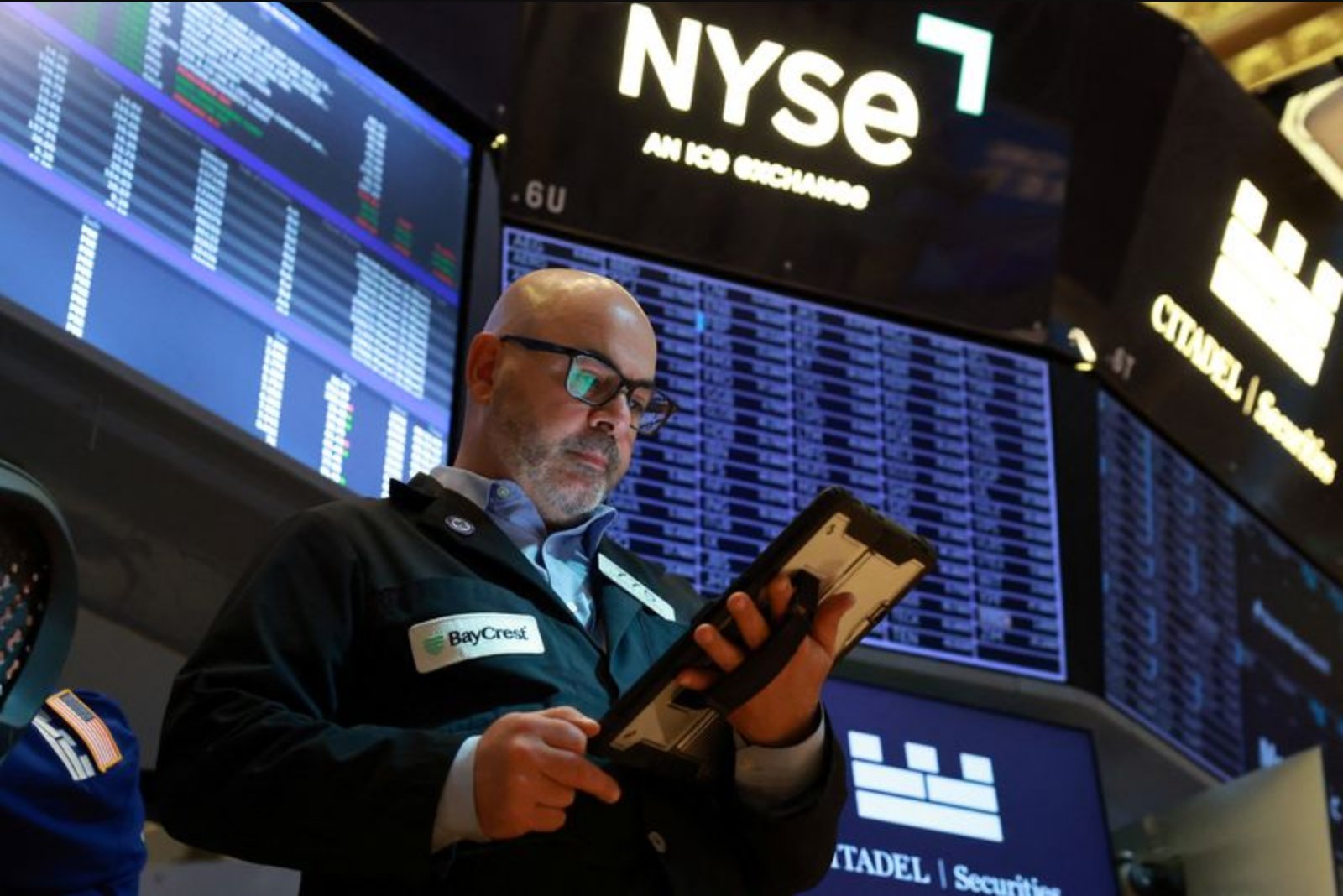
U.S. equity futures pushed higher on Wednesday, underpinned by continued enthusiasm around AI-related demand and tempered by investor caution over tenuous U.S.-Iran ceasefire talks. The trading backdrop combined optimism from technology-led earnings and milestones with concern that regional tensions and elevated bond yields could spur intermittent volatility.
Market participants remained watchful after recent U.S. strikes near the Strait of Hormuz, an action Iran described as a "gross violation" of the ceasefire agreement. Analysts at UBS warned that "the evolving situation in the Middle East and still-elevated bond yields may put the global stock rally to the test. Bouts of market volatility remain likely, as investors react to fresh headlines." They added that "strong earnings should support further gains for equities over the medium term, and we see attractive opportunities across regions."
Early U.S. futures readings at 04:42 a.m. ET showed Dow E-minis up 195 points, or 0.39%, S&P 500 E-minis up 21 points, or 0.28%, and Nasdaq 100 E-minis up 134 points, or 0.45%. Both the S&P 500 and the Nasdaq closed at record highs on Tuesday, driven in part by renewed confidence around AI investment and adoption.
A prominent catalyst for the technology segment came as Micron Technology surpassed a $1 trillion market valuation for the first time, a milestone that helped lift sentiment across memory-related stocks. Micron shares were stronger in premarket trade, while peers SanDisk, Western Digital and Seagate Technology each rose by more than 1.3% in early trading.
The broader rally has also been supported by an overall strong earnings season, with expectations of roughly 29% year-on-year growth in first-quarter results cited as a tailwind. That momentum helped the Dow Jones Industrial Average become the last of the major U.S. indexes to reach a record high on Friday.
Looking ahead, Goldman Sachs raised its year-end 2026 target for the S&P 500 to 8,000 from 7,600, pointing to continued corporate earnings strength as justification for the higher projection. Investors are also focused on upcoming macro data, with the personal consumption expenditures index due on Thursday. The PCE is the Fed's preferred inflation gauge and could influence monetary policy direction under new chair Kevin Warsh.
Money markets currently imply the Federal Reserve will hold rates steady through the remainder of the year, with a minority of traders pricing in a potential 25 basis point hike in December.
Notable movers in premarket action included Zscaler, whose shares plunged 21.5% after the cloud security firm forecast fourth-quarter revenue below expectations. Semiconductor and foundry-related exposure also saw pressure: GlobalFoundries fell 6.6% following a Bloomberg report that its majority owner, Mubadala Investment Company, was seeking to raise $1.91 billion via an unregistered block sale of GFS shares.
Embedded commentary and promotional material within the trading day noted investment tools evaluating names such as SNDK, indicating automated systems assess companies across financial metrics to identify opportunities. The promotional text referenced past notable gains in other stocks and invited readers to explore whether SNDK featured in algorithmic strategies, but did not provide further fundamental details within that note.
Overall, the market mood combined AI-driven optimism and solid earnings with geopolitical sensitivity and monetary policy watchfulness, creating an environment where headline-driven swings remain possible even as corporate results underpin medium-term equity prospects.
Summary
U.S. futures rose as AI momentum and strong earnings supported equities, while investors remained cautiously optimistic about a fragile U.S.-Iran truce. Key macro data and Fed guidance are expected to influence near-term market direction.
Key points
- AI-driven demand and a robust earnings season helped push major indexes toward record territory, benefiting memory and broader technology names.
- A fragile ceasefire between the U.S. and Iran and recent strikes near the Strait of Hormuz keep geopolitical risk elevated, which could spark episodic market volatility.
- Monetary policy and inflation data remain pivotal - the PCE report and policy tone under new Fed chair Kevin Warsh are likely to shape market expectations and interest rate pricing.
Risks / uncertainties
- Geopolitical risk - Continued tensions or further violations related to the U.S.-Iran truce could increase volatility, particularly affecting risk-sensitive sectors such as technology and semiconductors.
- Market sensitivity to bond yields - Still-elevated yields were cited as a factor that may test the equity rally and could pressure rate-sensitive equities and sectors.
- Monetary policy uncertainty - The upcoming PCE inflation reading and the Fed's policy stance under Kevin Warsh could alter market expectations and affect broad equity performance.