
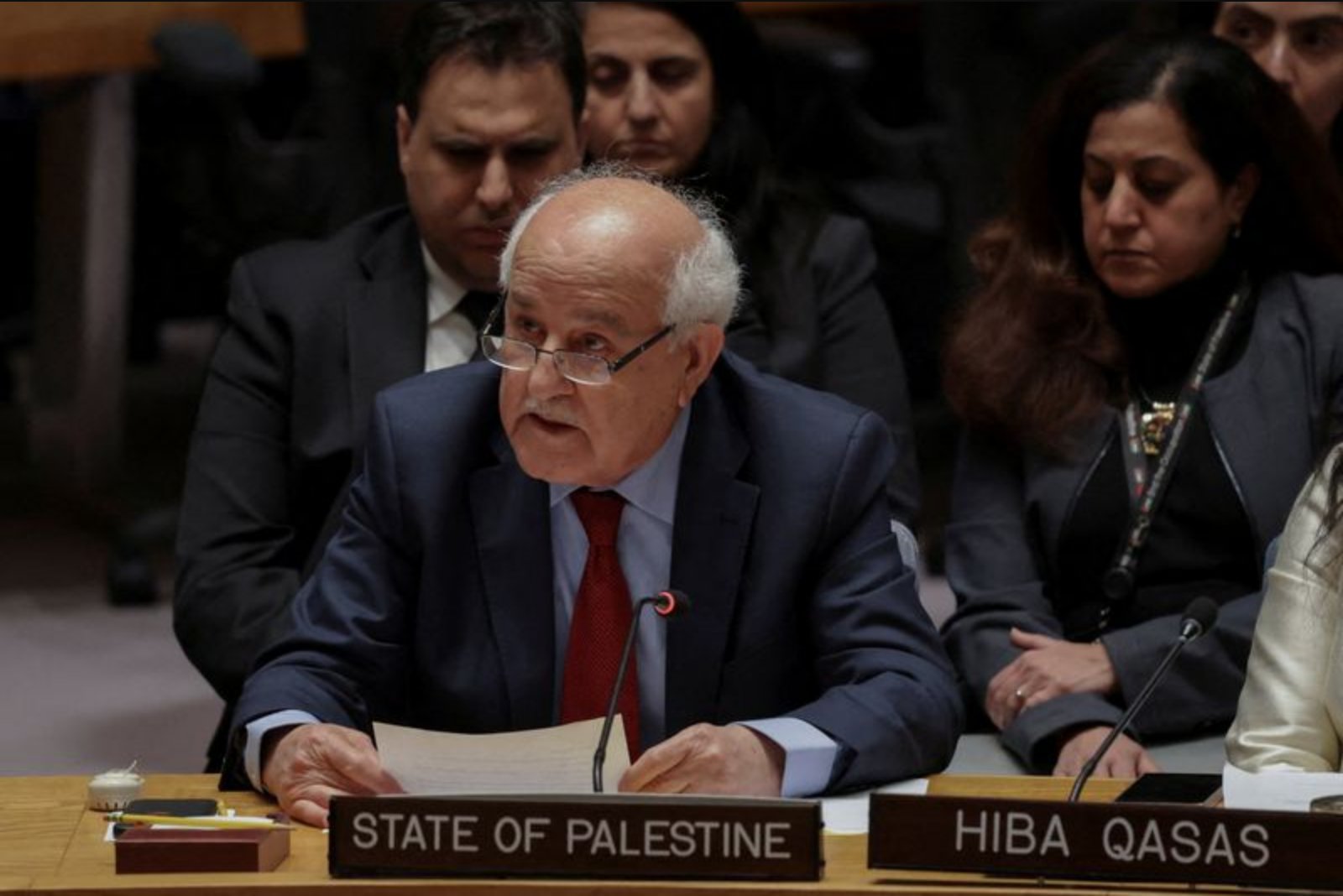
An internal State Department cable instructed U.S. diplomats stationed in Jerusalem to convey a firm message to the Palestinian U.N. delegation: if Palestinian ambassador to the United Nations Riyad Mansour does not end his candidacy for the vice presidency of the U.N. General Assembly, Washington could revoke the visas held by members of the Palestinian mission.
The cable, dated Wednesday and marked sensitive but unclassified, says Mansour's bid "fuels tensions" and risks undermining the Trump administration's plan for Gaza. It warns that the United States would impose consequences if the Palestinian delegation proceeds with the candidacy.
The cable includes a pointed sentence: "To be clear, we will hold the PA responsible if the Palestinian delegation does not withdraw its VPGA candidacy," using the acronym PA to refer to the Palestinian Authority, which administers limited self-rule in parts of the West Bank.
Talking points provided to U.S. diplomats in the cable reference a September 2025 decision that waived visa sanctions for Palestinian officials assigned to the Palestinian U.N. mission in New York. The document cautioned that it "would be unfortunate to have to revisit any available options" if the delegation did not withdraw its candidacy.
A State Department spokesperson reiterated the department's obligations under the U.N. Headquarters Agreement, saying the department "takes seriously our obligations under the U.N. Headquarters Agreement." On visa matters, the spokesperson declined to comment on actions related to specific cases, citing visa record confidentiality.
The cable frames the potential vice presidency as more than a ceremonial role. Although Mansour withdrew his candidacy for the presidency of the General Assembly earlier, the document notes that election to a vice presidential slot could still allow him to preside over General Assembly sessions. The cable flagged the possibility that the Palestinians could preside over General Assembly sessions during the 81st session's high-level week in September unless they stepped down from the race.
"Therefore, there is still a risk that the Palestinians could preside over GA sessions during UNGA81 unless they withdraw from the race," the cable stated. It added a warning scenario in which a future president of the General Assembly might facilitate Palestinian leadership of high-profile sessions tied to the Middle East or during UNGA81 high-level week.
The election for the president of the U.N. General Assembly and for the 16 delegations that will serve as vice presidents is scheduled for June 2. The Palestinian Authority represents the Palestinian people at the United Nations under the designation "State of Palestine," but it is not a full member of the 193-member General Assembly and does not have voting rights. The Palestinian mission holds observer status, the same formal standing the Holy See (Vatican) maintains at the U.N.
The cable also situates its diplomatic warning within the larger, unsettled context in Gaza. It states that President Trump's Gaza plan has been stalled after more than two years of conflict, citing a refusal by Hamas to disarm and noting continued Israeli military operations that have eroded an October ceasefire. According to the cable, Israeli forces continue to occupy more than half of Gaza's territory, have demolished much of the remaining infrastructure, and have ordered residents to evacuate.
Those operational realities in Gaza were presented in the cable as factors that heighten sensitivity around Palestinian participation in U.N. leadership roles, and as part of the rationale for the United States to press for withdrawal of the vice presidential candidacy.
Contextual note: The cable documents U.S. diplomatic instructions and internal assessments. It highlights visa policy as an instrument of leverage while outlining the specific procedural concern that election to a vice presidential position could allow presiding over General Assembly sessions.