
Overview
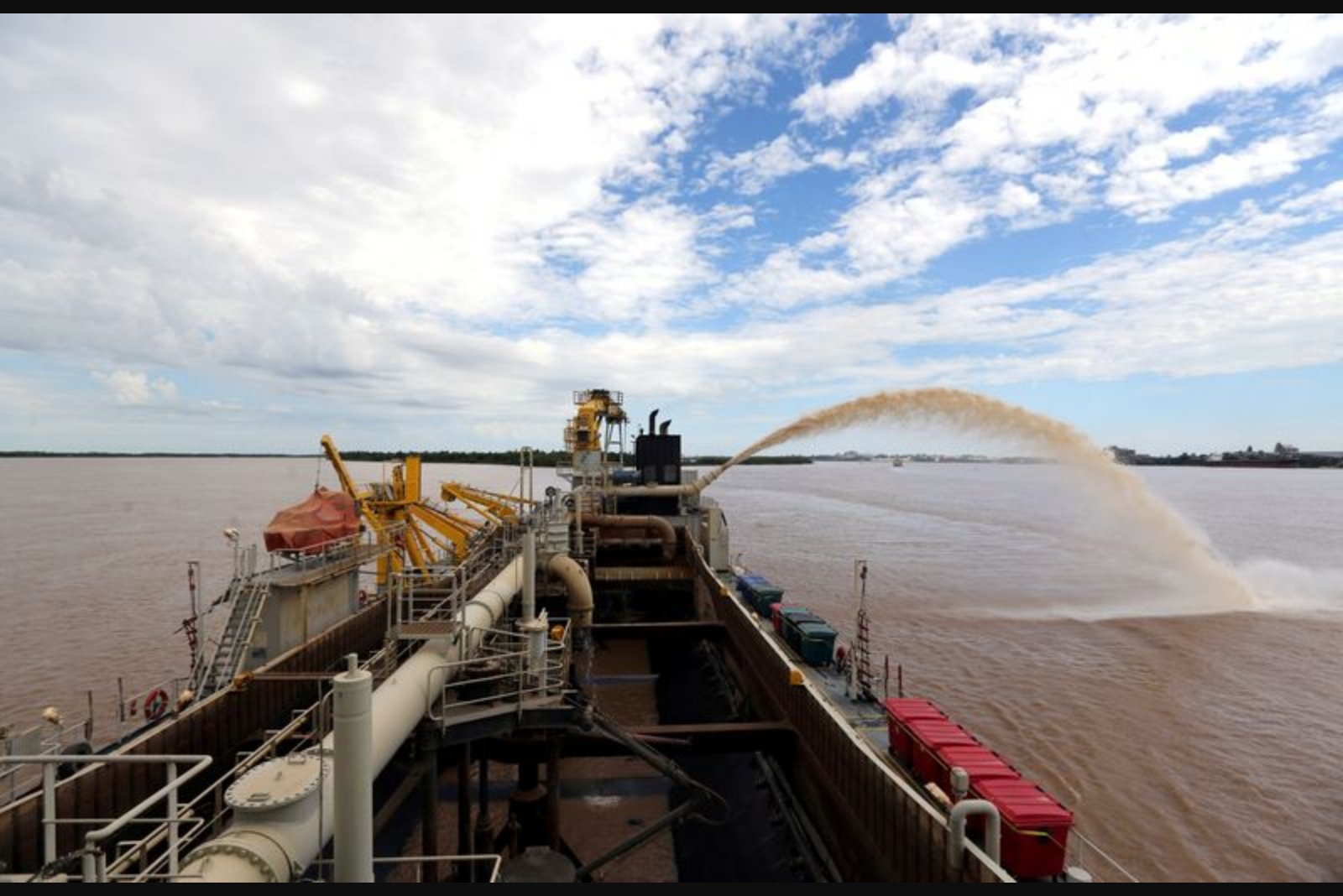
A letter dated April 23 from the chair of the U.S. House Foreign Affairs Committee raised alarms about what it described as "Chinese malign influence" in the contest to win a 25-year contract to dredge and operate the Parana River. The waterway is a critical artery for Argentina's agricultural exports and the tender is in its final phase, with a decision expected soon. Argentina has estimated the eventual investment tied to the contract could reach $10 billion.
Scope and rules of the tender
The tender explicitly bars state-owned enterprises from participating, an exclusion that was intended to prevent bids from Chinese state firms. According to the April 23 letter, the exclusion has not eliminated concerns about Chinese influence because, the letter alleges, Beijing is attempting to "circumvent that choice through a private sector proxy." The letter names Jan De Nul, a Belgian dredging company that has managed the Parana waterway for decades, and asserts the firm "maintains deep and ongoing links to PRC state-owned entities" through an Argentine company called Servimagnus, which is part of Jan De Nul's consortium.
Competitors and how the bid has proceeded
Jan De Nul is competing against a consortium led by the Deme Group. The Deme consortium includes investment firm KKR & Co and U.S.-based Great Lakes Dredge & Dock Corp. In the bid's point-score system, Jan De Nul has been leading. Argentina's National Ports and Navigation Agency has described the bidding process as complete and said it attracted "strong multisectorial support." The agency also acknowledged that Jan De Nul and Deme have had partnerships with Chinese companies in other contexts but stated that such ties are not, on their own, grounds for disqualification from the tender.
Accusations, denials and diplomatic pushback
The April 23 letter warned that awarding the contract to Jan De Nul "would be unacceptable and damaging to Argentina's national security, America's national security and our bilateral relationship." The letter's allegations prompted responses from multiple actors in the dispute. China's embassy in Buenos Aires rejected the claims as "unfounded speculations," saying China has repeated to Argentine authorities that it rejects discriminatory treatment of Chinese companies and criticizing what it called the politicization of security concerns in trade matters.
Jan De Nul and Servimagnus described the allegations of ties to Chinese capital during the bidding process as "absolutely false and malicious" and stated there is "no participation by Chinese companies, either as partners or as suppliers."
U.S. engagement and lobbying activity
The Deme consortium received approval from the U.S. Department of Commerce's Advocacy Center, an entity that assists U.S. companies pursuing foreign contracts, according to a person involved with the consortium who requested anonymity. That backing was followed by a series of diplomatic engagements. A Milei adviser, Santiago Caputo, flew to Washington, D.C. to meet with officials last week. Meetings included the chair of the House Foreign Affairs Committee, the senior director for Western Hemisphere affairs on the National Security Council, and Argentina's ambassador to the United States. Caputo was reportedly told the U.S. had "grave concerns" about alleged Chinese involvement, according to a person familiar with the visit.
Those concerns, the same person said, were partly driven by allegations of frequent contact between the Chinese embassy in Buenos Aires and Servimagnus' office in Argentina.
Charges of bias and procedural questions
Separately, the Deme consortium has accused the tender process of bias in a May 11 letter addressed to the senior director for Western Hemisphere affairs and submitted by the consortium. The letter alleges "clear bias" against U.S.-backed investment, arguing that the timeline for submitting technical offers was compressed in a manner that favored Jan De Nul. Argentina's anti-corruption prosecutors' office has also signaled concern about what it described as "serious and obvious" procedural irregularities in the bidding process.
Economic significance and stakes
About 80% of Argentina's agricultural and agro-industrial exports move along the Parana River, which drains the Rosario agro-industrial hub and surrounding areas into the South Atlantic Ocean. That concentration of export flows underscores why the contract's outcome has drawn intense scrutiny from political and commercial actors in Argentina and abroad. The matter has also intersected with geopolitics; the letter notes broader worries about Chinese influence in Latin America. In March, Beijing was Argentina's second-largest trading partner.
What remains unresolved
The tender is in its final stage and a decision is expected imminently. Key questions going forward include how Argentine authorities will weigh the competing claims: the U.S. lawmaker's warning about potential circumvention of state-ownership exclusions via private links, the denials by Jan De Nul and Servimagnus, the Deme consortium's assertion of bias in the tender timetable, and the anti-corruption office's concerns about procedural irregularities. Each of these elements will shape not only the ultimate award decision but also the bilateral and commercial relationships implicated by the outcome.
Reporting on this story is based on correspondence, consortium submissions, statements from involved parties and communications from government entities.