
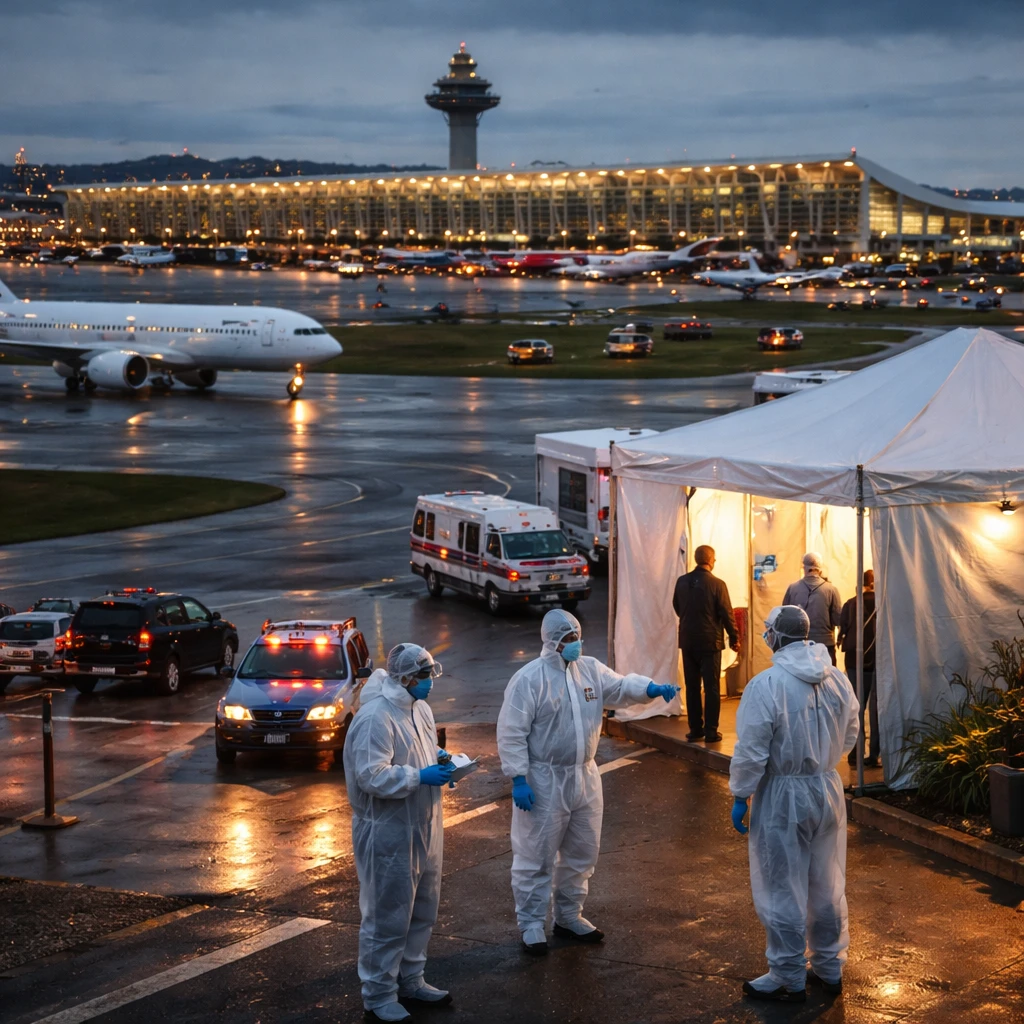
U.S. officials announced on May 21 that citizens who have visited the Democratic Republic of the Congo (DRC), Uganda or South Sudan within the preceding three weeks must re-enter the United States exclusively through Washington Dulles International Airport for enhanced public health screening.
The State Department said the change reflects steps being taken by the U.S. Centers for Disease Control and Prevention (CDC) and Customs and Border Protection (CBP) to apply heightened screening protocols at Dulles in response to the Ebola outbreak affecting the region.
CBP said an Air France flight travelling from Paris to Detroit on Wednesday was diverted to Montreal after a passenger from the DRC boarded the aircraft "in error." Officials described the diversion as part of measures designed to prevent Ebola from reaching U.S. soil.
Secretary of State Marco Rubio said Thursday the action to divert the flight was intended to protect Americans and to keep the virus from arriving in the United States. He framed the response in two objectives: first, preventing Ebola from entering the U.S.; and second, assisting affected populations in the DRC and neighbouring countries to limit further spread.
Earlier in the week the CDC announced that it was suspending entry of travellers who had been in the DRC and South Sudan within the prior weeks of arrival in the United States to reduce the risk of Ebola transmission. The suspension does not apply to U.S. citizens or lawful permanent residents.
The current screening approach echoes procedures used during the 2014 Ebola concerns, when the United States required travellers arriving from three African countries to land at one of five U.S. airports with enhanced screening. Those airports then included Dulles, New York JFK, Chicago O’Hare and Atlanta.
On the ground in the DRC, a case of Ebola was confirmed in the east of South Kivu province - hundreds of kilometres from what authorities have identified as the outbreak’s epicentre - according to a statement from the rebel alliance that controls the area on Thursday.
The World Health Organization has tied the outbreak to 139 deaths, and reported 600 suspected cases in Ituri and North Kivu provinces as of Wednesday. Two cases have also been confirmed in neighbouring Uganda.
Over the weekend the WHO declared the outbreak, identified as the Bundibugyo strain for which there is no vaccine, a public health emergency of international concern. That designation reflects concerns about the potential for wider spread and the limited medical countermeasures available for this strain.
Ugandan Information Minister Chris Baryomunsi told Reuters that he considered the U.S. ban on most travellers from Uganda, along with the DRC and South Sudan earlier in the week, to be an "overreaction."
Given the evolving situation, U.S. authorities have concentrated enhanced public health screening at Dulles and adjusted entry rules to manage risk while allowing exceptions for U.S. citizens and lawful permanent residents. The operational and diplomatic implications of these measures remain active as case counts and geographic spread are monitored by international and national health organizations.