
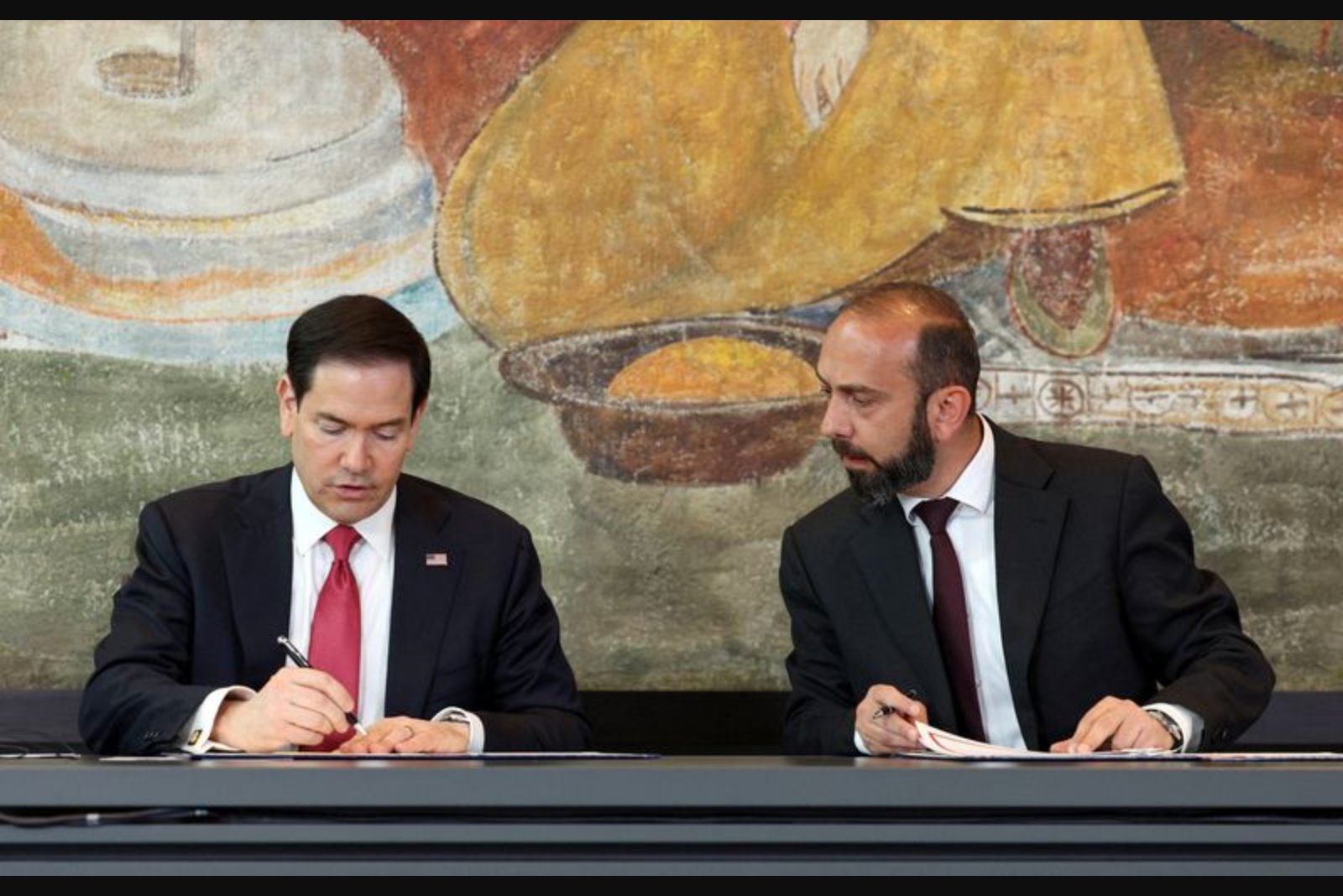
U.S. Secretary of State Marco Rubio met with Armenian Foreign Minister Ararat Mirzoyan in Yerevan on Tuesday and formalized a strategic partnership between the United States and Armenia. The signing took place at Zvartnots International Airport during a brief stopover by Rubio and occurred with less than two weeks remaining before Armenia's parliamentary elections.
Alongside the strategic partnership, the two sides signed a framework agreement on critical minerals and a separate framework on cooperation related to a proposed 43-kilometre transit corridor across southern Armenia. That corridor, as described in the agreement, would provide Azerbaijan with a direct route to its exclave of Nakhchevan and, by extension, a direct connection to Turkey, which is identified in the agreements as Azerbaijan's closest ally.
The timing of the visit came shortly before the June 7 parliamentary vote, which will pit Prime Minister Nikol Pashinyan's Civil Contract party, identified in the agreements as pursuing closer ties with Western partners, against a broad set of opposition parties, many of which are described as pro-Russian. The signings therefore take place against a backdrop of domestic political competition over the country’s foreign policy orientation.
In advance of Rubio's visit, the Kremlin issued a public warning on Monday, stating that Armenia could lose the "very attractive" price it pays for Russian gas if it moves away from integration with Russia. That statement highlights a concrete economic concern raised by Moscow in response to steps by Yerevan toward deeper engagement with Western partners.
The three agreements signed during the stopover - the strategic partnership, the critical minerals framework, and the transit corridor cooperation framework - were completed in a compressed diplomatic encounter at Yerevan's airport. The documents outline areas for enhanced bilateral cooperation but do not, in the text of the signings reported, provide detailed implementation timelines or operational specifics beyond the corridor’s proposed 43-kilometre route.
With the election date set for June 7, the agreements add an external dimension to an already contested domestic political environment. The Kremlin's comment on gas pricing underscores one of the economic considerations at play as Armenia navigates competing regional and international relationships.