
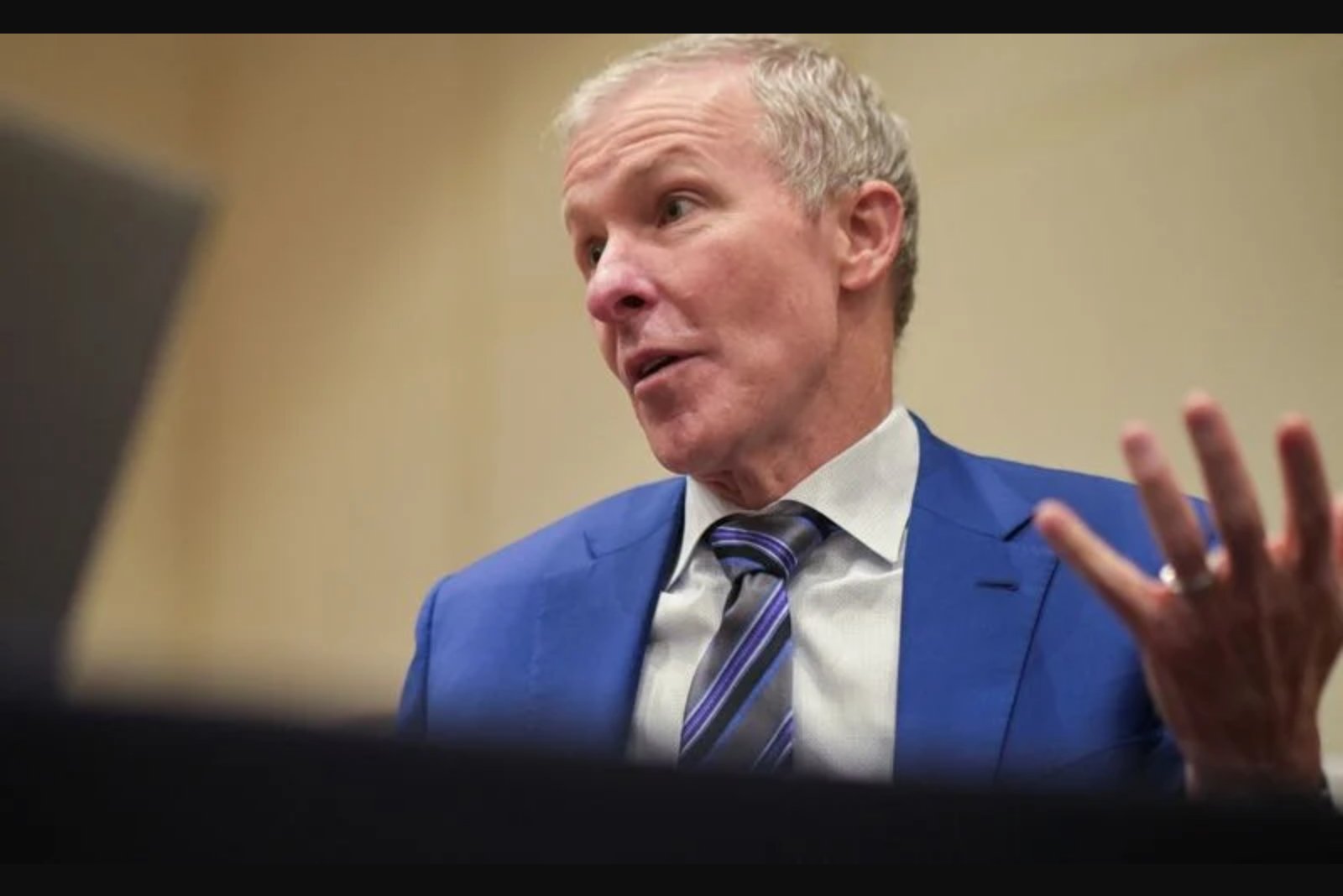
RIO DE JANEIRO, June 7 - United Airlines is open to opportunistic purchases of airport slots, gates or similar assets if rising jet fuel costs put weaker competitors under pressure, but the carrier's chief executive said a major consolidation with American Airlines is unlikely following American’s public refusal to engage.
Scott Kirby reiterated that in April he had approached American about a possible merger and said American declined to engage. Earlier reports indicated he had raised the idea with U.S. President Donald Trump in February. American’s chief executive, Robert Isom, publicly dismissed the notion as anti-competitive and harmful to customers.
"I think consolidation is unlikely for United," Kirby said in a discussion on the sidelines of the International Air Transport Association’s annual meeting in Rio de Janeiro. "That doesn’t mean we won’t still be in the market to buy assets, but consolidation is a low probability."
Kirby defended the strategic reasoning behind pursuing a deal with American, saying he believed such a transaction would have delivered consumer benefits. He stressed, however, that completing a deal of that scale and nature would have required cooperation from American’s own management team.
He said he expected labor groups, shareholders and customers would have supported a merger, but added that American management’s explicit, public opposition rendered the proposal impractical. "You can’t have the management team on record publicly saying it was anti-competitive," he said.
Repeatedly asked whether United had abandoned the idea permanently, Kirby returned to a single precondition: any merger would require "a willing partner."
Kirby also addressed several other deal-related points. He denied that United had discussed with the Trump administration the possibility of giving the U.S. government a golden share as part of any merger proposal.
Against a backdrop of surging fuel costs, Kirby described the current market as one that is testing airline margins and widening the gap between larger carriers with strong brands and smaller rivals that rely primarily on price competition. He said United expects that higher fares will put the company on track to recoup the full impact of the recent fuel price surge later this year, reflecting confidence in sustained demand despite rising ticket prices.
"Demand has stayed strong," Kirby said, while acknowledging that over time higher fares will have some effect on passenger behavior.
On the distinction among carriers, Kirby framed the competitive split as largely one between airlines that have built customer loyalty and those still competing mainly on price. He rejected criticism from Willie Walsh, head of the International Air Transport Association, that the big U.S. carriers are crowding out competition.
Kirby pointed to investments in brand and product as the reason some airlines - naming United and Delta Air Lines - are pulling ahead. "Customers care about the technology, the service, the reliability, the product," he said. "They want a great experience. They don’t just want a seat."
He characterized United’s advantage as rooted more in operating profit than in sheer balance-sheet strength. That operating profitability, he argued, allows the carrier to continue investing in product and service enhancements, while some similarly sized rivals are merely breaking even.
When asked whether JetBlue Airways might become a more attractive takeover target if it entered Chapter 11, Kirby said he considered that unlikely because JetBlue holds cash and has unencumbered assets.
Kirby also weighed in on fuel management strategies, rejecting fuel hedging as a structural solution to exposure from volatile fuel prices. "Ineffective if you lose money over time," he said, indicating skepticism about hedging as a long-term remedy. While acknowledging that Delta’s refinery gives that carrier an advantage in the present environment, Kirby said United has no intention of buying a refinery to address fuel cost volatility.
The remarks came as senior airline executives at the IATA gathering debated market dynamics and competitive positioning amid a period of unusually high jet fuel prices.
Implications for markets and sectors
Kirby’s comments underscore several market realities: ongoing pressure from fuel costs on airline margins, strategic differentiation via brand and product investment, and the potential for asset-level consolidation even as full mergers remain unlikely without mutual management agreement. Sectors directly implicated include commercial aviation, airport operations and aircraft service providers, with downstream impacts on travel demand, loyalty program economics and aftermarket service suppliers.