
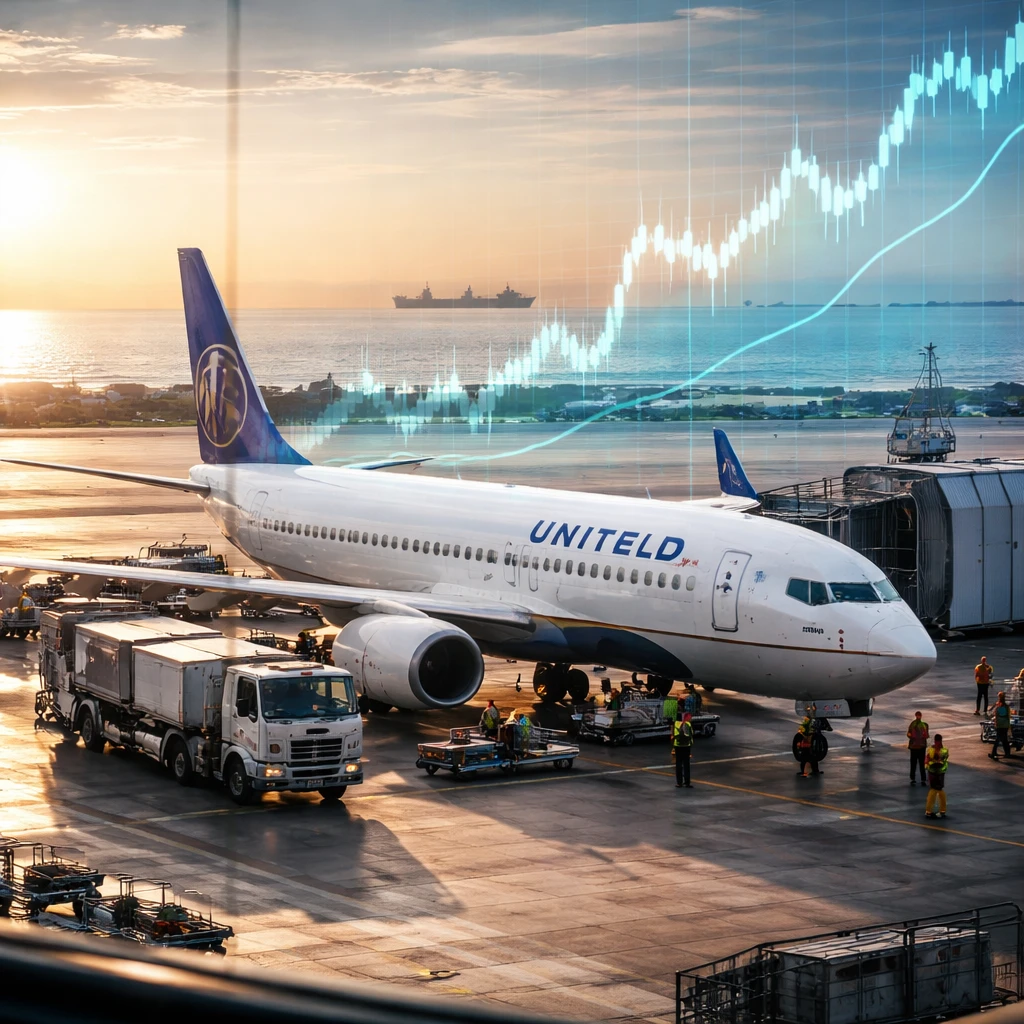
United Airlines' equity rallied sharply in morning trade, advancing 6.9% to $113.18 as airline stocks broadly reacted to a combination of lower fuel cost expectations and positive analyst attention. The industry-wide move followed a pronounced slide in Brent crude futures after renewed hopes for a peace agreement between the United States and Iran reduced fears of supply disruptions along the Strait of Hormuz - a key artery for global oil shipments - and thereby eased a major cost headwind for carriers.
Fuel-related relief was reinforced by a notable analyst revision. TD Cowen's Tom Fitzgerald raised his price target on United Airlines to $150 from $142 and reiterated UAL as his top pick in the sector, citing robust pricing metrics, favorable checks, and softer spot fuel. Earlier in the week, UBS also lifted its price target on United to $148 from $139 while maintaining a Buy rating and naming the carrier its top sector pick, actions that were highlighted in morning trading.
Investors are also focused on an on-stage appearance by United's senior leadership. CEO Scott Kirby and CFO Mike Leskinen are scheduled to speak at Bernstein's 42nd Annual Strategic Decisions Conference today at 1:30 p.m. EDT, a live forum where market participants expect commentary on capacity plans, pricing trends, and capital allocation priorities - topics that could influence near-term guidance and investor sentiment.
Underlying demand trends support the optimism. The Airline Fare Consumer Price Index has climbed 20.7% year-over-year, and several major U.S. carriers have posted share gains of up to 7.6% as the sector reacted to the improving geopolitical backdrop. United projects more than 53 million passengers during the June-to-August period, a material increase versus the prior summer, and bookings tied to large events and entertainment travel - including trips linked to the solar eclipse and international soccer fixtures - have shown double-digit growth.
Market context suggests the move in United shares is predominantly sector- and company-specific rather than a reflection of broader risk appetite. The Dow Jones Industrial Average was up 0.5% while the S&P 500 was essentially flat and the NASDAQ marginally lower, indicating that UAL's 6.9% advance stems from factors distinct to airlines and to United itself. During the session the stock reached a high of $114.10 - approaching within striking distance of its 52-week high of $119.21.
Competitive dynamics in the airline group also factored into the rally. Peers such as Delta Air Lines and American Airlines participated in the sector-wide lift, responding to the same mix of easing fuel concerns and encouraging demand indicators. Analysts cited the potential de-escalation in the Middle East as a substantial catalyst that could reduce operational risk and lower expenses for carriers, which likely contributed to the uniform positive reaction across major U.S. airlines.
In aggregate, three primary elements came together to push United's price higher in morning trading: a drop in crude oil futures tied to reduced geopolitical risk, bullish analyst target increases spotlighting United as a top sector pick, and a management presentation that could clarify near-term operational and financial priorities. Those forces, combined with resilient summer travel demand and rising fares, supported the share-price move toward the recent high-water mark.
Note on content scope: The article focuses on observable market moves, analyst actions, management scheduling, demand statistics and pricing trends as reported in market updates and company communications.