
London equities moved lower on Thursday, with the FTSE 100 retreating amid a mix of geopolitical uncertainty and subdued corporate newsflow. Concerns linked to U.S.-Iran negotiations competed with a partial rebound in crude that followed a sharp one-day selloff, leaving investors hesitant.
By 03:20 ET (07:20 GMT) sterling had eased slightly - down 0.12% at 1.3419. Major European bourses also weakened, with Germany’s DAX sliding 0.31% and France’s CAC 40 falling 0.23%. The FTSE 100 itself slipped 0.40%.
Oil staged a modest recovery after tumbling on Wednesday, when prices plunged about 5% following an earlier suggestion from U.S. leadership that a diplomatic resolution with Iran could be near. The rebound occurred after U.S. commentary turned firmer, with former President Trump warning that Washington remained ready to strike Iran if talks broke down, saying the situation was "right on the borderline" while also leaving open the option to wait "a few days." Despite the tone change, Brent crude had closed lower at $105.02 on Wednesday after Mr. Trump had earlier said the U.S. was in the "final stages" of a deal.
Tehran responded to the heightened rhetoric by signalling a readiness to retaliate if necessary. Parliament speaker Mohammad Bagher Qalibaf urged that Iran must strengthen its "readiness for a decisive and effective response," describing the standoff as "a war of wills." At the same time, Iranian state media reported that officials were examining the latest U.S. proposal, indicating that engagement on the offer was ongoing.
Mediation efforts continued, with Pakistan’s army chief Asim Munir travelling to Tehran on Thursday to pursue diplomatic channels. Iran’s foreign ministry repeated its core demands, including the release of frozen assets and the lifting of a blockade on ports.
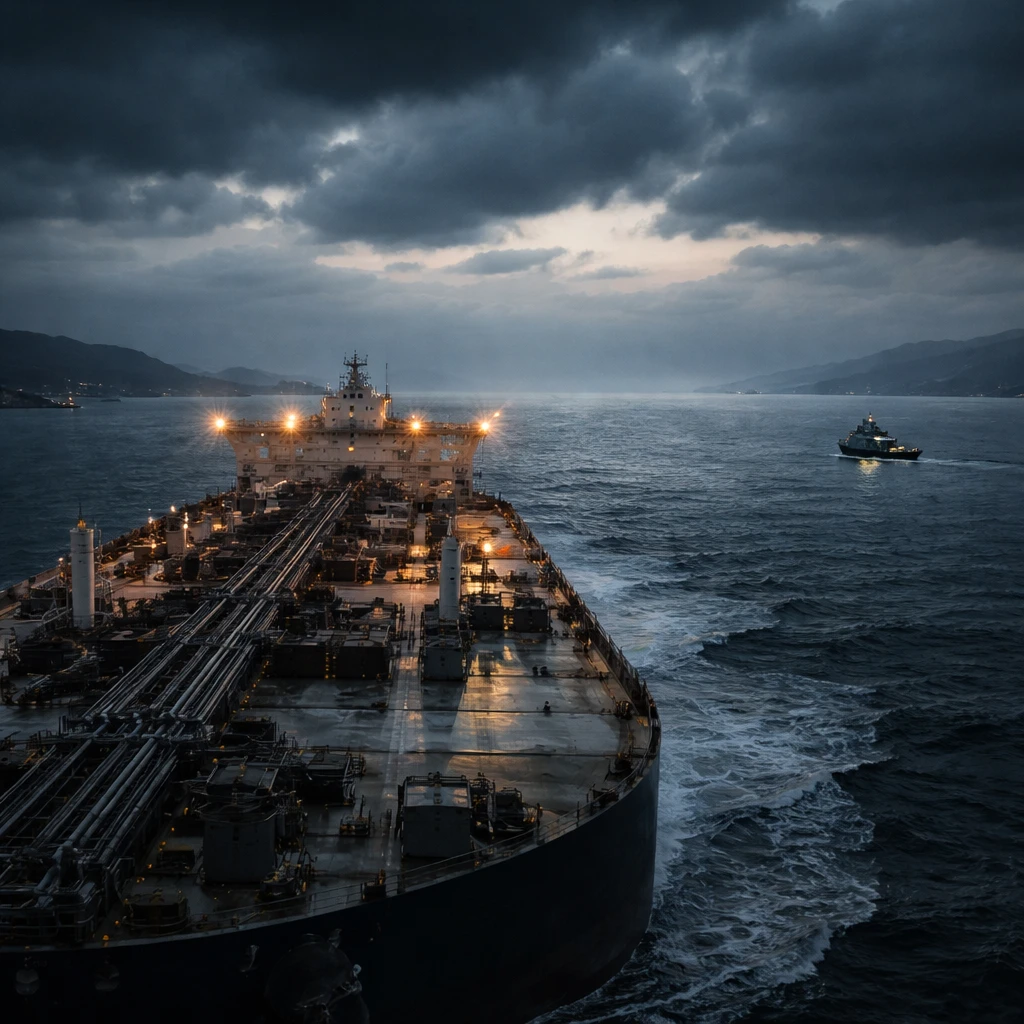
Navigational disruptions in the Strait of Hormuz remained a central concern. Iran’s newly-created Persian Gulf Strait Authority released a chart delineating a maritime zone under its claimed control and announced that vessels would need authorisation to transit. U.S. Central Command said it had redirected 91 ships in response to the blockade and noted it had boarded and searched an Iranian-flagged tanker before allowing it to continue.
The United Nations Food and Agriculture Organization cautioned that a prolonged closure of the strait could spark "a severe global food price crisis," emphasising the strategic importance of the waterway, which previously handled roughly a fifth of global oil shipments and about a third of global fertiliser supply before the war.
Political comments added to the tense backdrop. Mr. Trump said Israel’s Prime Minister Benjamin Netanyahu would do "whatever I want him to do" regarding Iran and that he was "in no hurry" to finalise a deal. Israel’s army chief reported that the Israel Defense Forces were at their "highest level of alert." While these remarks elevated geopolitical risk perceptions, they left markets navigating a mix of diplomatic activity and military readiness without a clear directional signal.
UK corporate updates
- Smiths Group trimmed its 2026 revenue outlook after its John Crane division absorbed a £10 million Q3 hit linked to the Middle East conflict.
- Close Brothers increased its motor finance provision by £30 million in Q3, while stating it remains on track to meet full-year guidance.
- Tate & Lyle described its results as "disappointing" and set out expectations for only modest revenue growth in 2027; the company also confirmed it had recently received a takeover approach from Ingredion.
- Ibstock said it expects full-year earnings to be broadly in line with forecasts but warned that cost inflation will persist into the second half.
- AJ Bell reported full-year profit running ahead of guidance, announced a share buyback, and said first-half revenue rose 12% accompanied by record net inflows.
Across the broader market, investor sentiment appeared to be held in check by the combination of geopolitical risk and a lukewarm reaction to major technology earnings, which together undercut momentum that might otherwise have been supported by the partial recovery in crude.
What this means for markets
The interplay between diplomatic negotiations, military posturing and shipping disruptions in a pivotal maritime corridor left oil and equity markets sensitive to each new development. With key UK corporates flagging both direct second-order impacts from the Middle East and company-specific results, traders faced a patchwork of drivers that supported caution rather than conviction.